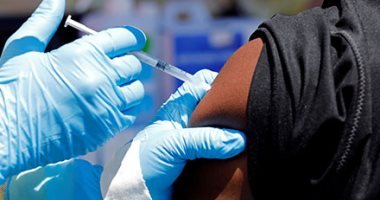
Dr. Anaïs Legand, a health technical expert in the World Health Organization’s Health Emergencies Programme, confirmed this during a press conference today, Wednesday, in response to questions about… Ebola vaccinesThere are 3 vaccines currently under development against the Bundibugyo strain of the Ebola virus. She explained that the first vaccine is being developed by Oxford University in cooperation with the Indian Serum Institute, while the second vaccine is developed by Moderna.
She added that, since the previous press conference, Moderna announced the acceleration of the development of a vaccine specifically for the Bundibugyo strain.
She indicated that the two vaccines developed by Oxford and Moderna may be ready to enter clinical trials within a period ranging between two and three months, while the third vaccine, which is being developed by the US National Institute of Allergy and Infectious Diseases, is expected to require a longer period that may reach 7 or 9 months.
Strengthening the response in Ituri and North Kivu.
In turn, Dr. Muhammad Yaqoub Janabi, Regional Director of the World Health Organization for Africa, confirmed that the visit of the Director-General of the Organization to Ituri Province constituted a strong message of solidarity with the affected communities and workers on the front lines.
He explained that the visit achieved important operational gains, which included direct communication with community leaders, youth, traditional leaders, and local influencers to enhance community trust, which he described as an essential element for controlling the outbreak. The visit also witnessed the opening of a new treatment center with a capacity of 60 beds, which includes a ward dedicated to children.
He added that the meetings contributed to confronting misleading information related to the disease and clarifying the timing of the World Health Organization’s announcement of the outbreak.
He also pointed out the resumption of commercial flights between Kinshasa and Bunia, which will contribute to improving the movement of supplies and the continuity of response operations.
He explained that the rate of contact tracing for Ebola has increased from 20% at the beginning of the outbreak, to about 45% currently, with efforts to reach 95%.
He stressed that security challenges, local conflicts, and border disturbances still affect contact tracing operations and supply chains, but they are known challenges and are being dealt with on an ongoing basis.
He stressed that the World Health Organization never left North Kivu, and that its activities are not limited to Ebola only, noting that the Democratic Republic of the Congo bears about 12% of the global burden of malaria.
He explained that the current surveillance and treatment centers also provide malaria diagnosis and treatment services, in addition to… Fighting Ebola.
He also called for adopting a long-term approach to reduce future outbreaks, noting that Ebola is a zoonotic disease that is transmitted from animals to humans, which requires working with local communities and indigenous people to raise awareness of the dangers of dealing with and consuming wild animals.
Regarding financing, Dr. Chikwe Ihekweazu, Executive Director of the Health Emergencies Program at the World Health Organization, explained that the Director-General of the Organization agreed, immediately after the outbreak began, to allocate $3.9 million from the organization’s emergency fund to begin the rapid response.
He added that the financial needs for the first three months of the Ebola outbreak are estimated at about $115 million, as part of the strategic preparedness and response plan that will be launched in cooperation with the African Centers for Disease Control, the Democratic Republic of the Congo, Uganda, and other response partners.
He pointed out that the organization has so far only obtained 35% of the funding required for this initial stage, despite the expanding scope of the outbreak and the need for significant additional resources during the coming period.
He stressed that the World Health Organization and its partners are continuing field work with the maximum available capabilities in support of the Congolese government, expressing his confidence that the international community will continue to provide the necessary support and solidarity to ensure control of the disease. Ebola outbreak And contain it.