Synopsis: Meeting also examines the state of female representation in local councils.
The Senate has called for greater participation of women, youth and qualified individuals in next year’s commune council elections, while stopping short of advocating mandatory quotas for female representation.
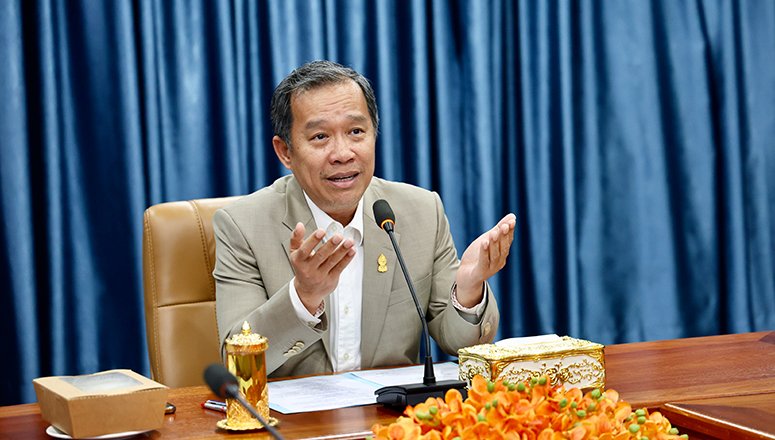
The appeal came during a monthly meeting chaired by Senate Second Vice-President Thun Vathana on June 8. The conference was attended by the chairs of the 10 Senate commissions, leaders of the eight regional Senate groups, the Women’s Senate Group and the Senate Ethics Committee.
Vathana said the discussions were aimed at strengthening local governance and ensuring that commune councils are better equipped to meet the country’s evolving development needs.
“While many councillors have served their communities with dedication, challenges remain in areas such as strategic planning, preparation of rolling three-year investment programmes, administrative management and the application of digital technologies in local governance,” he said.
The meeting focused on the qualifications of commune council candidates ahead of the June 2027 elections; measures to promote women’s representation at the local level; legislative follow-up mechanisms; and the Senate’s intersession mission plans.
Legal requirements for commune council candidates include Cambodian nationality at birth, literacy in Khmer, voter registration in the commune where they seek election and a minimum age of 25.
Participants discussed whether these qualifications remain sufficient as Cambodia’s local administrations face growing demands for technical expertise and digital competence.
“In this regard, while any future adjustments to legal qualifications require careful study and broad consultation, I would like to encourage all political parties to proactively identify and nominate qualified individuals, particularly youth who possess knowledge, innovation, energy, and a commitment to public service,” Vathana said.
“Our local councils should reflect not only the aspirations of citizens but also the growing human capital of our nation,” he added.
The meeting also examined the state of women’s representation in local councils. According to figures presented during the discussion, women account for more than half of Cambodia’s electorate but hold only around 22% of commune council seats nationwide.
Among Cambodia’s 1,652 communes, about 125, or 8%, do not have a female councillor.
Nationwide, there are 11,622 commune councillors, of whom 2,562 are women. Among councillors from the ruling Cambodian People’s Party, women represent approximately 25% of the total, while female representation among Candlelight Party councillors remains significantly lower.