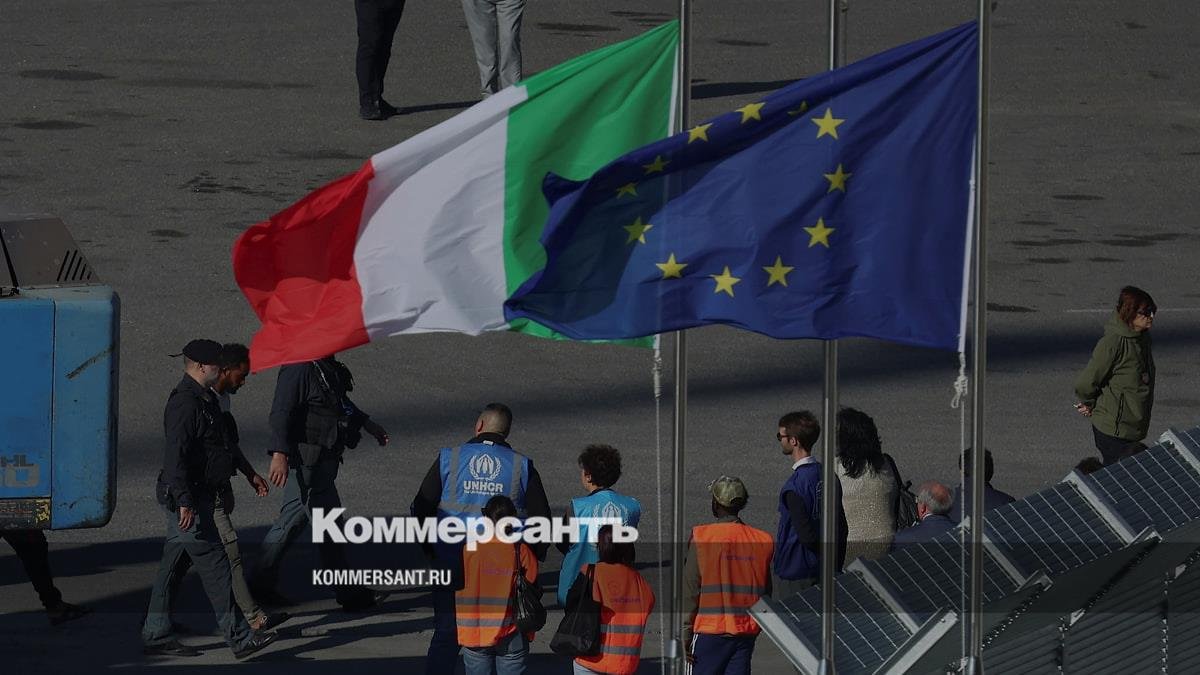
On June 12, a new pact on migration and asylum will begin to apply in the European Union. Now it will become more difficult to obtain asylum in EU countries, and if your attempt is unsuccessful, you will have to leave faster. But this program document does not yet completely solve the problem of refugees. A powerful wave of immigration hit the continent back in the 2010s, and while politicians and officials were agreeing on a unified response, the migration agenda managed to turn from a problem on external borders into an internal political challenge.
“With the new rules we will have more control over who can come to the EU, who can stay and who must leave. We are bringing order to Europe,” this is how the European Commissioner for Home Affairs and Migration, Magnus Brunner, describes the new order. A historical document that significantly changes the European migration system was adopted back in 2024. Countries were given two more years to prepare for its implementation.
Here are the main elements of the reform.
- First, mandatory screening of third-country nationals at external borders and collection or verification of biometric data. By relying on a single and updated Eurodac fingerprint database, countries will be able to identify duplicate applications and combat the illegal movement of claimants within the EU.
- Secondly, procedures for verifying asylum rights and deportation from the country will become faster and stricter. Those who do not have the right to humanitarian protection will no longer be able to wait for years for a refusal to receive benefits – some applications will be considered before entering the EU.
- Thirdly, EU countries agreed to help each other with refugee relocation, money or operational support. Previously, the primary responsibility for a migrant lay with the state that first accepted his or her asylum application.
In addition, the pact can be “superstructured” with additional acts – for example, a list of safe countries or a separate document on the return system from the EU. Brussels is now agreeing on the possibility of creating “return hubs” – external centers outside the EU, where applicants who have not received the right to asylum in the EU will be sent back. Among the countries where such centers could be located, the European press named Albania, African countries, as well as Kazakhstan and Uzbekistan, but the latter have already stated that they did not give their consent. How much it might cost to outsource migrants and why European taxpayers should finance it is still a topic of active debate.
The launch of the new pact on migration and asylum is a real milestone in the history of European integration. Key decisions in migration policy have remained with national governments for decades, and only since the late 1990s has the EU gradually built a common asylum system. With the adoption of the Lisbon Treaty in 2009, a unified system of migration procedures and solidarity was documented.
But by 2015, it became clear that the system was not working in practice: in one year alone, more than 1.25 million people applied for asylum. In April of the same year, Europe was shocked by a tragedy in the Mediterranean Sea, when a ship carrying 800 migrants from Africa sank on its way to the Italian island of Lampedusa.
European leaders then had to coordinate both an emergency response and systemic efforts on four fronts: preventing illegal crossings of EU borders, rescuing those in distress in the Mediterranean, improving policies for the integration of legal migrants and reforming the asylum system. In total, more than 8.6 million people applied for international protection for the first time between 2015 and 2025.
The irony is that in recent years the new package of documents has been criticized both for being too soft and for being too harsh.
If human rights activists accused legislators of “throwing European law back decades,” conservative politicians, on the contrary, blame their own governments for pandering to Brussels and excessive solidarity with their EU neighbors. With themes of national identity and anti-migration fueled by the far right in the EU and US President Donald Trump on the other side of the Atlantic, it is not surprising that European leaders ultimately opted for a tougher approach to immigration reform, focusing not on solving the problem of millions of displaced people, but on control and speedy expulsions.