Monday, May 25, 2026, 11:14 a.m
1142 readings

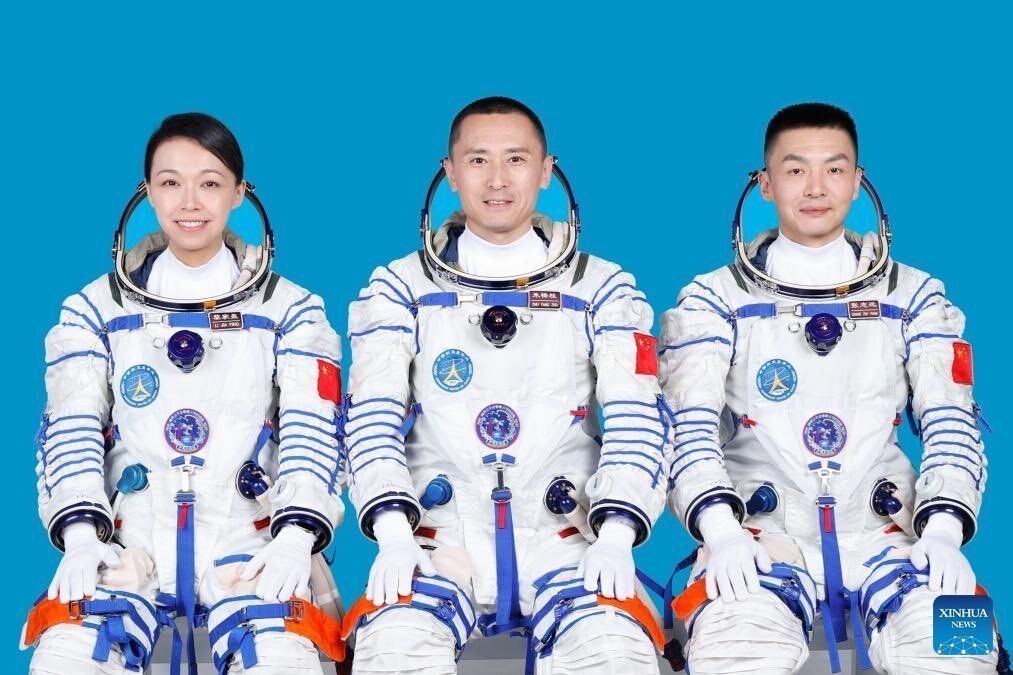
Chinese astronauts/PHOTO:X@benny0692698414
China sent three astronauts to its Tiangong space station in a mission that could set a new record for the Chinese space program and is a major step in Beijing’s plans to send humans to the moon by 2030.
The Shenzhou-23 spacecraft was launched on May 24 at 23:08 local time from the Jiuquan space center in northwest China. The launch was carried out using the Chang Zheng-2F Y23 rocket. (Chang Zheng means the Long March, after Mao’s retreat to save the Communist army from annihilation)
The crew consists of commander Zhu Yangzhu, pilot Zhang Yuanzhi and specialist Li Jiaying, the first astronaut in Hong Kong participating in a Chinese space mission.
Chinese authorities announced that one of the crew members could remain in orbit for about a year, which would represent the longest human mission in the history of the Chinese space program. The final decision is to be made depending on the mission.
Starting in 2021, Shenzhou series missions regularly carry crews to the Tiangong space station for six-month expeditions. Shenzhou-23, however, is the first Chinese mission to test such a long stay in space.
In parallel, Chinese engineers are continuing to test technologies for the country’s future lunar program, including the Chang Zheng-10 heavy rocket, the Mengzhou spacecraft and the Lanyue moon landing module.
The new mission will also test an autonomous rapid approach and docking procedure with the main module of the Tiangong station for the first time.
China launched the Shenzhou-23 mission with three sailors bound for the Tiangong space station. The ship took off from Jiuquan, in the northwest of the country, powered by a Larga Marcha-2F rocket, in a new advance of the Chinese space program. pic.twitter.com/Jt4jzOHqmg
— JP+ (@jpmasespanol) May 25, 2026
The scientific program of the flight includes research on the effects of long stays in space on the human body. Scientists will analyze the impact of cosmic radiation, loss of bone density and psychological stress associated with life in orbit.
China is also conducting an experiment with human stem cells in space. According to Chinese state media, researchers are trying to determine whether humans could live and reproduce long-term outside of Earth.
Beijing sees the mission as a key step in preparing for a manned landing before the end of the decade. China also plans to build together with Russia a permanent base on the Moon, powered by a nuclear power plant, by 2035.
The Chinese space program is developing in a context of intense competition with United States. NASA aims to send astronauts to the moon again in 2028 as part of the Artemis program.
In April, NASA astronauts flew around the moon as part of the Artemis II mission, the first manned lunar mission in more than 50 years. Meanwhile, SpaceX has conducted a new test of the Starship rocket, the vehicle to be used in future NASA lunar missions.