Main Points
Key Reads
That’s the end of our live coverage for this evening. We’ll have a report from Lebanon from Sally Hayden on a dramatic day in the Middle East later tonight.
Israel says it will reopen the Kerem Shalom Crossing back into Gaza to allow aid in
The Israeli Defense Ministry’s Coordinator of Government Activities in the Territories (COGAT) has said that it will reopen the Kerem Shalom Crossing back into Gaza to “gradually” allow in aid from Tuesday.
This comes after it announced on Sunday that “a number of necessary security measures have been implemented” after Iran’s missile firing on Israel. This includes “the closure of the crossings into the Gaza Strip, among them the Kerem Shalom Crossing and the Rafah Crossing, until further notice.”
It is unclear as to whether other border crossings will be opened. The closing of these crossings was criticised by humanitarian organisations including Medical Aid For Palestinians and Save The Children.
US president Donald Trump called Israeli prime minister Binyamin Netanyahu on Monday, AFP reports, after the first exchanges of fire between Israel and Iran since an April ceasefire.
The phone call comes after Trump called his ally “crazy” during another recent phone call between the pair.
Speaking to the agency, a White House spokesperson confirmed that a phone call took place on Monday but did not give any further details.
Medical Aid for Palestinians (MAP) criticises closure of Gaza aid borders
The director of Medical Aid for Palestinians (MAP) has criticised the closing of aid borders in Gaza, calling it an “illegal act of collective punishment”.
This comes after the Israeli Defense Ministry’s Coordinator of Government Activities in the Territories (COGAT) said on Sunday that all crossings with the Gaza Strip will remain closed until further notice – after Iran’s missile strikes in Israel.
However, Fikr Shaltoot, Gaza director at MAP, said this was a “form of collective punishment against Palestinians and egregious use of starvation as a weapon of war”. He argued this is illegal and will cost more lives.
“Nearly a thousand Palestinians have been killed since the so-called ‘ceasefire’ came into effect – and even before the crossings were sealed, aid was only ever trickling in, keeping millions only slightly above the threshold of starvation and between living and dying,“ Shaltoot said.
“Life-saving medical supplies, fuel, cooking gas, essential equipment – all of it might now be blocked. Hospitals that were already struggling without medicines or power will now face an even graver crisis”.
MAP called for the crossings to be opened, and on the international community to support the guarantee of full humanitarian access, the suspension on all arms sales, and support accountability mechanisms.
US did not intercept Iranian missiles fired at Israel, reports
A US official has denied Israel’s claim that the US intercepted Iranian ballistic missiles launched at Israel overnight while speaking to CNN on the condition of anonymity.
It contradicts an Israeli military official who said earlier that the US helped Israel’s air defence efforts, including by intercepting some of the Iranian missiles.
In previous rounds of fighting, the US has acknowledged helping Israel shoot down Iranian missiles fired toward the country, making the denial unusual. – The Guardian
United States demands precise information on Iran’s nuclear stockpile
The United States is demanding Iran provide “precise” information on its enriched uranium stockpile and give the UN nuclear agency access “without delay”, according to a draft resolution seen by AFP.
The draft resolution is expected to be submitted for a vote this week to the board of governors of the International Atomic Energy Agency (IAEA) that started meeting today.
Last week, the IAEA in a confidential report reiterated that the lack of access to nuclear sites in Iran constituted a “proliferation concern”.
The draft resolution affirms that it is “essential and urgent” that Iran “without delay” provides the agency with “precise information on nuclear material accountancy and safeguarded nuclear facilities in Iran”.
Tehran must also “grant the agency all access it requires to verify this information”, it adds.
To be passed, the draft resolution needs to be submitted and approved by the 35-member IAEA board of governors.
In a press conference after opening the board of governors’ meeting, IAEA head Rafael Grossi said he had “sporadic contacts with the foreign minister (of Iran) and others, but basically the channel of communication is broken”.
“Of course, when you have active shelling or bombing, inspections are not possible, but there are many things that can be done. And the important thing is this dialogue,” he said.
Israel says it will stop attacking Iran, but not Hizbullah unless it stops its attacks
Israel is stopping attacks on Iran “at Trump’s request”, Israel’s Channel 12 news outlet reports.
The report adds that Israeli strikes in southern Lebanon will continue if Hizbullah attacks Israel.
There have been reports in both Israeli and US media of a phone call between US president Donald Trump and Israeli prime minister Benjamin Netanyahu held today, though details of what was discussed have not been released.
Trump said the US would maintain its blockade of Iranian ports until there is a deal to end hostilities in the region after demanding Israel and Iran stop military action.
“Both sides, Israel and Iran, are looking to do an immediate CEASEFIRE! Final negotiations on “Peace” are proceeding, subject to ignorance or stupidity getting in its way,” Trump wrote in a social-media post. “The Blockade will remain in place, and in full force and effect, until a ‘Final Deal’ is reached.”
The White House did not immediately respond to a request for comment on the president’s post. It was unclear who was involved in the negotiations or what the parameters were. Neither Israel nor Iran confirmed the existence of ongoing talks – Bloomberg
BREAKING: Iran announced on Monday the end of its military operations against Israel, the unified command of armed forces said, but warned of harsher attacks if Israel continues strikes on Lebanon.
Iran president says his country will not ‘retreat in the face of any threat’
Iran’s president says the country has “neither abandoned the field nor the negotiating table”.
Masoud Pezeshkian says in a post on X that the country’s priority is “national security and the peace of our people”, adding that it would “not retreat in the face of any threat”.
Iran’s top military command Khatam al-Anbiya central headquarters announced the cessation of its “armed forces” adding that it would respond “more severe and forceful than before” if attacks continued.
Iran resumed attacks on Israel as a retaliation for Israel targeting Hizbullah in Lebanon.
US president Donald Trump stated on his Truth Social account that both Israel and Iran were ready for a ceasefire.
EU imposes sanctions on Iranian officials over Strait of Hormuz blockade
The European Union said on Monday it had imposed sanctions on two Iranian individuals and a unit of the Islamic Revolutionary Guard Corps for threatening the freedom of maritime traffic in the Strait of Hormuz, through which around a fifth of the world’s oil flows.
The move marked the first time the bloc has used a new powers to sanction Iran for restricting freedom of navigation.
The EU said in a written statement that it had added the Hormozgan Provincial Command of the Islamic Revolutionary Guard Corps (IRGC) Navy to its sanctions list, as well as Mohammad Akbarzadeh and Hamid Hosseini. It said Akbarzadeh is Deputy Commander for Political Affairs of the IRGC Navy and Hosseini is a representative of Iran’s Oil, Gas and Petrochemical Products Exporters’ Union.
Iran moved to close the Strait of Hormuz after US-Israeli strikes on Iran began on February 28.
“Iran’s actions are unacceptable. In response member states have approved sanctions against Iranian entities and individuals involved in disrupting transit through the Strait of Hormuz,” Kaja Kallas, the EU’s foreign policy chief, said earlier at a news conference in Cyprus.
“This is the first time the EU has applied its new freedom of navigation regime and when necessary we will apply it again” – Reuters
Trump claims Israel and Iran are on the verge of a ceasefire
US president Donald Trump said on Monday that both Israel and Iran are looking to “do an immediate ceasefire”, and that final negotiations on “peace” are proceeding.
“Both sides, Israel and Iran, are looking to do an immediate CEASEFIRE! Final negotiations on ‘Peace’ are proceeding, subject to ignorance or stupidity getting in its way,” he wrote on his Truth Social account.
“The Blockade will remain in place, and in full force and effect, until a ‘Final Deal’ is reached. Things should move quickly”.
Earlier Trump posted that both Iran and Israel should stop firing missiles at each other.
Trump tells Israel and Iran to ‘stop shooting’
US president Donald Trump has just posted on Truth Social and told both Israel and Iran to “immediately stop shooting”.
His intervention is significant as Trump urged Israeli prime minister Benjamin Netanyahu not to retaliate against missile strikes from Iran.
These were fired in retaliation for Israel targeting Hizbullah, an Iranian proxy, in Lebanon.
Netanyahu ignored the suggestion and both sides are now involved in tit-for-tat missile exchanges.
Pope Leo warns of world moving towards more war
Pope Leo told Spain’s parliament that escalating conflict, deepening polarisation and widespread disregard for human rights had pushed the world into a profound crisis, in one of his most expansive political addresses yet on Monday.
Leo, who has adopted a more forceful tone recently against the direction of global leadership, also firmly repeated his opposition to increased European military spending, urging politicians instead to end the wars ravaging the globe and help migrants.
“The world is undergoing a profound spiritual and cultural crisis, which is manifested in multiple forms of violence, polarisation, and mutual distrust,” the pope said in the address, which came hours after Israel and Iran renewed their attacks on one another in the most serious test of a two-month ceasefire.
“Weapons can impose a temporary silence; but they can never build an authentic and lasting peace.”
Leo’s speech, delivered in Spanish, was a rare papal address to a national legislature and the first by a pope to Spain’s parliament.
It is part of a week-long visit to the country in which the pontiff has met with migrants and the homeless, and called on national leaders to stop dividing their electorates.
EU prepares legislation to reduce electricity bills
The European Union is preparing changes to energy taxes and network charges, including plans to tax electricity at a lower rate than gas, in a bid to cut consumers’ power bills.
The European Commission proposal is part of the EU’s response to the fallout from the Iran war in energy markets, which has pushed up oil and gas prices, raising consumer bills due to the bloc’s reliance on imported fossil fuels.
The move would require national governments to tax electricity at a lower rate than natural gas, aiming to speed the shift from fossil fuels to electricity in transport, industry and heating, where oil and gas still dominate.
By cutting relative power costs, it would boost the competitiveness of technologies such as electric cars and heat pumps, according to a draft proposal seen by Reuters.
Fast EU action is needed “to decrease electricity bills and the EU dependence on fossil fuels”.
Governments would still be able to set national tax rates, provided they comply with the overall rule.
The draft, which could still change before publication, would also require countries to incentivise consumers to shift usage to times of day when power is cheaper.
“Users of the grids should be incentivised to behave in a system-friendly way, adjusting their energy use or shifting it towards times and places where the cheapest energy sources are available,” the draft said.
To support this, the EU would set a target for half of all electricity customers to have a smart meter by 2030, enabling them to track consumption and take advantage of cheaper off-peak prices.
Network charges – the fees collected by operators to run and upgrade grids – account for roughly a quarter of an average EU household’s power bill.
An Iranian foreign ministry spokesman has said the diplomatic channels between Iran and the US have not stopped.
Esmail Baghaei did not clarify whether the exchange of messages has been happening since yesterday or not.
He pointed out the Pakistan’s Interior Minister Mohsin Naqvi arrival in Tehran two days ago was to “help continue the talks and carry out mediation-related matters”.
Pakistan has been a mediator between Iran and the US. The talks between the two countries continued despite Israel’s continued attacks on Lebanon against the Iranian-backed militia Hizbullah.
World economies go into reverse as hostilities resume between Iran and Israel
Oil prices have risen and stock markets are under pressure as hostilities resumed between Israel and Iran after a fresh round of airstrikes.
Investors reacting to the conflict was helping fuel a downturn in the world’s financial markets.
The price of Brent crude oil shot up by around 5 per cent on Monday morning to more than 97 US dollars a barrel.
Nevertheless, prices remain below the 100 dollars a barrel mark and short of the 120 dollar peak reached in April.
Oil prices have eased slightly over recent weeks amid hopes of peace talks developing following a ceasefire agreement in the US-Israeli war with Iran in April.
But hopes were dashed that the conflict could be resolved after Iran launched missiles at Israel in the first strike since the fragile ceasefire, with Israel retaliating with airstrikes against Iran early on Monday.
Steep losses in Asian stock markets overnight saw Japan’s Nikkei 225 index fall by 3.8 per cent and South Korea’s Kospi index tumbling by more than 8 per cent after a sharp sell-off affecting technology stocks.
This came after a bruising session on Wall Street on Friday, where the S&P 500 index fell by 2.6 per cent amid renewed concerns about inflation.
European stock markets opened in the red on Monday, although losses were more modest compared with international peers.
The UK’s FTSE 100 was down about 0.3 per cent, to 10,336, in early trading, while Germany’s Dax was falling about 0.8 per cent, and France’s Cac 40 was down 0.6 per cent.
Richard Hunter, head of markets at Interactive Investor, said: “An ugly collision of the forces which have propelled markets so far this year – technology, economics and geopolitics – sent investors on a selling spree which resulted in a sharp sell-off across global markets.
“The inevitable pressure on Asian markets, which saw circuit breakers being triggered in South Korea as the index fell by more than 8 per cent at the open, was exacerbated by news that Israel had launched airstrikes on Iran, despite earlier calls for restraint from the US president.
“Oil prices rose by more than 4 per cent as a result, further underlying the inflationary pressures which much of the world will be facing in the coming months – Reuters
Houthis confront ‘American-Israeli aggression’
The Houthis, an Iran-backed militant group that controls much of Yemen, declared a ban on Israeli ships in the Red Sea, saying it had a right to “confront the American-Israeli aggression.”
“We declare a complete and total ban on Israeli maritime navigation in the Red Sea,” the group said Monday in a statement.
“We consider all enemy movements to be legitimate military targets for our Armed Forces.”
The move comes as the US-Israeli conflict with Iran drags into a fourth month.
When Israel’s war in Gaza began in October 2023, the Houthis attacked ships they deemed as bound or linked to Israel, saying it was an act of solidarity with Palestinians.
The Shiite Houthis have been fighting the Sunni-backed Yemeni government since 2014 in a civil war which has led 150,000 people dead.
The Houthis control the territory which fronts on to the Red Sea hence the threat to Israel.
Qatar seeks to mediate latest escalation of Middle East conflict
Qatar, which has been mediating throughout the conflict, has held talks with Iran on Monday.
Sheikh Mohammad bin Abdulrahman Al Thani, who is Qatar’s prime minister and foreign minister, spoke with Iranian foreign minister Abbas Araghchi of Iran, the Qatari foreign ministry said.
The two discussed mediation efforts between the United States and Iran, and the developments in Lebanon, according to the statement, which did not mention the latest fighting between Iran and Israel.

IRGC targets Israeli air bases
The Islamic Revolutionary Guards Corps (IRGC) says it has targeted two Israeli air bases in Nevatim and Tel Nof, according to Iranian state media.
The Islamic Republic News Agency reports the IRGC as saying the operation was carried out in response to missiles Israel had fired “against several radar sites in three locations” in Iran.
Houthis join in fight against Israel
Yemen’s Iran-aligned Houthis said on Monday that they would ban Israeli maritime navigation in the Red Sea.
They also said in a statement that they had attacked Israel.
Oil surges following renewed violence
The price of oil surged after Israel said it struck military targets in Iran following missile attacks by the Islamic Republic, threatening a fragile ceasefire in the Middle East as talks to end the war falter.
Brent spiked as much as 4.4 per cent to $97.15 a barrel, while West Texas Intermediate jumped above $94 before trimming some gains.
“This weekend’s escalation between Israel and Iran shows us once again how fragile the ceasefire is,” said Andy Lipow, president of Lipow Oil Associates. “Increased hostilities result in a greater geopolitical risk that the strait could be closed longer than expected, while raising the odds that Iran could take additional steps to restrict shipping in the Red Sea.”

Even if a US-Iran peace deal is agreed, multiple hurdles will impede normal resumption of oil flows. Among them, mines in the Strait of Hormuz must be removed, shut-in fields may take months to restart, and damage to energy infrastructure from drone and missile strikes needs to be repaired.
Europe’s natural gas benchmark also jumped on Monday as the risk of a prolonged conflict threatens to choke global liquefied natural gas exports at a time when the region should be refilling inventories.
Iran says transit fee to apply in Strait of Hormuz
The Strait of Hormuz will be open but under new conditions to be set by Iran and Oman, including a transit fee, Iran’s ambassador to Moscow was quoted as saying on Monday.
The US-Israeli war on Iran has largely cut oil flows via the strait, which before the conflict saw one-fifth of the world’s oil pass through. Several tankers have managed to pass through it recently, but oil and liquefied natural gas flows are still severely constrained.
“Of course, this strait will be open, but with new conditions to be determined by the Iranian and Omani authorities,” Ambassador Kazem Jalali told the Russian newspaper Izvestia in an interview published on Monday.
“We understand that Iran and Oman provide certain services related to this strait. And fees will be charged for those services,” he said without elaborating.
Iran has asserted that a permanent peace deal should allow it to demand fees for ships passing through the strait, which would vary depending upon the type of ship, its cargo and prevailing conditions.
That position is vehemently opposed by US president Donald Trump. In late May, the US warned Oman not to get involved in any effort with Iran to impose a toll and Treasury Secretary Scott Bessent said Oman’s ambassador had told him there were no plans to impose such tolls.
Trump ‘not happy’ about Israeli action
Tehran launched about 10 ballistic missiles at northern Israel in response to Israel bombing a target in southern Beirut.
Donald Trump told a Fox News reporter he wanted Iran to stop firing missiles and return to the negotiating table. He said Israel’s strikes in Lebanon were not co-ordinated with the US and “I’m not happy about it.”
A senior US official said Trump had called Binyamin Netanyahu, to urge him not to retaliate immediately for the Iranian missile attack.
The official, who spoke on condition of anonymity to describe a private phone call, said that Trump believed he had convinced Netanyahu to wait.
Trump “got Bibi to hold off for the time being,” the official said. The official would not offer any other details of the call, and there was no immediate comment from Netanyahu’s office.

Speaking to the Financial Times before Israel hit Iran, Trump insisted he dictated terms to Netanyahu on how the war should be prosecuted.
“He won’t have any choice,” Trump told the newspaper in a telephone interview, adding that he calls “all the shots”, not Netanyahu.
The skirmishes in Lebanon have been an obstacle for Iran-US negotiations. Tehran insists Lebanon be included in a broader ceasefire deal.
On Sunday, Trump told NBC News he was not demanding that Lebanon be part of any peace deal with Iran, claiming again that such an agreement, which has so far proved elusive, was near.
“I think they’d like to see it, but I’m not demanding,” Trump said in the interview recorded on Friday. He added: “We’re very close to a deal, or I’m going to blow the hell out of them [Iran].”
Israel strikes Iran despite Trump plea
Israel launched airstrikes on central and western Iran on Monday in apparent defiance of Donald Trump after he urged restraint over a reprisal attack by Tehran in an escalation that threatens to drag the Middle East back into a regional war.
It was the first exchange of direct strikes between the two enemies since a ceasefire paused the US-Israel war with Iran in April. Iran’s attack came in response to earlier strikes on Beirut by Israel.
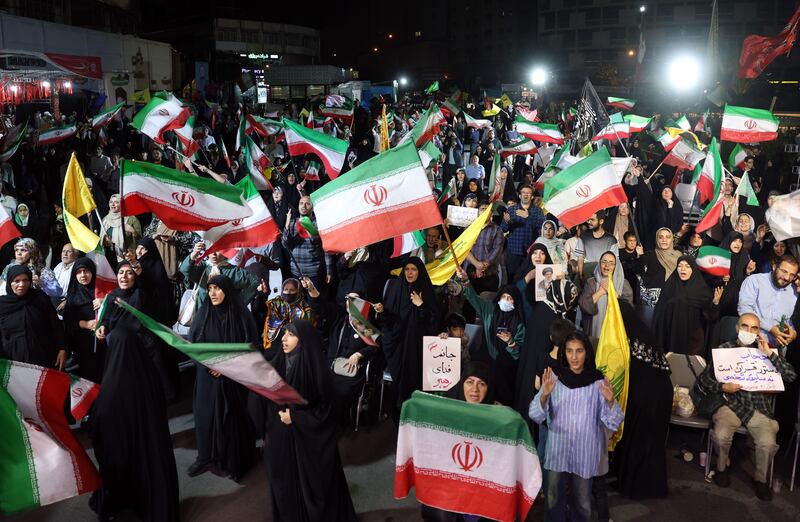
Israel’s strikes on Monday came just hours after Trump had called the Israeli prime minister, Binyamin Netanyahu, to urge him not to retaliate immediately for an Iranian missile attack on Sunday night, with the US president saying: “I call all the shots. He [Netanyahu] doesn’t call the shots.”
Iranian state media reported explosions in Tehran, Isfahan, Karaj and Tabriz, and Iran’s Revolutionary Guards said Israel had used air-launched ballistic missiles in its attack.
Iran closed the airspace around Tehran’s Imam Khomeini international airport – the country’s main airfield – after the Israeli attack.
The White House did not respond to messages about the Israeli strikes and whether they were done in coordination with the US.