Before being turned into boards, beams or charcoal, thousands of cubic meters of wood travel river routestrails and corridors controlled by criminal structures in different regions of the country. Behind this illegal economyauthorities have identified disputes over territorial control in areas of high forest wealth, especially in departments of the Colombian Amazon.
The figures known by EL TIEMPO show that the wood seizures made by the Colombian Navy increased during 2026. Between January 1 and May 20, 2,426 cubic meters of wood, compared to the 1,481 cubic meters reported in the same period of 2025. The increase reaches 64 percent.
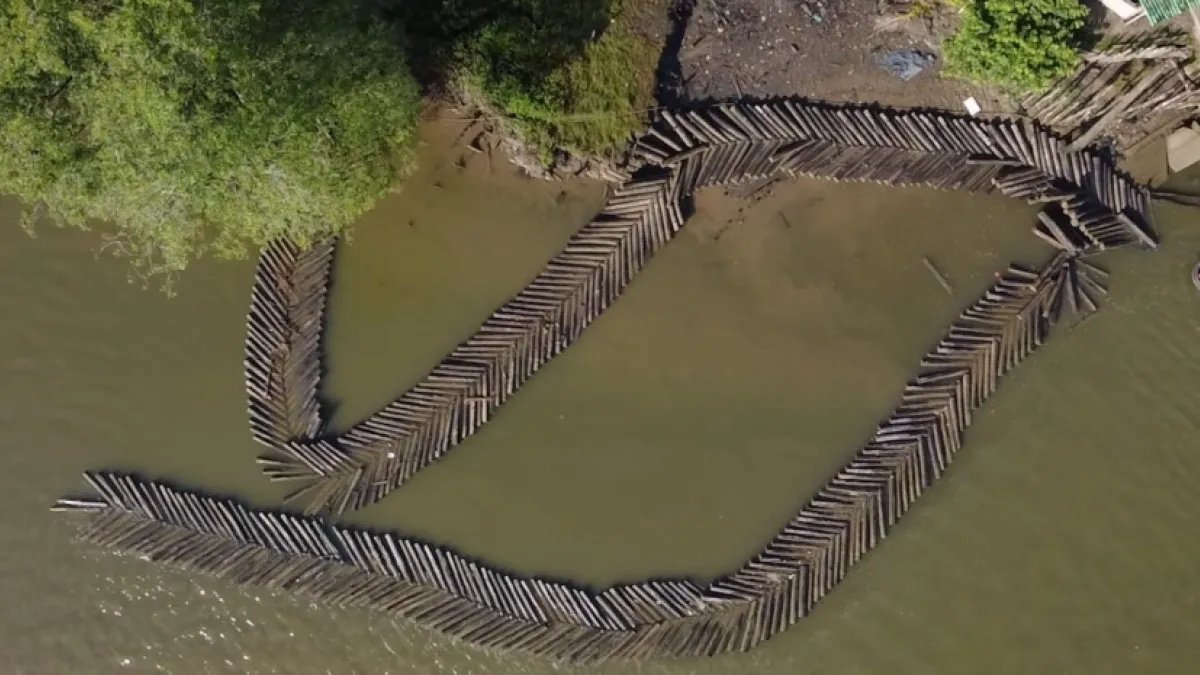
The Navy reports record seizures of illegal timber. Photo:Private file.
Official records also indicate that during 2024 they were seized 3,119 cubic meters and that in all of 2025 the figure reached 5,367 cubic metersone of the highest in recent years.
Although the largest seizures are concentrated in departments such as Valle del Cauca, Chocó, Nariño and Antioquia, the alerts about the illegal logging They also remain in jungle regions such as Caquetá, Guaviare, Meta, Amazonas and Putumayo, where forestry activity is often intertwined with other illegal economies and with disputes over control of extensive rural areas.
Specifically, researchers and environmental authorities have warned on different occasions that wood has become a funding source for criminal organizations who exercise control over forest reserve areas and strategic mobility corridors.
In several of these regions, phenomena of deforestationexpansion of the agricultural frontier, illegal mining, drug trafficking and presence of armed groups. The control of these activities has been one of the factors that has deepened the confrontations between illegal structures in the Colombian Amazon.
The Navy reports record seizures of illegal timber. Photo:Private Archive.
One of the most recent episodes occurred in Guaviarewhere clashes between factions of the FARC dissidents they left more than 45 people deadincluding several minors. The authorities have indicated that behind these disputes there is a fight for territorial control and of the illicit economies present in the region, including activities related to the exploitation of natural resources.
Regarding those directly responsible for the seized shipments, intelligence agencies point out that the FARC dissidentsmainly those of ‘Iván Mordisco’ and ‘Calarcá’ they would be behind this environmental crime.
The Navy data also allows us to identify the areas where the most wood has been seized during the last three years. Cauca Valley tops the list with 2,420 cubic metersfollowed by crashed with 2,158, Nariño with 1,805, Antioch with 1,222 and Bolivar with 920 cubic meters.
Regarding the most seized species, the sajo takes first place. Only in 2026 did the authorities seize 1,189 cubic meters of this wood, followed by the oak with 558 cubic meters. Species such as higuerón, caracolí, tangare-mangrove and ceiba also appear.
The Navy specified that its function includes the process of seizure and make available to the competent authorities the seized wood. Does not carry out research nor destination or use of the seized material.
Jesus Blanquicet
Justice Deputy Editor