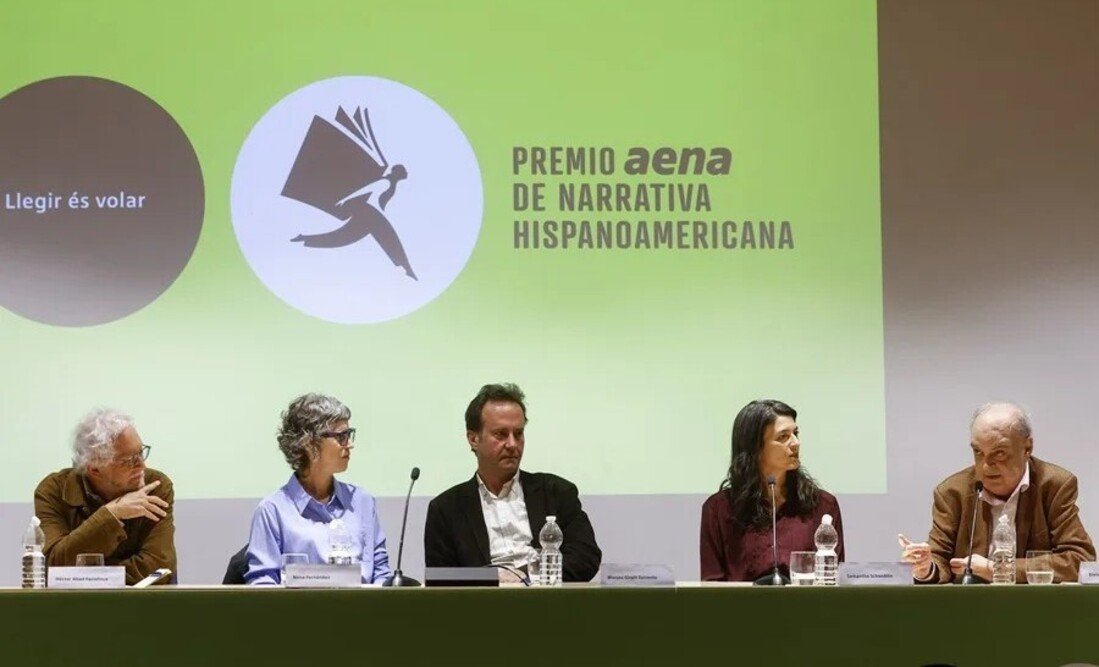
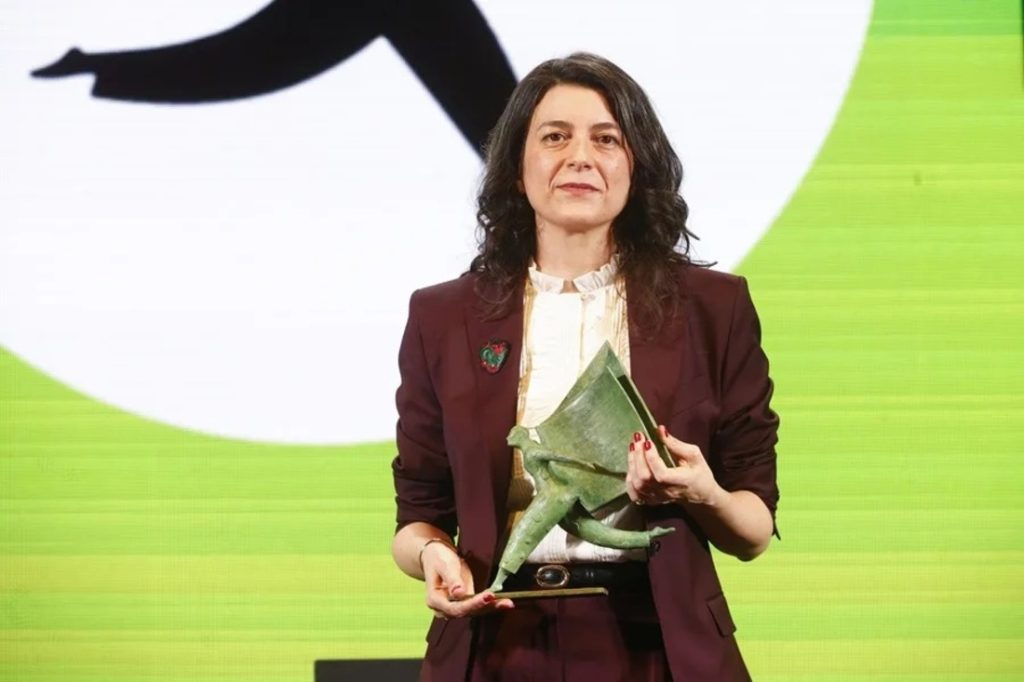
The creation of a new literary prize with a prize of one million euros has opened an intense debate in Spain. Not because of the quality of the winning work —by the Argentine writer Samanta Schweblin—, widely recognized in the literary world, but for the origin of the funds and the model that the award represents. The controversy arose even before the name of the winner was known, when the amount of the prize was announced, and the debate continues even today, even beyond the cultural sector.
The Aena Award for Hispanic American Narrative, awarded on April 8, 2026, is promoted by Aena – the company that manages the airport network in Spain and which has majority participation from the State – and is among the best-endowed awards in the Hispanic field. It is equal in amount to the Planeta Prize and has a similar level to the Nobel Prize of Literature, which awards 11 million Swedish crowns (about 934,000 euros, according to the quote at the time of the last delivery). The figure, however, represents around 0.05% of the company’s net profit in 2025.
The focus on public money
“I am not against literary awards or writers receiving financial compensation. But the use of public money in this area, when it reaches such high levels, is difficult to justify, not to mention openly disproportionate,” says Spanish writer Carmen Domingo.
“What I am against is the use of public money in such an… obscene way,” he told DW.
Domingo also warns about a broader trend: “The border between literature and the market is becoming increasingly blurred, and suspicions are growing about the influence of large publishing groups and the inclination to reward already established authors. And yet, something essential seems to be forgotten: prestige cannot be bought with money.”
Between recognition and criticism
Meanwhile, for the Argentine writer living in Berlin, Esther Andradi, the controversy is difficult to understand: “The majority of literary awards and scholarships have a business or state imprint. I don’t understand the criticism: then we should also question all the foundations that award awards,” she tells DW.
Andradi also questions criticism of the amount of the award: “Why is it not criticized that star soccer players win in a match the equivalent of several literary prizes? It seems that literature has to be associated with precariousness, as if misery made us better.”
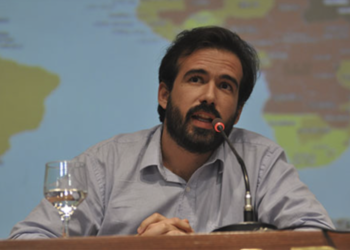
“In the moralistic cultural world, it is annoying that an external agent breaks the environment of poverty in which we writers have to live if we aspire to literary purity,” he slipped, ironically, from the pages of the newspaper The Country the writer Sergio del Molino, in the same sense.
Millionaire prizes and structural gaps
A more nuanced look provides Juan Casamayor, head of the publishing house Páginas de Espuma, where Samanta Schweblin published Seven empty houses. In his opinion, rewarding quality works with large sums is positive, but it reveals a deeper tension: “You cannot blame the initiatives that reward good books, but in an ecosystem where many writers live in precarious conditions, an obvious imbalance is generated,” he analyzes when consulted by this medium.
In his opinion, the problem appears when these recognitions are not accompanied by broader policies: “Large resources are allocated to a few books, while there is a lack of projects to promote reading, more work in the educational field and more sustained support for the entire book sector, from publishers to bookstores.”
In a similar vein, the poet Yolanda Castaño (Spanish National Poetry Prize 2023) values that the award is committed to literary quality over purely commercial criteria, but warns about its effects: “The award accentuates the pyramid of literary creation; one million euros for an author and more precariousness for the base,” she says in an interview with DW.
Castaño expands on this idea by focusing on the structure of the sector: “Authors continue to be the weakest link in a chain that tends to exploit them in exchange for symbolic recognition. The panorama is so unequal that it can be a deterrent and push many talents out of literature.”
In this context, these dynamics reflect a broader debate about the place of literature in cultural policies and the contemporary economy. As the title of the award-winning work suggests—unintentionally— The good evilthe discussion moves precisely in that ambivalence: between the recognition of literature and the conflicts generated by its financing.