Change font size:
Tirana Times, June 10, 2026 — Prime Minister Edi Rama has sought to link the growing anti-government protests over the planned tourism project in Zvërnec with foreign interests, suggesting that Greek media and online platforms have joined domestic opponents in trying to undermine what he describes as a historic investment for Albania.
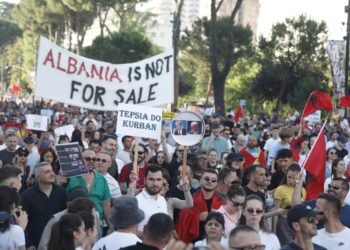
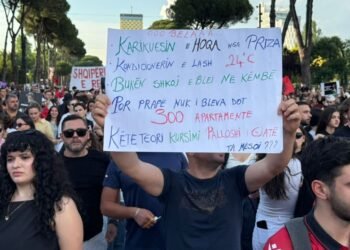
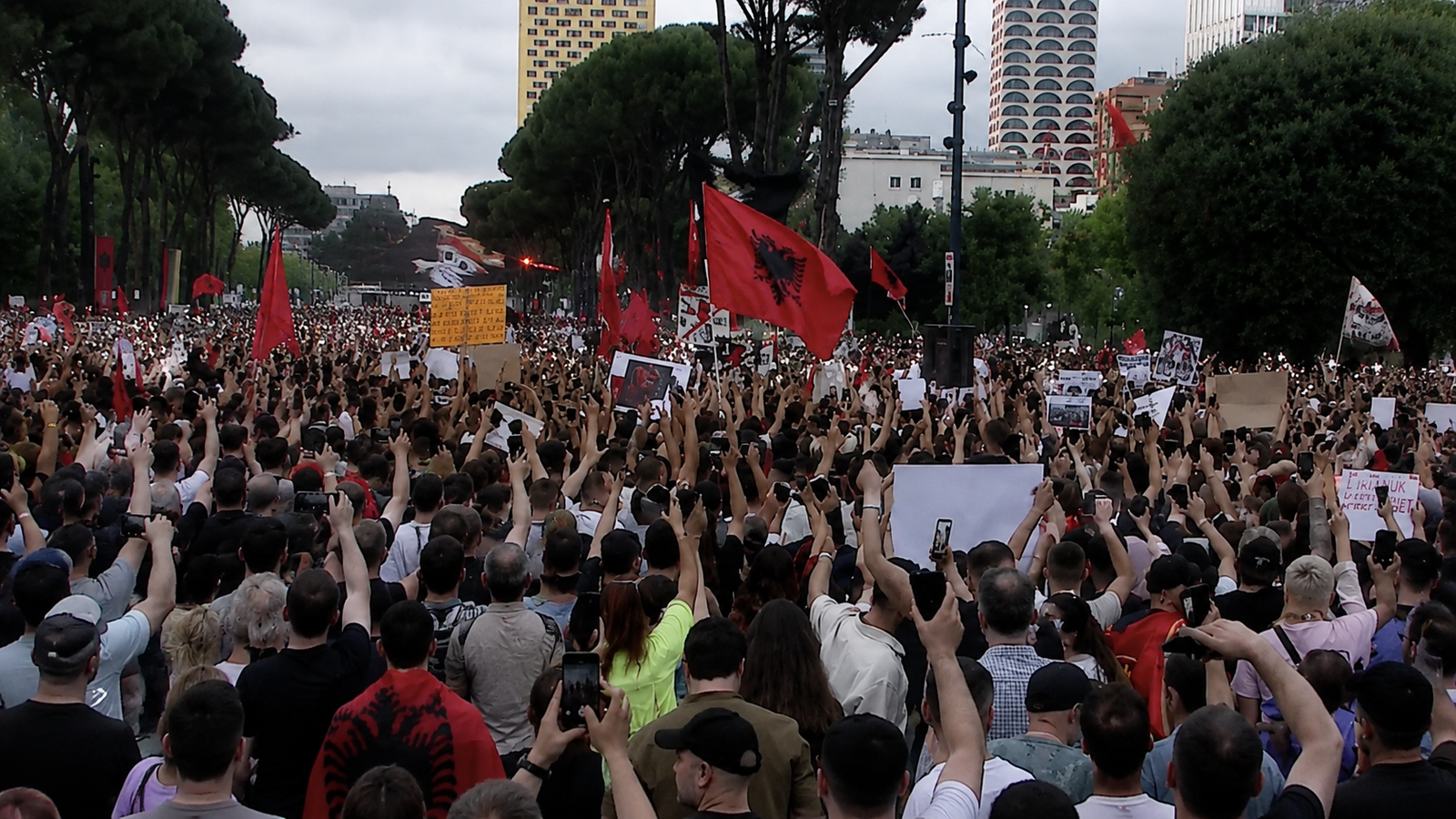
The protests, which began after the fencing of land in the protected Zvërnec-Narta area and the violent treatment of a protester by private security guards, have expanded into a broader political challenge to the government. Demonstrators have raised concerns over transparency, property claims, environmental protection and the role of politically connected foreign investors in the proposed multibillion-euro resort.
Rama, however, has framed the opposition to the project as part of a larger campaign against Albania’s development ambitions. In a social media post, he argued that Albania is aiming for what he called the “Olympus of tourism” through a 4 billion-euro investment involving American and Qatari partners. He also suggested that Greek media outlets and pages with large followings in Greece were amplifying the protesters’ message, implying that they were aligned with those trying to block the project.
“And for the first time in 35 years, Greek media and pages with millions of followers in Greece have become one with the eagles,” Rama wrote, using irony to describe the protesters and claiming that the project would bring prestigious hotels, 10,000 jobs and a major boost to Albania’s economy.
The government’s attempt to externalize the causes of the protests has followed a broader pattern in recent days. Rama has also said that Iran is exploiting the unrest, claiming that Albanian authorities have data and would publish facts to support that allegation. He said Albania has been in a cyber conflict with Iran for several years and described the controversy around Zvërnec as “a big attack” aimed at killing the project before it is born.
But analysts say the suggestion that Greece is behind the protests is weak and distracts from the real domestic causes of the unrest.
A senior foreign policy expert at the Albanian Institute for International Studies said the argument “does not appear to be based on facts and is difficult to take seriously.”
“I am afraid that suggesting Albania could compete with Greek tourism, or that Greece would fear the development of Albanian tourism, is not a serious approach,” the expert said.
“Rather than a fact-based analysis, this seems more like an attempt to shift attention away from the real causes of the protest.” The expert added that Greek media coverage of a major protest in a neighboring country does not amount to interference. Greece and Albania have long-standing political, economic and social ties, including a large Albanian community in Greece, cross-border tourism and unresolved bilateral issues.
The controversy has become politically sensitive because the Zvërnec project is not only about tourism. Opponents argue that the government has failed to provide sufficient transparency about ownership, environmental impact, procedures and the identity and role of the investors. The incident involving private guards dragging a protester in front of police triggered public anger and led to arrests, the revocation of the security company’s license and the dismissal of the Vlora police chief, according to the material.
Rama has rejected accusations that the government is “selling Albania.” In comments to Al Jazeera cited in the material, he said the project concerns private property and a private agreement between private parties, insisting that the Albanian government has no role in selling public land. He described the investment as “a blessing for the country” and said a 4 billion-euro project in a country with a GDP of about 27 billion euros “speaks for itself.”
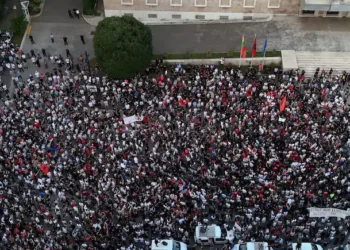
The protests, now in their second week, have increasingly moved beyond the original environmental and property concerns. They have become a broader expression of public distrust toward the government, with protesters demanding transparency and accountability and, in some cases, calling for Rama’s resignation and a technical government.
The prime minister’s foreign-blame narrative appears intended to reframe the issue as a clash between national development and outside interference. But critics argue that such claims risk deepening polarization and avoiding the central questions: who owns the land, what procedures were followed, what environmental guarantees exist, and why citizens first learned about the project through fencing, private guards and media leaks rather than through a transparent public process.
For now, Rama has vowed that the project will move forward. Protesters, meanwhile, say the dispute is not about opposing tourism, but about defending the rule of law, public accountability and one of Albania’s most sensitive coastal areas.