Wednesday, June 10, 2026
    The GeoStrategic Consensus
    No Result
    View All Result
    • Login
    • HOME
    • AMERICAS
      • Argentina
      • Brazil
      • Canada
      • Chile
      • Colombia
      • Costa Rica
      • Cuba
      • Dominican Republic
      • Ecuador
      • El Salvador
      • Greenland
      • Guatemala
      • Honduras
      • Mexico
      • Nicaragua
      • Panama
      • Paraguay
      • Peru
      • United States
      • Uruguay
      • Venezuela
    • ASIA-PACIFIC
      • Australia
      • Brunei Darussalam
      • Cambodia
      • China
      • Federated States of Micronesia
      • Fiji
      • Indonesia
      • Japan
      • Kiribati
      • Laos
      • Malaysia
      • Marshall Islands
      • Mongolia
      • Myanmar
      • Nauru
      • New Zealand
      • North Korea
      • Palau
      • Papua New Guinea
      • Philippines
      • Samoa
      • Singapore
      • Solomon Islands
      • South Korea
      • Taiwan
      • Thailand
      • Timor-Leste
      • Tonga
      • Tuvalu
      • Vanuatu
      • Vietnam
    • CARICOM
      • CARICOM – Non-English
        • Haiti
        • Suriname
      • CARICOM Associates
        • Anguilla
        • Bermuda
        • British-Virgin-Islands
        • Cayman-Islands
        • Curacao
        • Turks-and-Caicos
      • CARICOM English
        • Antigua and Barbuda
        • Barbados
        • Belize
        • Dominica
        • Grenada
        • Guyana
        • Jamaica
        • Montserrat
        • Saint Kitts and Nevis
        • Saint Lucia
        • Saint Vincent and the Grenadines
        • The Bahamas
        • Trinidad and Tobago
    • EURASIA
      • Armenia
      • Azerbaijan
      • Balarus
      • Georgia
      • Kazakhstan
      • Kyrgyzstan
      • Moldova
      • Russia
      • Tajikistan
      • Turkmenistan
      • Ukraine
      • Uzbekistan
    • EUROPE
      • Albania
      • Andorra
      • Austria
      • Bosnia and Herzegovina
      • Bulgaria
      • Croatia
      • Cyprus
      • Czech Republic
      • Denmark
      • Estonia
      • Finland
      • France
      • Germany
      • Greece
      • Holy See
      • Hungary
      • Iceland
      • Ireland
      • Italy
      • Kosovo
      • Latvia
      • Liechtenstein
      • Lithuania
      • Luxembourg
      • Malta
      • Monaco
      • Montenegro
      • Netherlands
      • North Macedonia
      • Norway
      • Poland
      • Portugal
      • Romania
      • San Marino
      • Serbia
      • Slovakia
      • Slovenia
      • Spain
      • Sweden
      • Switzerland
      • United Kingdom
    • MIDDLE EAST AND NORTH AFRICA
      • Algeria
      • Bahrain
      • Egypt
      • Iran
      • Iraq
      • Israel
      • Jordan
      • Kuwait
      • Lebanon
      • Lybia
      • Morocco
      • Oman
      • Palestinian Territories
      • Qatar
      • Saudi Arabia
      • Syria
      • Tunisia
      • Turkey
      • United Arab Emirates
      • Western Sahara
      • Yemen
    • SOUTH ASIA
      • Afghanistan
      • Bangladesh
      • Bhutan
      • India
      • Maldives
      • Nepal
      • Pakistan
      • Sri Lanka
    • SUB-SAHARAN AFRICA
      • Angola
      • Benin
      • Botswana
      • Burkina Faso
      • Burundi
      • Cabo Verde
      • Cameroon
      • Central African Republic
      • Chad
      • Comoros
      • Cote d’Ivoire
      • Democratic Republic of the Congo
      • Djibouti
      • Equatorial Guinea
      • Eritrea
      • Eswatini
      • Ethiopia
      • Gabon
      • Gambia
      • Ghana
      • Guinea
      • Guinea Bissau
      • Kenya
      • Lesotho
      • Liberia
      • Madagascar
      • Malawi
      • Mali
      • Mauritania
      • Mauritius
      • Mozambique
      • Namibia
      • Niger
      • Nigeria
      • Republic of the Congo
      • Rwanda
      • Sao Tome and Principe
      • Senegal
      • Seychelles
      • Sierra Leone
      • Somalia
      • South Africa
      • South Sudan
      • Sudan
      • Tanzania
      • Togo
      • Uganda
      • Zambia
      • Zimbabwe
    • HOME
    • AMERICAS
      • Argentina
      • Brazil
      • Canada
      • Chile
      • Colombia
      • Costa Rica
      • Cuba
      • Dominican Republic
      • Ecuador
      • El Salvador
      • Greenland
      • Guatemala
      • Honduras
      • Mexico
      • Nicaragua
      • Panama
      • Paraguay
      • Peru
      • United States
      • Uruguay
      • Venezuela
    • ASIA-PACIFIC
      • Australia
      • Brunei Darussalam
      • Cambodia
      • China
      • Federated States of Micronesia
      • Fiji
      • Indonesia
      • Japan
      • Kiribati
      • Laos
      • Malaysia
      • Marshall Islands
      • Mongolia
      • Myanmar
      • Nauru
      • New Zealand
      • North Korea
      • Palau
      • Papua New Guinea
      • Philippines
      • Samoa
      • Singapore
      • Solomon Islands
      • South Korea
      • Taiwan
      • Thailand
      • Timor-Leste
      • Tonga
      • Tuvalu
      • Vanuatu
      • Vietnam
    • CARICOM
      • CARICOM – Non-English
        • Haiti
        • Suriname
      • CARICOM Associates
        • Anguilla
        • Bermuda
        • British-Virgin-Islands
        • Cayman-Islands
        • Curacao
        • Turks-and-Caicos
      • CARICOM English
        • Antigua and Barbuda
        • Barbados
        • Belize
        • Dominica
        • Grenada
        • Guyana
        • Jamaica
        • Montserrat
        • Saint Kitts and Nevis
        • Saint Lucia
        • Saint Vincent and the Grenadines
        • The Bahamas
        • Trinidad and Tobago
    • EURASIA
      • Armenia
      • Azerbaijan
      • Balarus
      • Georgia
      • Kazakhstan
      • Kyrgyzstan
      • Moldova
      • Russia
      • Tajikistan
      • Turkmenistan
      • Ukraine
      • Uzbekistan
    • EUROPE
      • Albania
      • Andorra
      • Austria
      • Bosnia and Herzegovina
      • Bulgaria
      • Croatia
      • Cyprus
      • Czech Republic
      • Denmark
      • Estonia
      • Finland
      • France
      • Germany
      • Greece
      • Holy See
      • Hungary
      • Iceland
      • Ireland
      • Italy
      • Kosovo
      • Latvia
      • Liechtenstein
      • Lithuania
      • Luxembourg
      • Malta
      • Monaco
      • Montenegro
      • Netherlands
      • North Macedonia
      • Norway
      • Poland
      • Portugal
      • Romania
      • San Marino
      • Serbia
      • Slovakia
      • Slovenia
      • Spain
      • Sweden
      • Switzerland
      • United Kingdom
    • MIDDLE EAST AND NORTH AFRICA
      • Algeria
      • Bahrain
      • Egypt
      • Iran
      • Iraq
      • Israel
      • Jordan
      • Kuwait
      • Lebanon
      • Lybia
      • Morocco
      • Oman
      • Palestinian Territories
      • Qatar
      • Saudi Arabia
      • Syria
      • Tunisia
      • Turkey
      • United Arab Emirates
      • Western Sahara
      • Yemen
    • SOUTH ASIA
      • Afghanistan
      • Bangladesh
      • Bhutan
      • India
      • Maldives
      • Nepal
      • Pakistan
      • Sri Lanka
    • SUB-SAHARAN AFRICA
      • Angola
      • Benin
      • Botswana
      • Burkina Faso
      • Burundi
      • Cabo Verde
      • Cameroon
      • Central African Republic
      • Chad
      • Comoros
      • Cote d’Ivoire
      • Democratic Republic of the Congo
      • Djibouti
      • Equatorial Guinea
      • Eritrea
      • Eswatini
      • Ethiopia
      • Gabon
      • Gambia
      • Ghana
      • Guinea
      • Guinea Bissau
      • Kenya
      • Lesotho
      • Liberia
      • Madagascar
      • Malawi
      • Mali
      • Mauritania
      • Mauritius
      • Mozambique
      • Namibia
      • Niger
      • Nigeria
      • Republic of the Congo
      • Rwanda
      • Sao Tome and Principe
      • Senegal
      • Seychelles
      • Sierra Leone
      • Somalia
      • South Africa
      • South Sudan
      • Sudan
      • Tanzania
      • Togo
      • Uganda
      • Zambia
      • Zimbabwe
    No Result
    View All Result
    Agentially
    No Result
    View All Result
    Home AMERICAS United States

    Richard Pryor’s daughter grapples with the complex relationship she had with her father — and his use of the n-word

    The Analyst by The Analyst
    June 10, 2026
    in United States
    Richard Pryor’s daughter grapples with the complex relationship she had with her father — and his use of the n-word


    • Elizabeth Stordeur Pryor, daughter of comedy legend Richard Pryor, has written a memoir exploring her complicated relationship with her father.
    • She became a scholar specializing in the history of the n-word, only later realizing her focus was connected to her father’s use of it.
    • Her book reveals Richard Pryor’s struggles with addiction and loneliness while examining how he used the racial slur in his comedy.

    AI-generated summary was reviewed by a CNN editor.

    READ ALSO

    Opinion | California’s Excuses Are Damaging Faith in Government

    NASA reveals Artemis III crew and mission update

    Comic legend Richard Pryor used the n-word so much during his standup routines that he once said, “I said it over and over like a preacher singing hallelujah.”

    Yet one of the most notorious examples of his ability to wield the n-word as a comic weapon took offstage. It happened when he challenged a White journalist who used the slur — not once but twice — during an interview that aired on prime-time television.

    The exchange took place in 1979 when ABC’s Barbara Walters interviewed Pryor at the peak of his fame. He had become a TV and movie star after releasing several Grammy-winning standup albums. During the interview, held at Pryor’s home, Walters asked the comedian about his repeated use of the racial slur.

    “When you’re onstage, you talk about — see, it’s hard for me to say — you talk about n***ers,” Walters said, pronouncing the entire word.

    “You just said it. You said it very good,” Pryor told Walters as her film crew erupted in nervous laughter.

    Walters looked visibly flustered, and Pryor added with a sly grin, “This is not the first time you said it.” Walters insisted it was the first time — before using the full slur again without hesitation.

    It was a classic Pryor moment. He deftly turned a critique of his racial humor around and forced a White person to confront uncomfortable truths about their own ease in voicing a racial slur. And he got laughs doing it.

    Comedian Richard Pryor is interviewed by Barbara Walters in 1979. The interview is remembered for its frank discussion on the use of the n-word.

    But there was a hidden witness to that exchange: Pryor’s daughter. Elizabeth Stordeur Pryor, then 12, sitting just out of the camera’s view and watching in astonishment. She says her father had told her to never allow a White person to use the n-word, but here was a White woman dropping the slur in his face.

    “I don’t know if there’s anyone … appearing Whiter than Barbara Walters in that moment with her bouffant hair style hair, pink lips, pink clothes and daintiness,” Elizabeth Pryor tells CNN today. “And she’s here with my father using the n-word and he calls her out for it. I wasn’t sure what’s going to happen.”

    That moment would take on far more meaning for Elizabeth Pryor than she could realize at the time. She went on to become a scholar studying the n-word. But it took her years before she realized that her obsession with the term had anything to do with her famous father.

    This is the journey she recounts in an engrossing new memoir, “Something We Said: Richard Pryor, a Notorious Word, and Me.” The book is a backstage look at some of the most publicized events in Pryor’s life: His tumultuous relationship with women (he was married seven times), his drug addiction, his decision to renounce using the n-word after traveling to Kenya, and his eventual death from a heart attack at 65 after battling multiple sclerosis.

    It’s also an account of her struggles growing up as the daughter of Pryor and Maxine Pryor, a Jewish woman, when interracial relationships were still taboo.

    “He struggled to show up as a parent, and I never felt funny enough, or creative enough, or Black enough to be his daughter,” she writes in the book.

    The memoir also is a study of the history of the n-word. Today Elizabeth Stordeur Pryor is a professor of history at Smith College in Massachusetts, where she specializes in the study of a word that’s been called “the nuclear bomb of racial epithets.” She gave a TED Talk in 2020 titled, “Why it’s so hard to talk about the n-word.”

    Her father, though, made the n-word the centerpiece of his comedy on albums such as “That N***er’s Crazy” and “Bicentennial N***er”. He didn’t use the slur to shock, but to expose racism and reveal facets of Black American culture unknown to most White Americans. One commentator said Pryor’s humor was “the most poignant and penetrating comedic view of African-American life ever afforded the American public.”

    A portrait of Elizabeth Stordeur Pryor, scholar and daughter of comedian Richard Pryor.

    Pryor was not the first Black comedian to use the n-word. Dick Gregory, the comedian and civil rights activist, used the slur as the title of his 1964 autobiography and in some of his routines. And enslaved African Americans used the n-word in work songs and oral narratives to signify strength and ingenuity.

    Still, some Black people have long insisted that no one should ever use the word, regardless of circumstances.

    In her book, Elizabeth Pryor writes that “the n-word could be poison or antidote, depending on who controlled the mic.” She says her father made a “superhero out of a slur.” He “tamed it like a lion in the ring, and invoked it to empower the very people it was meant to hurt.”

    Elizabeth Pryor talked to CNN about what her father was like offstage, why she waited years before listening fully to his comedy albums and what she thinks of Black hip-hop artists who use the n-word today. The conversation was edited for brevity and clarity.

    My father was really famous in the 1970s—a groundbreaking comedian and a household name. In some ways, he started becoming as famous for his off-stage foibles or demons as he did for his stand-up. I was a young teenager when all of this was happening—like 12, 13, 14— and people would just always ask me these overly familiar questions: Do you know him? Are you close? How often do you see him?

    These questions felt like they were invalidating my relationship with my father. And after the accident (Pryor almost killed himself in 1980 after he set himself on fire while freebasing cocaine), people always would ask me questions, like, does he still do drugs? It just felt safer and easier not to say yes.

    I think it was in 1980 when my father was on a drug-and-alcohol spiral. At the time I didn’t know this, but he made a suicide attempt by pouring liquor on himself and lighting it on fire. He burned two-thirds of his body and the whole thing was very dramatic (Pryor ran out of his house, engulfed in flames, before police tracked him down). He’s in the hospital for six or more weeks.

    There were a lot of public jokes about it, where people would take a match, light it, bounce it and say what’s this? It’s Richard Pryor running down the street. And that kind of joke made its way into my social circles. I would hear it at parties, bar mitzvahs, and boys would make these jokes in front of me. It wasn’t even that I was embarrassed of my father. I never felt embarrassed of my father. I was proud of him. I felt embarrassed of the scrutiny.

    I was too young when he started. It was really in the last decade as I was doing this work. I’m studying the n-word because a White student said the n-word in my classroom, quoting a line from “Blazing Saddles” — a film my father co-wrote — and I became undone. And as I started doing this teaching and reading more about this word, my father’s name was like in everything that I read because of his subversive use of the word.

    Photos of comedian Richard Pryor

    The more that I became entrenched in that work, the more it became impossible to ignore that if I was really going to be a scholar of the n-word, I had to become familiar with his work. So I started listening and I was like, oh, everybody’s been right about him. He is a groundbreaking genius.

    He was quiet. I used to always get the question — is he funny at home? And he really wasn’t. He was down a lot, but even when he wasn’t down, he wasn’t cracking jokes. But he was a magical person. I spent most of my time growing up with my mother, but I could say things to my father that I could never say to her, and he would get it.

    I was the last one to know. Even as I was lecturing about Richard Pryor (she chuckles), I still didn’t get that this was legacy. This was inheritance. This was ancestral. When I started saying no when people asked if I was related to him, that was more than just a no. It was also kind of a compartmentalizing of that relationship.

    I fought for him at the end of his life, and he died a very lonely death from a very debilitating, chronic illness. The last years of his life were sort of clouded by that. And maybe this is an academic problem, just not really understanding how the personal and professional come together. But as I got deeper and deeper — this is going to sound ridiculous — but after this conversation, I’m going to feel closer to him. That’s been happening to me. I just feel him so strongly now.

    There’s a scene in the book when your dad kept saying, ‘Nobody is going to love you,’ and it took you awhile to realize he was talking about himself. What does that say about him?

    I think my father felt really lonely. In the old notebooks of his I found, and I don’t know this for a fact, but I feel pretty confident that in the ’60s, he was not in Alcoholics Anonymous or a 12-step group or anything like that. But even in that notebook, he has lists of his hangups. He’s haunted by his own behavior and haunted by his childhood.

    I’m sure he was insecure about whether the people with him even loved or saw him or knew him. I remember sitting in rooms with a bunch of men, and they just laughed at everything he said. I’m not talking about on the stage, but just in his living room.

    Comedian Richard Pryor in 1977, near the peak of his fame.

    That was such a powerful, affirming moment for me. It’s on the heels of all my own pain around the word already in my life at like 14 or 15 years old. (Pryor says she was called the n-word by classmates as a teenager.) I felt really proud of him even without quite understanding then the impact of the trip to Africa. The epiphany for him around the word is entrenched in his experience in a place where Black people are doing everything, and without the watchful eye of White surveillance. He’s able to see there is no use for the n-word here. It doesn’t make sense there. I was so proud of that perspective.

    I have not thought of one yet. We live in an era where there is a surrogate phrase that stands in for the word: the n-word. It doesn’t need to be said. I don’t think anything is lost when it’s not said.

    In order for this society to work (a society based on White supremacy), there has to be a dehumanizing belief that there are a group of people that are static, and cannot, no matter what, move out of this category. The n-word is not a real thing. That is an invention of Whiteness to elevate Whiteness. It doesn’t exist in reality (scientists say there is no biological basis for race; all humans are members of the same race).

    The n word — the actual word I’m speaking of here — feels like it’s an attack on enslaved people. It’s an attack on Blackness just because of Blackness. But really the word takes off as a slur when Black people start becoming free. It’s really an attack on Black prosperity, social and economic mobility, political mobility. The word is used against luminaries like Frederick Douglass when they are rising out up their enslavement. That’s really when the word takes off to be the word that we know it to be today.

    This is where you get the Malcolm X quote (in his speeches the civil rights leader often said, “What does a White man call a Black man with a Ph.D.? A n***er with a Ph.D”).

    For me, the question is always a little misguided. It’s a misdirect. The reason that the n-word works for hip-hop artists, and for people like my dad, and for Black power writers before him, is because it resonates as a kind of subversion and protest because of the inequality and social injustice that exists in the country.

    So the question to me isn’t really, should hip-hop artists start or stop using the word? But really, how can we create a society where the word doesn’t mean anything, where it doesn’t resonate? And when that happens, it will not be in hip-hop. It won’t be cutting edge. I think an artist who’s trying to use this to express the kind of subversion that hip-hop artists and poets and others do is absolutely entitled to do so.

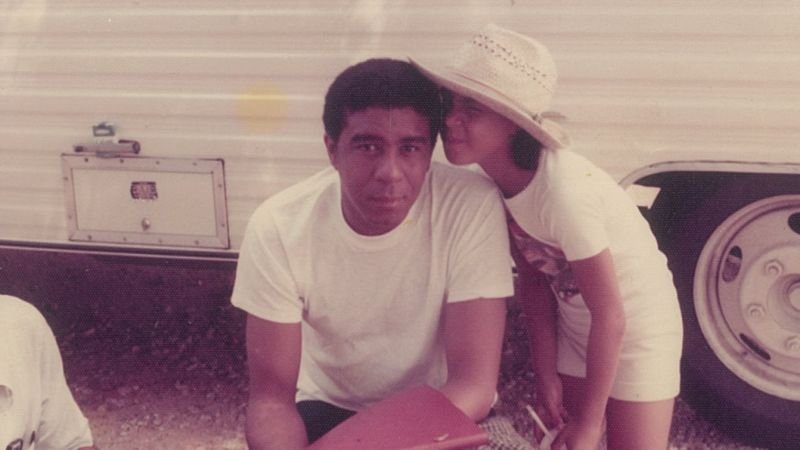
    Comedian Richard Pryor stands with his daughter Elizabeth Stordeur Pryor.

    Have you ever wondered what your father might say onstage in an era of Trump and MAGA?

    I mean, he was already doing it 50 years ago. I don’t even have to imagine, right? People often send me clips about “just us” (In one of Pryor’s routines, he says Black people go to courts looking for justice and that’s what they find: “Just us”). Its painfully relevant. That’s a bummer. So, to the question of what would he do today? I think I have an idea.

    John Blake is a CNN senior writer and author of the award-winning memoir, “More Than I Imagined: What a Black Man Discovered About the White Mother He Never Knew.”
    Source link

    Related Posts

    Opinion | California’s Excuses Are Damaging Faith in Government
    United States

    Opinion | California’s Excuses Are Damaging Faith in Government

    June 10, 2026
    NASA reveals Artemis III crew and mission update
    United States

    NASA reveals Artemis III crew and mission update

    June 10, 2026
    Why the Supreme Court Is Debating Which Founding Fathers Were Drunks
    United States

    Why the Supreme Court Is Debating Which Founding Fathers Were Drunks

    June 10, 2026
    Nancy Mace’s thrashing in South Carolina governor’s race caps a rough downfall
    United States

    Nancy Mace’s thrashing in South Carolina governor’s race caps a rough downfall

    June 10, 2026
    H-1B visas: Federal judge voids Trump’s $100,000 fee requirement
    United States

    H-1B visas: Federal judge voids Trump’s $100,000 fee requirement

    June 10, 2026
    Graham Platner Wins Maine Primary Despite Controversies
    United States

    Graham Platner Wins Maine Primary Despite Controversies

    June 9, 2026
    Next Post
    Opinion | California’s Excuses Are Damaging Faith in Government

    Opinion | California’s Excuses Are Damaging Faith in Government

    POPULAR NEWS

    Italian rescuers recover 10 bodies after migrant boat capsizes off Malta | Migration

    Italian rescuers recover 10 bodies after migrant boat capsizes off Malta | Migration

    June 9, 2026
    Thousands march for French schoolgirl murdered after police failed to question suspect | France

    Thousands march for French schoolgirl murdered after police failed to question suspect | France

    June 10, 2026
    Gulf News | IATA to Gulf News: The pace of production of sustainable aviation fuel is below expectations

    Gulf News | IATA to Gulf News: The pace of production of sustainable aviation fuel is below expectations

    June 9, 2026
    Taiwan Dunmu Goodwill Fleet concludes 104-day voyage | Taiwan News

    Taiwan Dunmu Goodwill Fleet concludes 104-day voyage | Taiwan News

    June 9, 2026
    Second round results Peru 2026 Elections: ONPE official count in Huancavelica and electoral flash live today, June 7 | Keiko Fujimori | Roberto Sánchez |

    Second round results Peru 2026 Elections: ONPE official count in Huancavelica and electoral flash live today, June 7 | Keiko Fujimori | Roberto Sánchez |

    June 9, 2026

    EDITOR'S PICK

    Solidarity and indifference – L’Osservatore Romano

    Solidarity and indifference – L’Osservatore Romano

    June 9, 2026
    Where and how big was the earthquake TODAY, June 9? Tremor reports via IGP

    Where and how big was the earthquake TODAY, June 9? Tremor reports via IGP

    June 9, 2026
    Paasisavut 2026: The application period is now open

    Paasisavut 2026: The application period is now open

    June 9, 2026

    KCNA | Article | Remarks on “Dagger in Heart of Asia” Is Intensive Manifestation of U.S. Hegemonism and Cold War Mentality

    June 9, 2026

    Recent Posts

    • The nationalized footballers who will be present at the 2026 World Cup – World Cup
    • Justice wants to take cocaine profits from footballer Promes – de Ware Tijd
    • Two cyclones off southern Brazil this week: what impact they could have in Uruguay, according to Metsul
    • Peter Clemenger: The legendary advertising executive on his remarkable 98-year life

      © 2026 Agentially - Navigating shifting sovereignties and global risk .

      Welcome Back!

      Login to your account below

      Forgotten Password?

      Retrieve your password

      Please enter your username or email address to reset your password.

      Log In
      No Result
      View All Result

        © 2026 Agentially - Navigating shifting sovereignties and global risk .

        This website uses cookies. By continuing to use this website you are giving consent to cookies being used. Visit our Privacy and Cookie Policy.