by Marinio Balsemhof
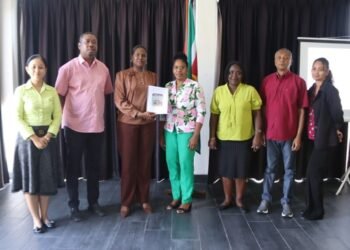
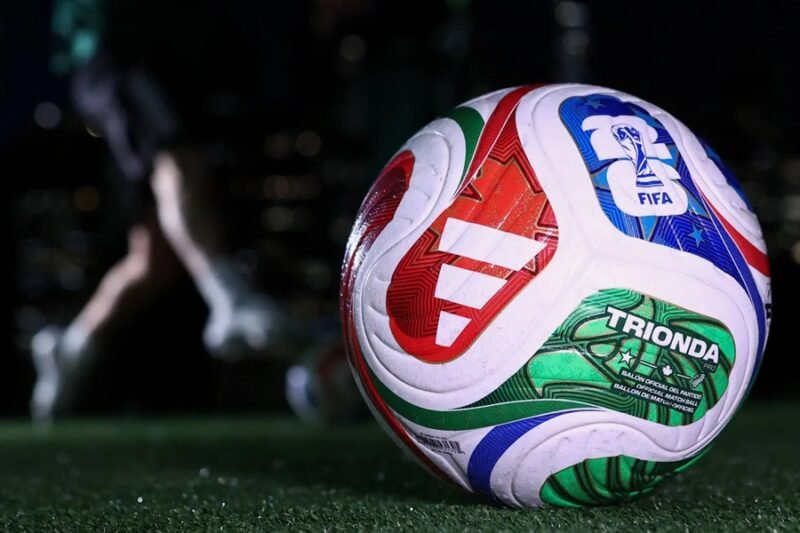
PARAMARIBO — The STVS is working to make reception possible for the whole of Suriname when the Fifa World Cup football matches will be broadcast. Agreements have therefore been made with media partners, including Telesur (ATV) and SRS. This has STVSdirector Raoul Abisoina said in a meeting with media workers on Thursday.
He also addressed reports that have circulated in recent days about the financing of the exclusive broadcasting rights for Suriname. He denied that the Surinamese government paid five hundred thousand US dollars, but refused to mention the amount despite the insistence of journalists. Vice President Gregory Russia later said in the National Assembly that the total amount is 450,000 US dollars and that the government will receive half of it. The STVS must pay the remainder yourself.
“This is the twelfth World Cup STVS will broadcast”
STVS director Raoul Abisoina
Budget item
Abisoina indicated that she was closely involved in the negotiations and acted as a contact person with Iris Latam, the company authorized to sell the rights for the region. Regarding the contribution of the STVS, he noted that the money will be raised through sponsorship. “We have approached a large number of companies for cooperation in broadcasting the World Cup.”
The director told me that STVS had included an item in its annual budget for the purchase of World Cup rights since 2020, but that item has always been deleted by the Ministry of Finance and Planning. “If it had been arranged properly at the time, it would have been included in the budget now,” Abisoina said. He referred to the 2022 World Cup. For that tournament, the rights had already been paid by the Bouterse/Brunswijk government before the change of government in 2020, so no problems arose.
Open bidding
The STVSdirector explained that an “open commercial procedure” was followed to obtain the broadcasting rights for next month’s World Cup. The World Football Association (Fifa) had initially offered several media companies the opportunity to make a bid.
However, Suriname was left out last year because the submitted bids did not meet expectations, according to the rights holders. Ultimately, the rights for the Caribbean region were awarded to Iris Latam Limited, which then negotiated separately with countries in the region.
Several Surinamese media companies were interested, but in the end the choice was made STVS. The state broadcaster’s many years of experience played an important role in this. “This is the twelfth World Cup STVS will broadcast and we have been involved in this sporting event all these years,” Abisoina emphasized.
Permission STVS
It to the STVS The exclusive right granted means that other media organizations that want to organize World Cup-related broadcasts or activities will first have to make agreements with the national broadcaster.
The agreements do not only apply to media houses. For example, organizations such as sports cafes are allowed to show the matches, but they are not allowed to charge admission. “That is only allowed with written permission from the STVS,” it was emphasized.
By the way, Abisoina denied that they deliberately work exclusively with state-owned companies. Some media companies had shown interest, but no concrete agreements were reached. Outside ATV and SRS The STVS also signed a collaboration with the radio station Trending FM 89.3.
Reception
Abisoina stated that the age-old problem that the STVS is not (well) received everywhere in Suriname has been brought to the attention of the government as the sole shareholder. However, due to lengthy procedures, it has not yet been possible to solve all technical problems, he said.
The director hopes that the STVS will be available again in several areas before the start of the World Cup, which runs from June 11 to July 19. For regions where reception problems persist, viewers will have to use alternatives such as live streams and broadcasts, he said ATV and SRS.
Despite the challenges, Abisoina said she is confident that the investments will be recouped. “If that were not the case, the supervisory board may dismiss me.”
On criticism that the STVS if the foundation was not allowed to make a profit, he responded soberly. “People are not honest. At first they think that the STVS should be self-sufficient and now they think we should not make a profit.”