One year after the Supreme Court of Justice made the six-year prison sentence final against Cristina Kirchner due to corruption, Justice could not confiscate a single cent, even though it ordered the recovery of some 685,000 million pesos.
Today that part of the case returned to the Supreme Court, which must decide whether to reject Cristina Kirchner’s last appeal and advances with the auction of its assets through a digital platform over the internet.
The former president prevented her assets from being confiscated because she presented a flood of judicial appeals in the Federal Oral Court 2 who condemned her, in the Federal Court of Criminal Cassation and now – again – in the Court itself.
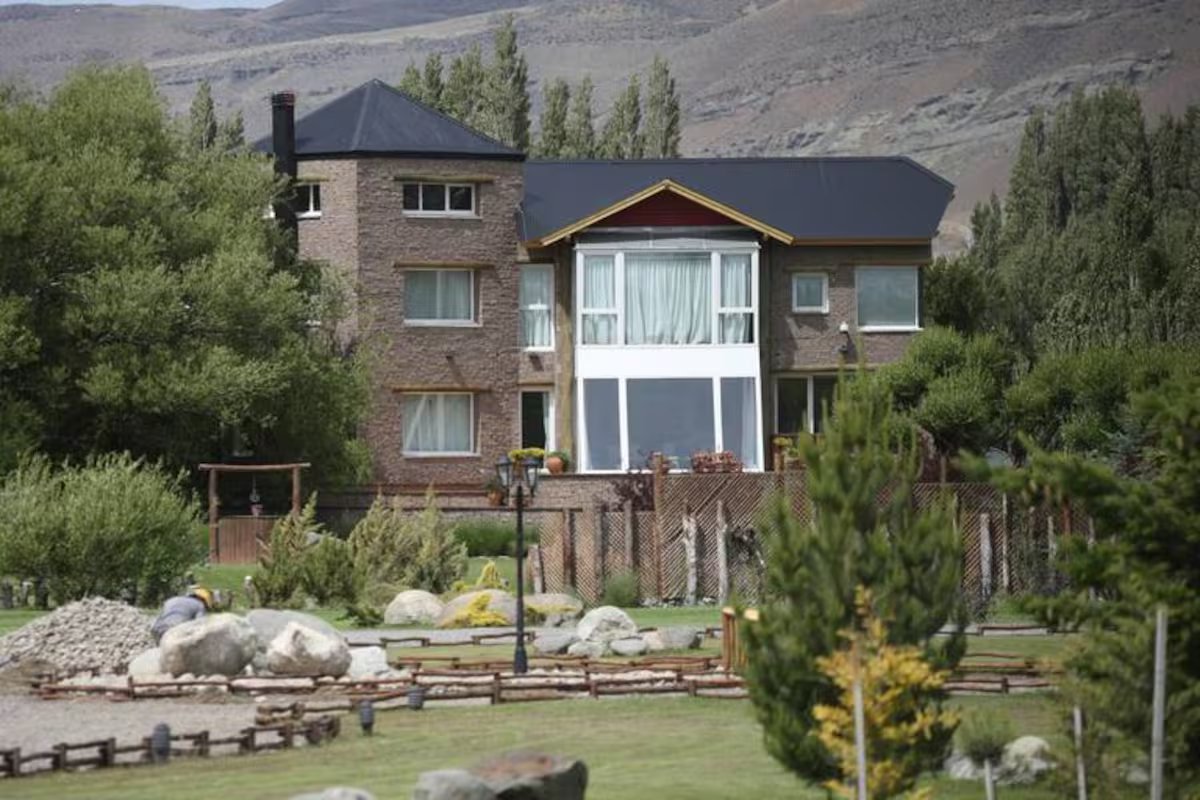
The last battle is for 111 assets that the prosecutor identified Diego Luciani and his colleague Sergio Mola so that they can be appraised and auctioned off, in order to cover that sum of money, even in part. Subtraction another group of assets identified by the prosecution that are being processed in the oral court.
The rejection of the extraordinary appeal by the Federal Court of Cassation definitively confirms the execution of the assets of Cristina Kirchner and their children Máximo and Florencia.
With the appeal rejected, the ruling on the possible confiscation is ready to be executed immediately. However, Cristina Kirchner He went to the Supreme Court of Justice through a direct appeal, which was unlikely to succeed.
In addition to six years in prison, Cristina Kirchner’s conviction for the Road Traffic case implies the confiscation of assets for some 685,000 million pesos, for which they must respond jointly all those convicted.
But, among them, the only ones who have substantial assets are Cristina Kirchner and her children, since the assets of Lazaro Baez were auctioned off in bankruptcy Austral Constructions and in the other conviction he has for money laundering, in the case of the K Money Route.
The decision to reject the extraordinary appeal was made by the judges of the Chamber IV of the Chamber of Cassation and left firm the decision to move forward with the execution of the assets. Cristina Kirchner’s defense argues that many of them were acquired before the events that led to the conviction.
The magistrates Gustavo Hornos and Diego Barroetaveña They rejected by a majority the appeals presented by the defense counsel of Cristina Kirchner, Lázaro Báez and by the attorney of Máximo Kirchner and Florencia Kirchner against the ruling that had confirmed the execution of assets to make the confiscation in the Roads case effective.
In the case of the extraordinary appeal presented by Cristina Kirchner, The three members of the Chamber agreed to declare it inadmissible. In his vote, Hornos maintained that the resources did not demonstrate the existence of a sufficient federal issue to enable the Court’s intervention. The judge reiterated the general basis for confiscation in corruption cases, noting that “crime does not constitute a legitimate title to generate legally recognized wealth” and that the institute seeks to prevent the crime from producing permanent economic benefits.
For his part, the judge Diego Barroetaveña adhered to the Hornos vote. He considered that the defenses’ grievances were limited to expressing disagreements with what was decided and that they did not raise a specific federal controversy about the scope of constitutional norms. He also understood that there were no cases of arbitrariness that justified the opening of the extraordinary instance before the Court.
The judge Mariano Borinsky agreed to declare the extraordinary appeal presented by Cristina Kirchner inadmissible. However, he maintained a partially different position regarding the appeals presented by Lázaro Báez and by the attorney for Máximo and Florencia Kirchner.
After the Federal Court of Criminal Cassation made final the sentence ordering to specify he recovered of the 685,000 million of pesosthe oral court that imposed the sentences ordered him a letter to the Supreme Court to move forward with the matter. He wants to know if, based on current regulations, any of the 111 properties to be executed It is in the interest of the Court itself for its usefulness or of the Council of the Judiciary.
The judge Rodrigo Giménez Uriburu —who convicted the former president and is in charge of carrying out the sentence—asked the Court to resolve whether any property “will be affected and assigned, for reasons of better service of justice, for its own use (by the Court) or for that of the Council of the Judiciary of the Judicial Branch of the Nation.”
The anklet
Meanwhile, the former president claimed one year into her sentence, which is the time she has been under house arrest in her home at 1111 San José, that they take off the electronic ankletextend her visitation regime and let her go out to the terrace.
But prosecutor Luciani opposed and last week the last attempt failed when the judge Rodrigo Giménez Uriburu ratified the validity of all conditions of arrest.
Regarding the visitation regime, the court authorized the Free entry exclusively for family members, doctors, custodians and lawyers. The rest of the people must, without exception, require judicial authorization.
As for the permission to go up to the terrace of the building, the court authorized its use for two hours a day between 6 and 8 p.m. In its latest resolution, it considered that Cristina Kirchner “retains the possibility of daily access to an open space suitable for the development of physical and recreational activities.”