
A regional public health campaign is urging Caribbean citizens to rethink the growing presence of unhealthy food and beverage brands in schools, arguing that educational institutions should prioritize children’s health rather than serve as platforms for corporate marketing.
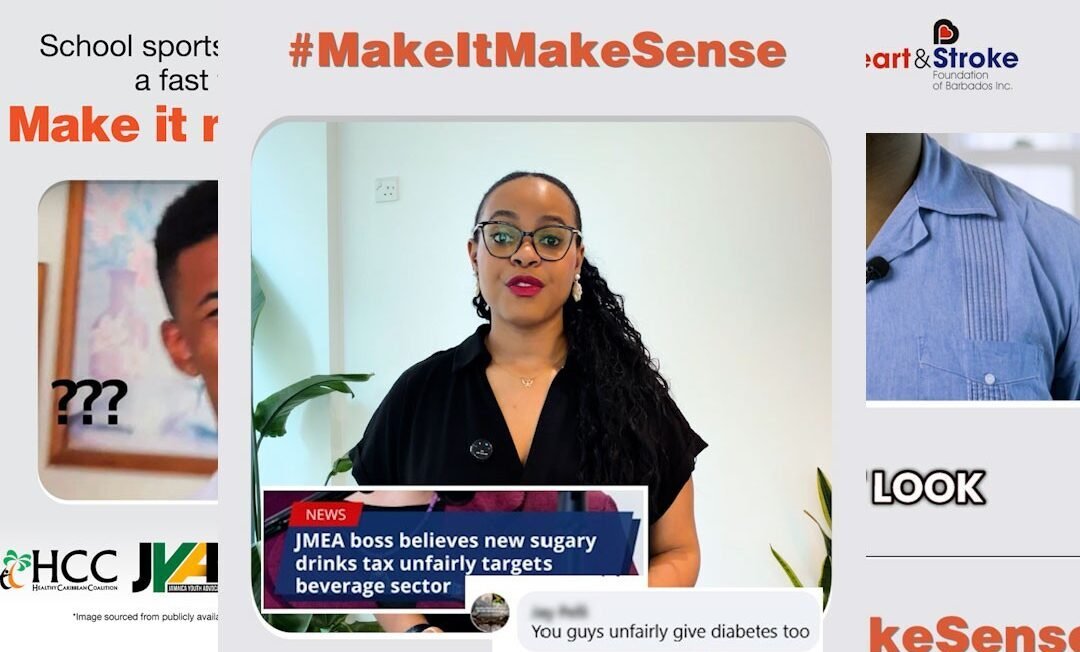
The initiative, titled “Make it Make Sense,“ has been launched by the Healthy Caribbean Coalition (HCC) in collaboration with the Heart and Stroke Foundation of Barbados (HSFB), the Heart Foundation of Jamaica (HFJ), and the Jamaica Youth Advocacy Network (JYAN). A press release explained that the campaign seeks to promote healthier school environments by reducing the influence of ultra-processed food (UPF) and beverage companies and limiting industry involvement in educational settings.
Running from May 25 to July 16, 2026, the campaign is being promoted across HCC’s Facebook and Instagram platforms in 11 Caribbean territories. Members of the public are invited to sign a petition supporting the removal of unhealthy UPF and drink marketing from schools.
The release said that the latest campaign builds on previous advocacy initiatives, including “People Over Profit See the Truth”, “For the Children”, and an earlier “Make it Make Sense” campaign. Reportedly, those efforts focused on exposing food industry influence over policymaking and implementation while encouraging evidence-based nutrition policies throughout the region. This year’s campaign shifts attention to the school environment, highlighting how sponsorship agreements, branded events, donations, and similar activities can subtly shape perceptions and become normalized over time.
Health advocates point to rising childhood obesity rates across the Caribbean, which now exceed the global average. The trend is largely linked to excessive consumption of ultra-processed foods high in sugar, sodium, unhealthy fats, and other additives. Experts warn that these dietary patterns increase the likelihood of children developing noncommunicable diseases (NCDs), including diabetes, cardiovascular disease, and certain cancers, at younger ages, as per the release.
According to the coalition, schools play a critical role in fostering healthy habits, yet the continued involvement of UPF companies often undermines those efforts. The organization argues that industry participation in schools can blur the distinction between genuine support and marketing, regardless of whether countries have formal school nutrition policies in place.
While CARICOM governments continue to pursue initiatives aimed at creating healthier school environments, HCC asserts that food and beverage marketing through sponsorships, donations, and branded educational activities remains largely unregulated. Advocates contend that these practices allow corporations to influence school culture, shape children’s attitudes toward products, and position themselves as trusted community partners.
HCC President Senator Dr. Kenneth Connell warned about the long-term consequences associated with excessive consumption of ultra-processed foods.
He encouraged people to “reflect on their own environments and how marketing of unhealthy food and drinks impact their decision-making with respect to what they consume; and imagine what that same powerful marketing does to our children, especially when it is face-to-face”.
JYAN Executive Director and attorney Shannique Bowden said the campaign seeks to expose marketing strategies that target children under the guise of community support.
“The Make it Make Sense campaign highlights how some corporate entities use corporate social responsibility to target children, knowing their vulnerabilities, with enticing donations and sponsorships, stating they are filling gaps. These forms of marketing are predatory, and violate child rights principles, and continue to add to our growing problem of child health concerns, including obesity and other NCDs”.
The Heart Foundation of Jamaica acknowledged that many schools face financial challenges, but questioned whether support should come from companies promoting unhealthy products.
“Supporting children’s well-being, now more than ever, should be the priority for All, given our fragile communities and high vulnerability to negative health outcomes including rising childhood obesity. The HFJ has been actively working to raise awareness around several health issues which are the result of, for instance, the overconsumption of sugary beverages. The National School Nutrition Policy also includes recommendations for regulation of policies banning or restricting the marketing of High Fat, Sugar and Salt (HFSS) foods in the school environment, including sponsorships, grants, and donations by UPF brands,” said HFJ Programme Manager Barbara McGaw.
HCC Communications Officer Sheena Warner-Edwards noted that alternatives to UPF sponsorships are becoming more common.
She observed that “HCC in its daily tracking has seen an increase in health-promoting/neutral companies filling this gap, including banks, insurance companies, and even smaller operations such as clothing stores and radio stations.”
The release stated that the Heart and Stroke Foundation of Barbados is also using the campaign to highlight what it describes as marketing practices that weaken efforts to protect children’s health in schools.
HSFB Chief Executive Officer Greta Yearwood described the campaign as particularly relevant given the amount of time children spend in educational settings.
“What children eat and drink impacts their health outcome as they grow and track into adulthood. If we are serious about protecting children and reducing NCDs, then tactics which encourage the consumption of foods high in fats, sugars and salt, targeting children, cannot be permitted. We need to protect public health policies from interference from vested interests!”
Campaign organizers say the widespread presence of unhealthy food and beverage branding in schools has become so commonplace that it often goes unquestioned. Through “Make it Make Sense”, they hope to encourage greater public scrutiny and support for policies that prioritize children’s health over corporate marketing interests.
They said that members of the public can add their names in support of removing unhealthy food and beverage marketing from schools through the campaign’s online petition.