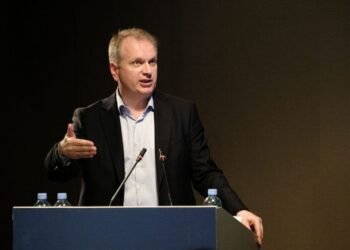
How music and psychology complement each other, how close Montenegrin and Portuguese cultures are, why he perceives the concert in Kotor as a conversation across the sea, and what he would say to Montenegrin decision-makers from the point of view of officials in a municipality near Lisbon, the opera singer, graduate psychologist, manager in the field of culture reveals in an interview for “Vijesti”. Carlos Faria dos Reis (Carlos Faria dos Reis) from Portugal.
At the beginning of February, he held a concert in Kotor called “Tribute to Kamoš”, which was dedicated to the greatest Portuguese poet. Louis de Camois (Luis de Camões) who lived in the 16th century, and in the organization of the KotorArt festival.
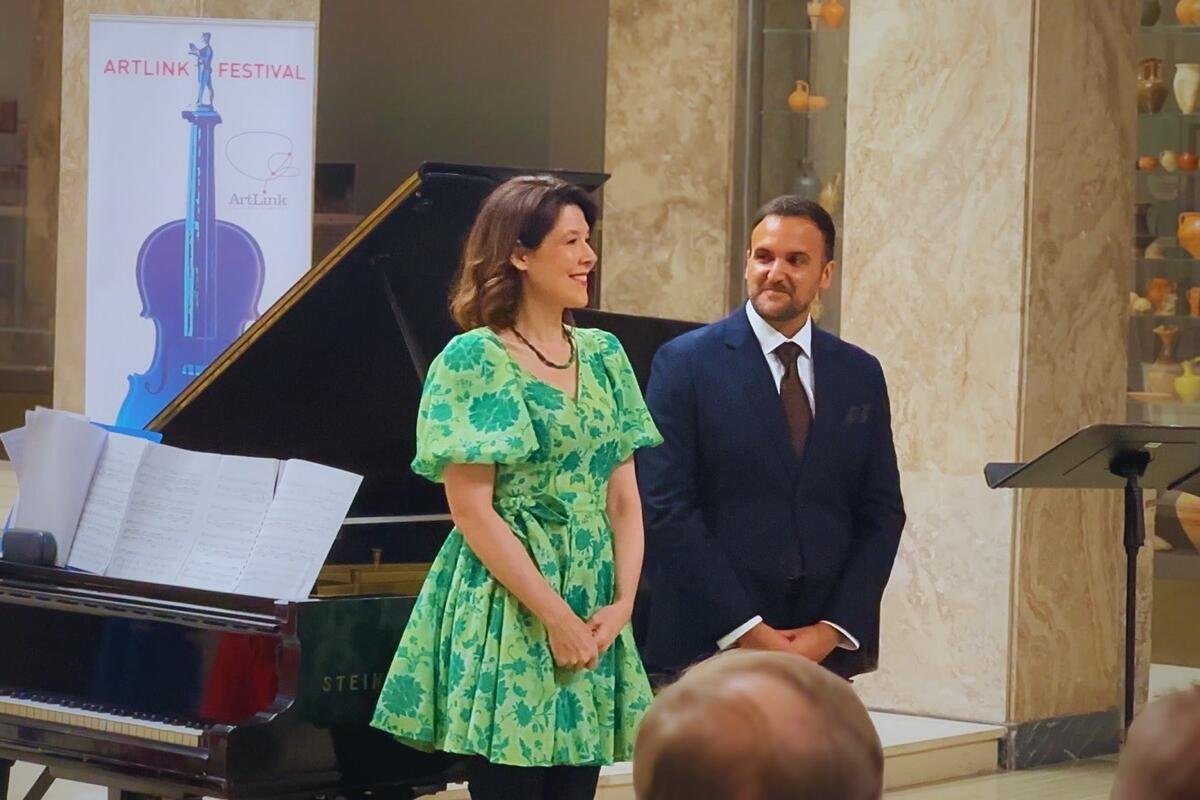
On that occasion, tenor Carlos Faria dos Reis performed with a pianist Jovanko Višekruna Janković, bringing to the audience a rich and rarely performed program of Portuguese art song, which includes more than a century of musical creativity, from early romanticism to modern interpretations of Portugal’s national identity.
The program marked the 500th anniversary of Camoise’s birth, and the Portuguese embassy included the event as part of the celebration of Portugal’s National Day on June 10. In an interview for “Vijesti”, Reiš says that on that occasion he brought “a fragment of the poetic soul of Portugal” to Montenegro.
“There is a completely natural bridge between Montenegrin and Portuguese art and culture, given that both understand the sea, history and longing as universal languages,” he says.
Tenor Carlos Faria dos Reis began his musical education with harpsichord studies at the National Conservatory in Lisbon. As a soloist and member of the Chamber Choir of Lisbon, he performed at numerous concerts in the country and abroad, participating in the productions of the National Theater “São Carlos”. He is dedicated to the research of historical interpretations of the Portuguese vocal tradition and different musical cultures. In addition to his artistic work, he has a degree in psychology and heads the Department of Culture and Art in the Municipality of Oeiraš.

In an interview with “Vijesti”, Reiš talks about the importance of Kamoš’s creativity, but also about music and art in general.
“Psychology has greatly enriched my artistic life. It has deepened my understanding of character, emotional nuances and stage fright… Music is emotional communication. Psychology provides insight into how emotions are processed, expressed and received. On the other hand, art teaches psychology about complexity and ambivalence”, he points out with a message to colleagues and officials in Montenegro that “sustainable cultural systems require continuity and vision”…
You visited Montenegro on the occasion of a concert in Kotor dedicated to the famous Portuguese artist and poet Luiz De Camois. What does this performance and tribute in Montenegro mean to you, as a performer, but also a Portuguese, how do you perceive it?
Coming to Kotor on February 4, at the invitation of the KotorArt festival, to pay tribute to Luis de Camois, has a deep symbolic meaning for me. Camoish is not only a fundamental figure of Portuguese literature, but he is also a pillar of our cultural identity.
To honor him outside of Portugal, in a city like Kotor, with its layered historical heritage and strong maritime memory, is particularly meaningful to me. As a Portuguese artist, I experienced this performance as an act of cultural dialogue. Kamois wrote about travels, encounters and sea crossings… To sing his verses on the coast of the Adriatic means to continue that expedition in a different form.

Personally, I experience this moment with humility and emotion. I also feel a certain responsibility: I’m not just performing music, I’m bringing a fragment of Portugal’s poetic soul to Montenegro.
How would you describe the meeting between the music and the poetry of Louis de Camois, and why does his verse still prove to be a powerful musical impulse today?
Kamoish’s poetry has exceptional musicality. His command of rhythm, internal cadence and emotional architecture makes his lyrics almost beg to be sung. He moves between epic grandeur and intimate lyricism with remarkable ease. This duality – monumental and deeply personal – is exactly what music strives to express. His lyrics remain powerful because they speak of timeless human experiences: longing, exile, love, destiny… These emotions transcend the ages. When translated into music, they take on breath and vibrancy; they become embodied. And it is this embodiment that keeps them alive.
How would you present the selected repertoire, how does it correspond to the Portuguese cultural and artistic heritage and how would you describe the uniqueness of the Portuguese vocal tradition in relation to other, great and even more famous European musical trends?
The repertoire I have presented is rooted in Portuguese heritage: poetry from the Renaissance onwards is linked to music composed by Portuguese authors of the 19th and 20th centuries. The Portuguese vocal tradition is marked by a special relationship to “saudade” – a word that does not have a precise translation. It simultaneously carries longing, tenderness, memory, absence and hope. That emotional ambivalence defines a large part of our music.
Compared to the great European traditions such as Italian bel canto, German Lied or French melody, Portuguese vocal art often favors introspection over external expression. Even when she is virtuoso, she remains emotionally inward, almost confessional. Our uniqueness does not lie in strength or brilliance, but in the depth of feeling and the subtle shaping of the text.
What are your impressions of Montenegro, do you and how much do you know about our country, culture, artists?
Montenegro immediately impressed me as a country of extraordinary beauty and strong identity. Kotor, with its mountains descending into the sea, seems almost theatrical, as if nature itself had designed the scene.

I am aware of the complex history of Montenegro and its cultural interactions, touches and influences of the Mediterranean and the Balkans. I want to know your composers, traditional singing styles and sacred music traditions, I am very curious about that. The music of each country carries a history translated into sound.
How do you perceive the performance of national/traditional Portuguese music outside of its cultural context and what do you think it can universally convey to listeners? What distinguishes it, how can it be interesting to the Montenegrin audience?
When I perform national or traditional Portuguese repertoire outside of its cultural context, I do not seek to “export folklore” or tradition, but to convey common human emotions.
Portuguese music is characterized by lyricism, subtle rhythmic nuances and emotional finesse. Even when the language is incomprehensible to the audience, the emotional architecture can be felt. I believe that there is a natural bridge with the Montenegrin audience. Both cultures understand the sea, history and longing. These are universal languages.
Your musical journey began with harpsichord studies, today you are an opera singer, but also a graduate psychologist, and then a cultural manager. How did that path take shape and what guided you?
My musical journey began with the harpsichord and early music. That education instilled in me discipline, stylistic awareness and respect for structure. The voice naturally came later, perhaps because singing seemed like a more immediate form of emotional expression.
Psychology entered my life out of curiosity about human behavior and inner experience.
Cultural management arose from a sense of civic responsibility.
Every step was guided by the desire to understand art and man more deeply.
Did your early contact with historical instruments and old music shape you as a vocal artist?
Absolutely. Historical instrument studies strongly shaped my vocal approach. Early music requires clarity of text, rhetorical awareness and stylistic precision. She taught me that music is a language and that phrasing is elevated speech. It remains the foundation of my singing even today.
Given that you pay particular attention to historically informed interpretations of Portuguese vocal music, are you looking to strike a balance between authenticity and contemporary expression and what would be the audience’s sensibility?
Historically informed interpretation does not mean a mechanical revival of the past. It involves understanding the context, aesthetics and intention, and then conveying them through the living body in the present moment.
Authenticity must coexist with sincerity. If the interpretation becomes museum-like, it loses its vitality. My goal is to respect the historical style, but also to provide an emotional immediacy for today’s audience.
Do you believe that culture can have a real therapeutic and socially healing effect, perhaps even enlightening, especially in times of crisis and polarization?
I firmly believe that culture has therapeutic and socially healing potential. In times of crisis and polarization, art can renew dialogue. It allows us to face complexity without aggression.
Music, in particular, bypasses intellectual barriers and touches something deeper in us. It can raise awareness, awakening empathy.
Would you like to add something?
Finally, I would like to add that I am honored to have had the opportunity to share Portuguese music with Montenegro. When cultures meet through art, they do not compete, but mutually expand. For me, the concert in Kotor was not just a performance, it was a conversation across the sea. Last but not least, the challenge of creating the program for the concert in Kotor is the responsibility of the Artlink Association from Belgrade, more precisely Jovanka Višekruna Janković, a great person and pianist with whom I have the honor to collaborate through culture and musical performances.
Artists often underestimate the importance of psychological work
You are a graduate psychologist. How does it complement you as an artist and vice versa? Does psychology contribute to a deeper understanding of emotional and performance layers?
Psychology greatly enriched my artistic life. She deepened my understanding of character, emotional nuances and stage fright.
Music is emotional communication. Psychology provides insight into how emotions are processed, expressed and received. On the other hand, art teaches psychology about complexity and ambivalence.
They complement each other.
In your opinion, are artists sufficiently dedicated to mental work, given the times and circumstances we live in, the numerous pressures and challenges we all face?
I believe that artists often underestimate the importance of psychological work. The pressures of public speaking, exposure and professional instability can be great. In times of speed, digital oversaturation and uncertainty, internal stability is of crucial importance. Artistic excellence cannot be sustained without emotional balance.
Investment in education, continuity and vision
You spent most of your career as the head of the Department of Culture and Art in the Municipality of Oeiraš. Where is that municipality located, what are your responsibilities and what does the daily life of an artist look like within a public institution – are the challenges and expectations greater? What would you say is your mission from that aspect, which segments of culture and art to improve in society and in what way? Would you have any advice for your colleagues in Montenegro?
As head of the Department of Culture and Arts in the Municipality of Oeiras, whose headquarters are located near Lisbon, my responsibilities include strategic planning, cultural programs, support for artists and ensuring access to culture for various social groups.
Working in a public institution implies a balancing act between artistic vision, responsibility and public service. The challenges are indeed greater: expectations are high, resources must be managed responsibly, and cultural policy must serve the entire community.
My mission is to democratize access to culture and strengthen the role of art in public life. I would tell my colleagues in Montenegro to invest in long-term cultural education and to trust their artists. Sustainable cultural systems require continuity and vision.
Download the application and follow the news


FOLLOW US ON

News