07.06.2026. 09:00h
In the upcoming parliamentary elections, the citizens of this South Caucasian country are not only choosing a new convocation of the parliament, but also the strategic direction of the country: faster entry into the European Union or return to the Russian sphere of influence.
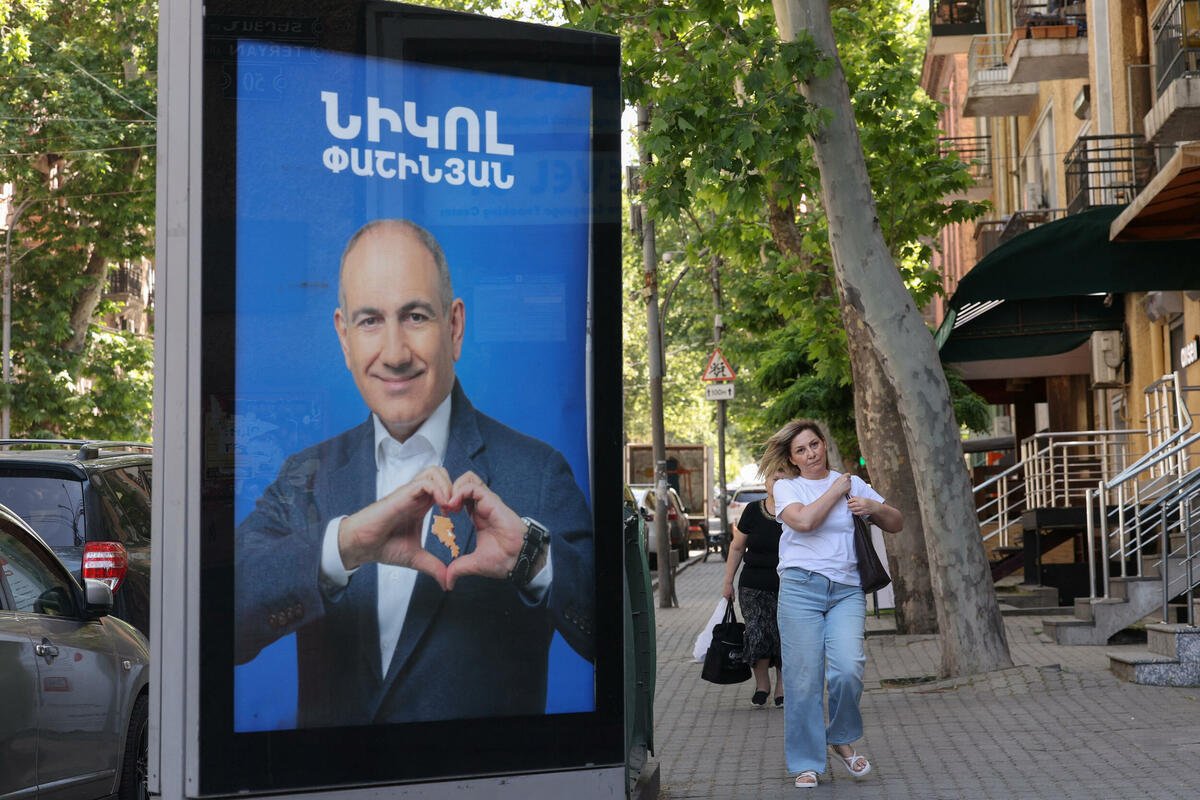
According to a poll commissioned by the non-governmental organization International Republican Institute (IRI), based in Washington, the “Civil Contract” party of the current pro-European Prime Minister of Armenia Nikola Pashinyan is in first place with 32 percent of support.
The opposition is traditionally pro-Russian and is divided into three main political forces that are significantly behind the ruling party.
About seven percent of voters support the “Strong Armenia” bloc, which is led by Russian billionaire of Armenian origin Samvel Karapetyan. He is currently under house arrest in Yerevan on charges of inciting a violent takeover.
The political alliance “Armenia”, led by former president Robert Kocharyan, who is close to Russian President Vladimir Putin, expects about four percent of the vote.
The “Prosperity Armenia” party, founded by businessman Gagik Tsarukyan, can count on around two percent of support.
Other parties, including the new protest movements, have the support of only one to two percent.
Surveys – be careful
Experts warn that these figures should be interpreted with caution due to the unprecedentedly low response rate: only 16 percent of respondents agreed to participate in the survey. That is 19 percent less than before the special elections in 2021. At the same time, 92 percent of participants said they intend to vote, compared to 72 percent in 2021.
Almost every other respondent refused to reveal their favorite or stated that they had not yet made a final decision on who they would vote for.
New political direction: Brussels or Moscow?
One of the main topics of the pre-election campaign was foreign policy. The ruling party is bringing the country closer to the European Union and further away from Russia and the Collective Security Treaty Organization (CSTO), a military alliance controlled by Moscow.
In May 2025, the Armenian parliament adopted a law on the initiation of the EU accession process.
During the election campaign, current Prime Minister Nikol Pashinyan promised to introduce a visa-free regime with the European Union in the next two years.
At the beginning of May, Pashinyan hosted the summit of the European political community in Yerevan and said that Armenia “is not an ally of Russia” in the war against Ukraine.
This statement caused a sharp reaction from Moscow. Russia has threatened to introduce tariffs and legal obstacles for Armenian workers who want to work in Russia, and suggested that a referendum should be called in which citizens would choose between two options: the EU or the Eurasian Economic Union (EAEU).
Russia also uses trade measures as a means of pressure, including restrictions on the import of Armenian agricultural products such as vegetables, fruit and wine, as well as the possibility of suspending deliveries of gas and oil derivatives at preferential prices.
President Vladimir Putin additionally warned that the adoption of European standards will lead to the interruption of economic cooperation, and he compared the situation in Armenia with the crisis in Ukraine in 2014.

Russian influence and relations with the USA
Moscow’s meddling in the elections is causing heated debate in Armenia. Tensions rose after the Russian independent investigative media Insider published an article about an alleged Russian spy network in Armenia.
According to that media, Russian billionaire and leader of the “Strong Armenia” party, Samvel Karapetyan, listed the Information Center of the Federal Security Service (FSB) of Russia as his employer in the application for a passport issued to him in 1999.
Armenian security forces have repeatedly initiated criminal proceedings against representatives of the pro-Russian opposition. A major political scandal broke out after the arrest of Andranik Tevanyan, the second candidate on the list of the “Prosperity Armenia” party. The politician, known for his pro-Russian views, faces charges of high treason and espionage.
The opposition called these cases, as well as the Insider text, “political persecution”.
In addition to getting closer to the European Union, Pashinyan’s government is strengthening relations with the United States of America. Recently, comprehensive strategic partnership charters and a memorandum on rare earth elements were signed.
Armenia and Azerbaijan, with the mediation of the US, paved the way for an ambitious logistics project that would connect Azerbaijan with its exclave of Nakhichevan through southern Armenia. This agreement represents a significant step towards ending the blockade of Armenia.

Relations with Russia and the opposition
The ruling party describes future relations with Russia as a “transformation” rather than an alliance, citing diversification of foreign policy as the reason.
The crisis in relations began in the fall of 2022, when the OIKB and Russia failed and did not provide military assistance to Yerevan during border conflicts with Azerbaijan.
The main opposition forces, on the other hand, act as ideological opponents of the current government. They advocate the renewal of the strategic alliance with Moscow, considering it a key guarantor of security in the peace process with Azerbaijan.
Nikol Pashinyan has put the idea of a “real Armenia” at the center of his campaign, rejecting revisionist calls for the restoration of “historical borders” that include Nagorno-Karabakh. Azerbaijan regained control of the breakaway region after the 2023 war, ending more than three decades of conflict.
The opposition strongly criticizes this approach. Despite the tensions, the survey shows that 71 percent of citizens believe that the elections will be free and fair, while 61 percent believe that the country is moving in the right direction. The main problem, according to 17 percent of respondents, is border security.
Download the application and follow the news


FOLLOW US ON

News