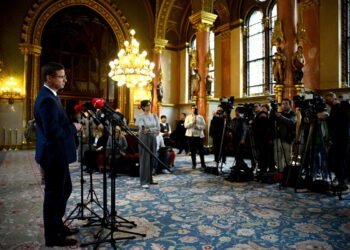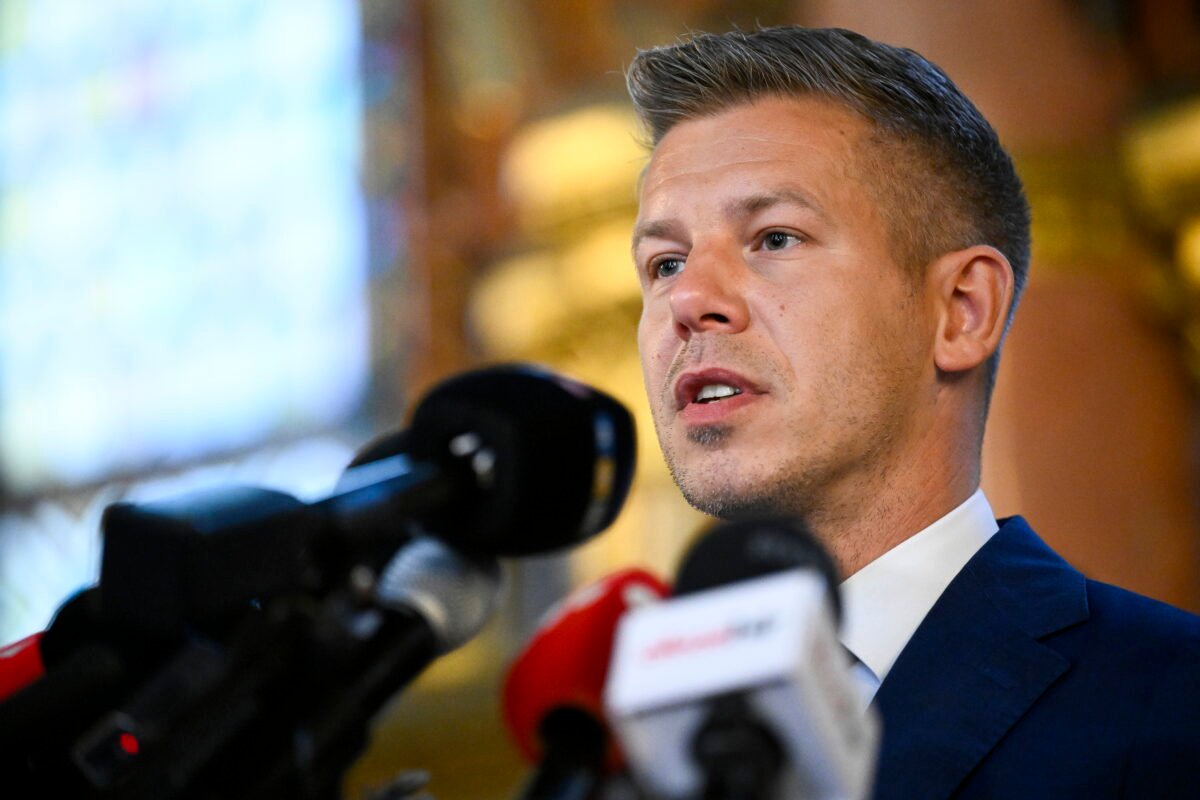

Péter Magyar, chairman of the Tisza Party and prime minister-elect, has held high-level talks with European Commission officials in Hungary over the past two days, the politician announced. The topic of the negotiations was the release of the blocked EU funds.
As the election winner revealed on Sunday, detailed technical consultations—the first steps in a complex yet urgent process—continued with the highest-level professional representation from the future Hungarian government. Péter Magyar emphasized that his future government would take office with an “unprecedented legitimacy.” This, he said, was not only an opportunity for Hungary, but for all of Europe.
The election winner made it clear that as planned,
his third trip following his swearing-in as prime minister will take him to Brussels, where he will conclude a comprehensive political agreement with the leaders of EU institutions and member states to ensure that Hungarian citizens and businesses receive the billions of euros in EU funds they are entitled to as soon as possible.
At the meeting, the party chairman stated that “the billions of euros in EU funds rightfully belong to Hungary and the Hungarian people,” and that the Hungarian economy cannot be revived without EU funds. “EU funding is not charity, but a fair return for the contributions made by Hungarians to the Union and for the work Hungary has done for Europe,” he said.
Over the past two days, we have held high-level talks in Budapest with leaders of the European Commission.
During this round of talks, I made it clear that the TISZA government is beginning its work with unprecedented legitimacy and, at the same time, a strong sense of… pic.twitter.com/ygmJXgbQnH
— Magyar Péter (Ne féljetek) (@magyarpeterMP) April 19, 2026
At the start of the negotiations, Magyar outlined the Tisza Party’s commitments to regain Brussels’ trust, including anti-corruption measures, Hungary’s accession to the European Public Prosecutor’s Office, and the restoration of the freedom and independence of the judiciary, the press, and higher education. “We intend to fully implement these commitments once in government, just as we will fulfill our promise to bring home the EU funds that belong to the Hungarian people,” he stated.
The European Commission described the talks as “high-level technical meetings.” A delegation was in Budapest on April 17 and 18, following direct contact between Commission President Ursula von der Leyen and Péter Magyar, the Commission wrote in a statement.
Although there is great optimism, the hurdles for the new government remain high.
The European Commission has set a total of 27 so-called “super milestones” for Hungary.
Full compliance with these is the legal prerequisite for the release of funds from the Recovery and Resilience Facility (RRF) as well as a portion of the cohesion funds. These requirements are primarily aimed at strengthening the rule of law, combating corruption, ensuring the independence of the judiciary, and promoting transparency in public procurement procedures.
So far, the process has been slow. The Commission had deemed four of these 27 milestones, which Hungary was supposed to achieve by 2024, to have been met. Under Viktor Orbán’s government, however, between 18 and 30 billion euros remained frozen, as Brussels criticized the implementation of anti-corruption measures as insufficient.
Magyar now faces the task of resolving this complex legacy and swiftly fulfilling the remaining conditions to secure the total of 35 billion euros for the Hungarian economy. The future leadership, however, appears determined. The exploratory talks were intended to ensure that the new government is fully operational from the first day of its term—particularly on issues such as the Ukraine loans and the COVID-19 recovery funds.
Via MTI, Featured image: MTI/Hegedüs Róbert