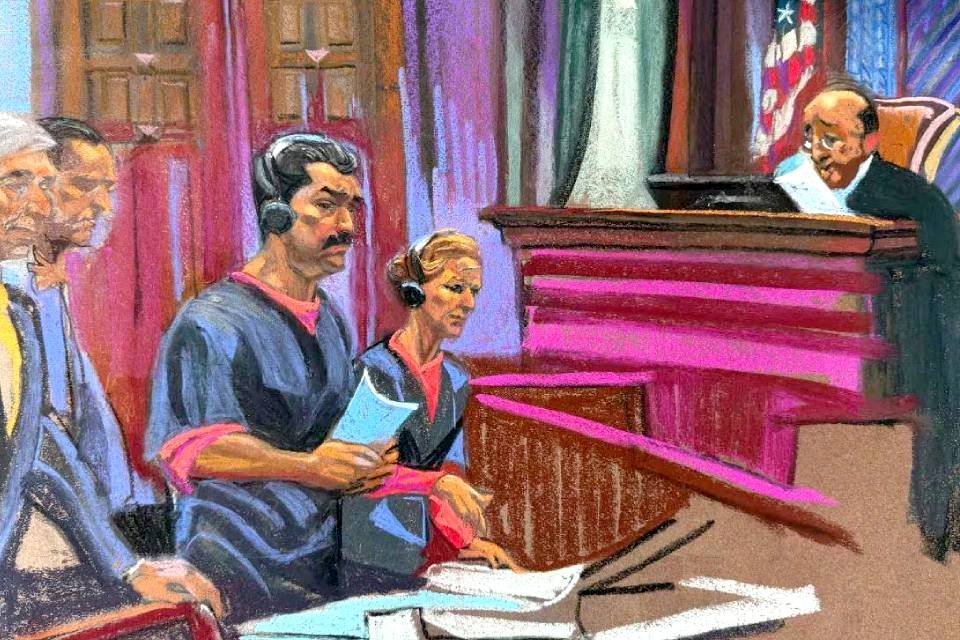
Judge Alvin Hellerstein, who presides over the criminal case in the United States against Nicolás Maduro, issued this Wednesday an order that regulates the management of confidential material that the authorities deliver to the defense.
The judge’s order, signed yesterday, Tuesday, is the same one previously proposed in a draft by the United States Attorney’s Office, which considered an evidence protection regime necessary due to the “risks” to the safety of witnesses and the integrity of the investigation.
The defense of Maduro and his wife, Cilia Flores, requested that the Prosecutor’s Office give them the evidence to which they are entitled before the trial, a process known as ‘discovery’, so this order effectively classifies and regulates all that evidence.
In practice, one of the key consequences is that the defense is prohibited from sharing evidence with other defendants who have not yet been arrested, such as the Venezuelan Minister of the Interior, Diosdado Cabello, as requested a week ago by the Prosecutor’s Office.
Other defendants not detained in the case are Ramón Rodríguez Chacín, former Minister of the Interior of Venezuela; Nicolás Maduro Guerra, son of the former president; and Héctor Rusthenford Guerrero Flores, alias Niño Guerrero, alleged leader of the Tren de Aragua criminal organization.
The material “may not be shared with any identified defendant who has not yet been arrested in the framework of this procedure, nor with the lawyers of said defendants,” the text indicates.
The order also establishes that Maduro and Flores’ lawyers can only use the material shared by the Prosecutor’s Office “for defense purposes,” and cannot publish it on the internet or social networks, or make any disclosure to the media.
The Prosecutor’s Office may designate some of the material under stricter classifications that involve presenting evidence only under seal in writings to the court, and in some cases the evidence can only be seen by the lawyer and his staff, but not the defendants.
In addition, the regulation of confidential material contained in the order does not become void at the conclusion of the criminal case, and the judge maintains jurisdiction to ensure compliance thereafter, the text indicates.