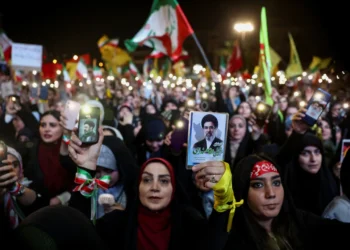
YEREVAN – Armenian Prime Minister Nikol Pashinyan declared a “historic victory” of his Civil Contract party in the parliamentary elections, after the preliminary results showed a convincing leadership of the ruling party.
According to the data of the Central Election Commission, after more than 60 percent of the votes were counted, Pašinjan’s party won about 51 percent of support, while the Strong Armenia alliance of Russian-Armenian billionaire Samvel Karapetyan got about 23 percent.
The turnout was approximately 59 percent, and the elections were evaluated as an important test of the future geopolitical direction of the country. Pashinyan said that the people voted for “regional prosperity and cooperation” and announced the continuation of rapprochement with the West, along with the development of relations with Russia.
Peace with neighbors as a priority
The Prime Minister emphasized that Armenia must institutionalize peace with Azerbaijan, expecting a positive response from Baku and Ankara.
His campaign was marked by messages that the future of the country is at a turning point, especially after the loss of Nagorno-Karabakh in 2023 and the deterioration of relations with Moscow, he states “EuroNewsAlthough Armenia and Russia are formally allies, ties have weakened significantly as many in Yerevan believe that Moscow did not provide the expected assistance during the Karabakh crisis.
Russian influence under pressure
The elections were held in an atmosphere of accusations of Russian interference, misinformation and economic pressure, including a ban on the import of certain products from Armenia.
The opposition, on the other hand, accused the government of irregularities and pressure on its activists, while Pašinan’s opponents claimed that his policies could threaten the country’s security.
Despite these criticisms, the results show that a significant portion of voters supported a course that includes closer ties with the European Union, an attempt to normalize relations with Turkey and a permanent peace agreement with Azerbaijan.
Pashinyan’s victory represents a new sign of the weakening of Russian influence in the South Caucasus, a region that Moscow has considered its traditional area of interest for decades.