New religious histories are currently being published, while a university lecture delivered last week in New Zealand highlights Tonga’s preparations to mark 200 years since Christianity was firmly established in the kingdom, following earlier failed missionary attempts.
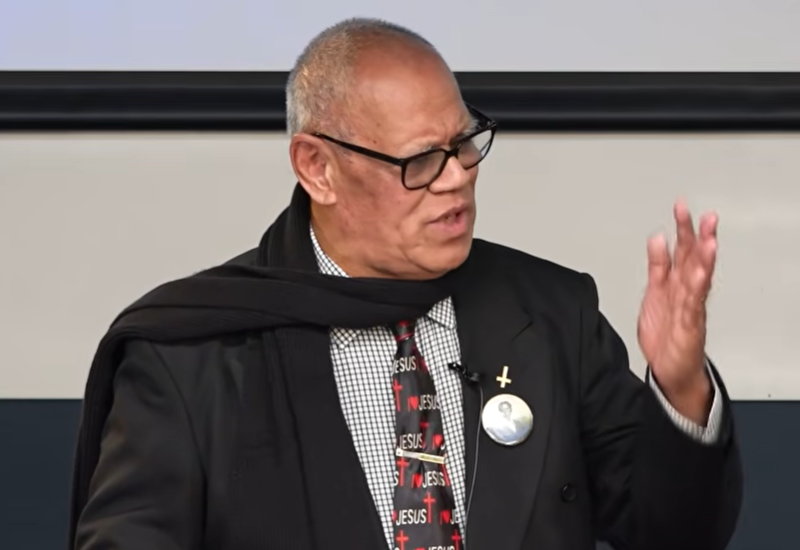
Rev’d Dr Paula Onoafe Latu is revisiting the history of the Methodist Church in Tonga and last week delivered a lecture at the University of Otago as part of the commemorative initiatives.
The research and publication programme is overseen by a committee chaired by Her Majesty Queen Nanasipauʻu, with members including Free Wesleyan Church President Dr Tevita Havea, Secretary General Rev’d Feleti ‘Atiola, and Dr Latu, who are developing a six-volume book series for the celebrations.
Dr Latu told Kaniva News he is working on the book series from his Takanini residence in New Zealand, with support from colleagues, including his daughter.
Wesleyan and Methodist both emerge from the same Christian tradition founded by John Wesley, an 18th-century English Anglican cleric and theologian who co-founded the Methodist movement.
However, Wesleyan typically refers to the early missionary movement and its theological emphasis, while Methodist serves as the broader term for the churches that later developed from that tradition.
The anniversary marks the introduction of Christianity by early missionaries, beginning with the London Missionary Society in 1797, followed by Wesleyan missionaries in 1822 and Catholic missionaries in 1840.
In a tribute within his Otago paper, Dr Latu wrote: “We remember with condolences the families of Harper, Bowel, and Gaulton, along with an English sailor from Great Britain, who lost their lives during the civil war of 1799, bringing an end to the short-lived mission of the London Missionary Society in Tonga.”
He described these missionaries as “the first martyrs of Christianity in Tonga.” Drawing on the words of early Christian writer Tertullian, Dr Latu noted: “The blood of the martyrs is the seed of the Church.”
He further reflected that their sacrifice became the foundation for the spread of the Christian Gospel and faith in Tonga over the past 200 years. Lest we forget — Rest in God’s love.
Assessing Missionary Legacy
Although early British missionary efforts faced challenges and were not without flaws, Dr Latu’s research and forthcoming publications aim to evaluate the achievements of the Wesleyan mission in Tonga.
These missions laid the foundations of a faith that would reshape Tongan society and identity over the next two centuries.
In his Otago presentation, Dr Latu said Christianity not only transformed the spiritual life of the people but also played a central role in shaping Tonga’s political development, legal system, and national unity.
The presentation marked not only the historic anniversary but also the establishment of a new partnership between the University of Otago and the Free Wesleyan Church’s Sia’atoutai Theological College, where Dr Latu serves as principal.
Christianity and Royal Reform
The paper also highlighted King George Taufaʻāhau Tupou I’s pivotal role in embracing Christianity—alongside his wife, Queen Sālote Lupepauʻu—and using its influence to modernise Tonga, beginning with the 1862 emancipation of the people from chiefly and royal control.
The document notes that King Taufaʻāhau I’s establishment of the 1875 Constitution, grounded in Christian principles, stands as one of the most significant outcomes of this legacy, helping Tonga preserve its sovereignty and avoid colonisation.
Churches and schools established by missionaries also drove widespread literacy and education, with Bible translations into Tongan playing a key role in shaping both language and national identity.
Tree of Life
Dr Latu describes the growth of Christianity in Tonga as a “Tree of Life,” beginning with the planting of the Gospel seed, taking root in the hearts of the people, and eventually bearing fruit in social progress and spiritual maturity.
This transformation extended beyond Tonga’s shores, with Tongan missionaries being sent across the Pacific and the world since the 19th century, continuing the cycle of spreading the Christian faith.
The anniversary is expected to unite churches, communities, and the Tongan diaspora in a shared celebration of faith, identity, and resilience.
Why 1826 Marks the Start
According to Dr Latu, early missionary efforts by the London Missionary Society (1797–1799) and later by the Wesleyan leader Walter Lawry (1822–1823) recorded no conversions.
The turning point came with the arrival of John Hutchinson and John Thomas in 1826, who established a mission base at Kolovai, including a church and school known as Nazareth. This marked the beginning of a sustained and structured Christian presence in Tonga, even though the first recorded Tongan convert, John Lolohea, did not occur until 1829.
Despite early resistance—including the suppression of the church in Kolovai in the Hihifo district by Chief Ata in 1829—the mission began to gain momentum. Following this setback, Chief ‘Ahome‘e escorted Mr Thomas from Kolovai to King Aleamotu‘a in Nuku‘alofa.
LMS missionaries from Tahiti, accompanied by local and regional helpers, arrived in Nukuʻalofa en route to Fiji, but were instructed by Aleamotuʻa to remain and establish the mission there, underscoring his belief that Christianity must first take root in Tonga before spreading beyond, according to Dr Latu.
This led to the construction of the first church at Sia ko Veiongo in Nukuʻalofa, while the continued efforts of Wesleyan missionaries such as Nathaniel Turner and William Cross from 1828 further strengthened the mission.
Growing Converts, Expanding Mission
By 1829, the number of converts had begun to grow, with seven early baptisms recorded. Requests for missionary support also increased, notably from Taufa‘āhau, the Tu‘i Ha‘apai—who later became King George Tupou I—to whom Mr Thomas and the Tongan convert Pita Vī were subsequently sent.
From this point, the Wesleyan mission developed consistently and spread throughout the kingdom, laying the foundation for the nationwide acceptance of Christianity.
For this reason, 1826 is recognised as the starting point of Christianity’s enduring establishment in Tonga—marking not its first arrival, but the beginning of sustained growth, organisation, and eventual transformation of the nation.