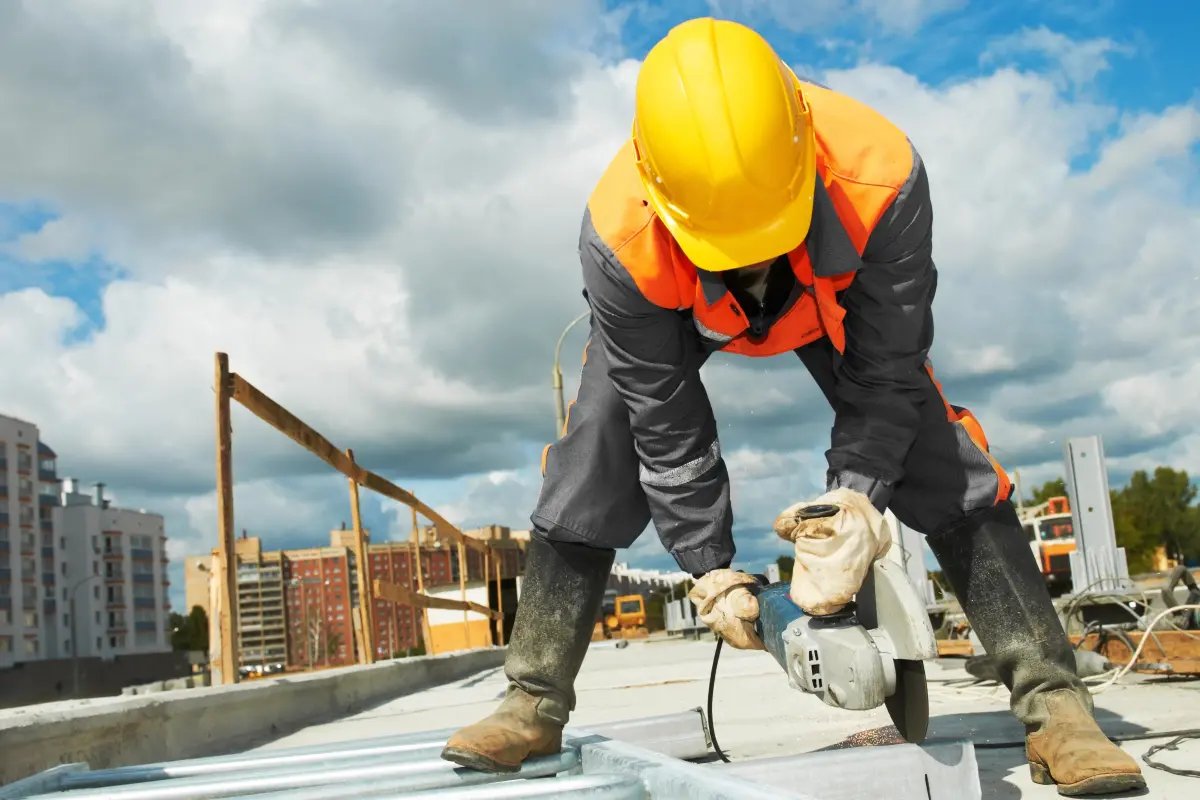
The construction industry in Panama is going through a moment of tensions and contrasts that reflect both the immediate effects of fiscal policies and the structural behavior of the economy. The drop in home sales and the collection of 2% of the Real Estate Transfer Tax (ITBI) have generated a domino effect that not only hits real estate developers, but also paralyzes new projects and affects the entire value chain of the sector.
In a country where construction contributes more than 15% to the gross domestic product (GDP) and is one of the main generators of formal employment, this brake has profound implications on the economy and the lives of thousands of families.
The report from the Panamanian Chamber of Construction (Capac) on the challenges and opportunities for 2025 already warned that, despite the obstacles, construction continues to be a fundamental driver of the economy. The Chamber stressed that the sector not only generates formal employment, but also positively impacts associated industries such as the production of materials, the real estate sector and banking. In addition, it plays a key role in reducing the housing deficit, offering housing solutions to thousands of Panamanians.
The union insisted that to guarantee sustained growth it is necessary to strengthen public-private collaboration, streamline procedures and reinforce policies such as the Preferential Interest Law, in force for more than 40 years. He also emphasized that the government must comply with pending payments to private companies, since the completion of projects and the delivery of solutions to communities depends on it.
Data from the National Institute of Statistics and Census (INEC) confirm that in 2025 the GDP at current prices (or nominal GDP) reached $90,462.6 million, with a growth of 4.6% compared to 2024. In chained volume, the GDP was $84,752.9 million, with an increase of 4.4%.
The construction sector grew 2.7% at the end of last year, driven by private residential projects and public infrastructure works, while in the fourth quarter it showed a rebound of 4.4%, a sign of a partial recovery towards the end of the year. However, the first months of 2026 reflect a mixed outlook: the value of construction increased 12.9% compared to the same period in 2025, thanks to non-residential projects that grew 85.7%, but the built area fell 7.6% and the production of inputs such as concrete and cement was reduced, showing that housing continues to weaken.
The figures show that the real estate industry is going through one of its most critical moments. According to data from Convivienda, the sector accumulates a drastic slowdown of 55% (10,146) when adding the results of 2024 and 2025. In the last year alone, the drop was almost 30% (4,020), a figure that raises concern about the country’s ability to generate employment and reduce the housing deficit.
The executive president of Convivienda, Elisa Suárez, said that the important thing is that Panamanian families continue to have access to mortgages and housing, especially the working middle class that earns less than $1,000.
He recalled that the housing deficit exceeds 180,000 families and that solutions must arise from formality, with public-private collaboration. Among the urgent measures he mentioned the reopening of mortgage credit, the reduction of excessive bureaucracy and the review of the 2% exemption. “We are in the right direction,” he stated, recognizing that the Preferential Interest Law is a great step, but it must be complemented with policies that guarantee real access to decent housing.
The labor consultant René Quevedo contributed another dimension to the debate: youth employment and its direct relationship with access to housing. He pointed out that 54% of youth jobs are informal, with an average salary of $815, which makes access to mortgages difficult. In addition, the interior of the country lost 105,000 jobs in 2025, including 60,000 in agriculture, while the recovery was concentrated in the canal axis.
“The best social program in the world is a job,” said Quevedo, warning that “without trust there will be no private investment” and, therefore, “formal jobs will not be generated.” Quevedo insisted that fiscal policy must consider the youth unemployment crisis and the need to reactivate construction as an alternative to absorb part of the lost jobs. For him, “the immediate challenge is to inject liquidity into the economy in the next 18 months, stimulating confidence that investing in Panama is good business.”
For those who earn a minimum wage of $600, access to new housing is practically impossible under current conditions. The costs of mortgages and the impact of the ITBI raise the amount of initial payments, excluding a large part of the working population.
The bank has pointed out that the tax makes financing even more expensive, limiting the possibilities of those with low incomes. In contrast, apartments under horizontal ownership regime showed growth of 11.1% in 2025, driven by more affordable mortgages and lower maintenance costs, reflecting a shift in demand towards vertical projects.
Representative Yamireliz Chong considered that builders are abusing prices, taking into account that they deliver homes mostly with poor quality materials, with hidden defects that people then have to carry. “If they as a market feel tight, imagine how Panamanians feel who need decent housing but with low salaries that do not allow them to access housing with such high costs,” he said.
He added that “I am not saying that they should give away the homes or that the developers should not do business, what I am saying is that they should be fair with the prices or at least with the quality of what they sell.”
Chong ruled that the elimination of this subsidy to the promoters was proposed by the government, not the deputies. He clarified that “if it is reincorporated, the uncertainty will be removed for the developers but not for the Panamanians who have to face the high cost of housing, plus the high interests of the banks that often do not respect the preferential interest period.”