Sunday, June 7, 2026
    The GeoStrategic Consensus
    No Result
    View All Result
    • Login
    • HOME
    • AMERICAS
      • Argentina
      • Brazil
      • Canada
      • Chile
      • Colombia
      • Costa Rica
      • Cuba
      • Dominican Republic
      • Ecuador
      • El Salvador
      • Greenland
      • Guatemala
      • Honduras
      • Mexico
      • Nicaragua
      • Panama
      • Paraguay
      • Peru
      • United States
      • Uruguay
      • Venezuela
    • ASIA-PACIFIC
      • Australia
      • Brunei Darussalam
      • Cambodia
      • China
      • Federated States of Micronesia
      • Fiji
      • Indonesia
      • Japan
      • Kiribati
      • Laos
      • Malaysia
      • Marshall Islands
      • Mongolia
      • Myanmar
      • Nauru
      • New Zealand
      • North Korea
      • Palau
      • Papua New Guinea
      • Philippines
      • Samoa
      • Singapore
      • Solomon Islands
      • South Korea
      • Taiwan
      • Thailand
      • Timor-Leste
      • Tonga
      • Tuvalu
      • Vanuatu
      • Vietnam
    • CARICOM
      • CARICOM – Non-English
        • Haiti
        • Suriname
      • CARICOM Associates
        • Anguilla
        • Bermuda
        • British-Virgin-Islands
        • Cayman-Islands
        • Curacao
        • Turks-and-Caicos
      • CARICOM English
        • Antigua and Barbuda
        • Barbados
        • Belize
        • Dominica
        • Grenada
        • Guyana
        • Jamaica
        • Montserrat
        • Saint Kitts and Nevis
        • Saint Lucia
        • Saint Vincent and the Grenadines
        • The Bahamas
        • Trinidad and Tobago
    • EURASIA
      • Armenia
      • Azerbaijan
      • Balarus
      • Georgia
      • Kazakhstan
      • Kyrgyzstan
      • Moldova
      • Russia
      • Tajikistan
      • Turkmenistan
      • Ukraine
      • Uzbekistan
    • EUROPE
      • Albania
      • Andorra
      • Austria
      • Bosnia and Herzegovina
      • Bulgaria
      • Croatia
      • Cyprus
      • Czech Republic
      • Denmark
      • Estonia
      • Finland
      • France
      • Germany
      • Greece
      • Holy See
      • Hungary
      • Iceland
      • Ireland
      • Italy
      • Kosovo
      • Latvia
      • Liechtenstein
      • Lithuania
      • Luxembourg
      • Malta
      • Monaco
      • Montenegro
      • Netherlands
      • North Macedonia
      • Norway
      • Poland
      • Portugal
      • Romania
      • San Marino
      • Serbia
      • Slovakia
      • Slovenia
      • Spain
      • Sweden
      • Switzerland
      • United Kingdom
    • MIDDLE EAST AND NORTH AFRICA
      • Algeria
      • Bahrain
      • Egypt
      • Iran
      • Iraq
      • Israel
      • Jordan
      • Kuwait
      • Lebanon
      • Lybia
      • Morocco
      • Oman
      • Palestinian Territories
      • Qatar
      • Saudi Arabia
      • Syria
      • Tunisia
      • Turkey
      • United Arab Emirates
      • Western Sahara
      • Yemen
    • SOUTH ASIA
      • Afghanistan
      • Bangladesh
      • Bhutan
      • India
      • Maldives
      • Nepal
      • Pakistan
      • Sri Lanka
    • SUB-SAHARAN AFRICA
      • Angola
      • Benin
      • Botswana
      • Burkina Faso
      • Burundi
      • Cabo Verde
      • Cameroon
      • Central African Republic
      • Chad
      • Comoros
      • Cote d’Ivoire
      • Democratic Republic of the Congo
      • Djibouti
      • Equatorial Guinea
      • Eritrea
      • Eswatini
      • Ethiopia
      • Gabon
      • Gambia
      • Ghana
      • Guinea
      • Guinea Bissau
      • Kenya
      • Lesotho
      • Liberia
      • Madagascar
      • Malawi
      • Mali
      • Mauritania
      • Mauritius
      • Mozambique
      • Namibia
      • Niger
      • Nigeria
      • Republic of the Congo
      • Rwanda
      • Sao Tome and Principe
      • Senegal
      • Seychelles
      • Sierra Leone
      • Somalia
      • South Africa
      • South Sudan
      • Sudan
      • Tanzania
      • Togo
      • Uganda
      • Zambia
      • Zimbabwe
    • HOME
    • AMERICAS
      • Argentina
      • Brazil
      • Canada
      • Chile
      • Colombia
      • Costa Rica
      • Cuba
      • Dominican Republic
      • Ecuador
      • El Salvador
      • Greenland
      • Guatemala
      • Honduras
      • Mexico
      • Nicaragua
      • Panama
      • Paraguay
      • Peru
      • United States
      • Uruguay
      • Venezuela
    • ASIA-PACIFIC
      • Australia
      • Brunei Darussalam
      • Cambodia
      • China
      • Federated States of Micronesia
      • Fiji
      • Indonesia
      • Japan
      • Kiribati
      • Laos
      • Malaysia
      • Marshall Islands
      • Mongolia
      • Myanmar
      • Nauru
      • New Zealand
      • North Korea
      • Palau
      • Papua New Guinea
      • Philippines
      • Samoa
      • Singapore
      • Solomon Islands
      • South Korea
      • Taiwan
      • Thailand
      • Timor-Leste
      • Tonga
      • Tuvalu
      • Vanuatu
      • Vietnam
    • CARICOM
      • CARICOM – Non-English
        • Haiti
        • Suriname
      • CARICOM Associates
        • Anguilla
        • Bermuda
        • British-Virgin-Islands
        • Cayman-Islands
        • Curacao
        • Turks-and-Caicos
      • CARICOM English
        • Antigua and Barbuda
        • Barbados
        • Belize
        • Dominica
        • Grenada
        • Guyana
        • Jamaica
        • Montserrat
        • Saint Kitts and Nevis
        • Saint Lucia
        • Saint Vincent and the Grenadines
        • The Bahamas
        • Trinidad and Tobago
    • EURASIA
      • Armenia
      • Azerbaijan
      • Balarus
      • Georgia
      • Kazakhstan
      • Kyrgyzstan
      • Moldova
      • Russia
      • Tajikistan
      • Turkmenistan
      • Ukraine
      • Uzbekistan
    • EUROPE
      • Albania
      • Andorra
      • Austria
      • Bosnia and Herzegovina
      • Bulgaria
      • Croatia
      • Cyprus
      • Czech Republic
      • Denmark
      • Estonia
      • Finland
      • France
      • Germany
      • Greece
      • Holy See
      • Hungary
      • Iceland
      • Ireland
      • Italy
      • Kosovo
      • Latvia
      • Liechtenstein
      • Lithuania
      • Luxembourg
      • Malta
      • Monaco
      • Montenegro
      • Netherlands
      • North Macedonia
      • Norway
      • Poland
      • Portugal
      • Romania
      • San Marino
      • Serbia
      • Slovakia
      • Slovenia
      • Spain
      • Sweden
      • Switzerland
      • United Kingdom
    • MIDDLE EAST AND NORTH AFRICA
      • Algeria
      • Bahrain
      • Egypt
      • Iran
      • Iraq
      • Israel
      • Jordan
      • Kuwait
      • Lebanon
      • Lybia
      • Morocco
      • Oman
      • Palestinian Territories
      • Qatar
      • Saudi Arabia
      • Syria
      • Tunisia
      • Turkey
      • United Arab Emirates
      • Western Sahara
      • Yemen
    • SOUTH ASIA
      • Afghanistan
      • Bangladesh
      • Bhutan
      • India
      • Maldives
      • Nepal
      • Pakistan
      • Sri Lanka
    • SUB-SAHARAN AFRICA
      • Angola
      • Benin
      • Botswana
      • Burkina Faso
      • Burundi
      • Cabo Verde
      • Cameroon
      • Central African Republic
      • Chad
      • Comoros
      • Cote d’Ivoire
      • Democratic Republic of the Congo
      • Djibouti
      • Equatorial Guinea
      • Eritrea
      • Eswatini
      • Ethiopia
      • Gabon
      • Gambia
      • Ghana
      • Guinea
      • Guinea Bissau
      • Kenya
      • Lesotho
      • Liberia
      • Madagascar
      • Malawi
      • Mali
      • Mauritania
      • Mauritius
      • Mozambique
      • Namibia
      • Niger
      • Nigeria
      • Republic of the Congo
      • Rwanda
      • Sao Tome and Principe
      • Senegal
      • Seychelles
      • Sierra Leone
      • Somalia
      • South Africa
      • South Sudan
      • Sudan
      • Tanzania
      • Togo
      • Uganda
      • Zambia
      • Zimbabwe
    No Result
    View All Result
    Agentially
    No Result
    View All Result
    Home AMERICAS Cuba

    Opinion: The two Koreas and the Cuban case

    The Analyst by The Analyst
    June 7, 2026
    in Cuba
    Opinion: The two Koreas and the Cuban case


    Montreal (Canada)/For decades, the official discourse of the Cuban communist regime has attributed the island’s economic precariousness to the US embargo. Shortages of basic goods, persistent deterioration of infrastructure, and even mass emigration would be the result of external restrictions imposed by the United States. Much has been written about the limitations of the thesis that attributes the Cuban economic situation exclusively to the US embargo.

    READ ALSO

    The Cuban opposition and the transition to democracy

    Femicide: Lisney Cárdenas agonized for eight hours in Camagüey

    An important part of these criticisms has focused on showing that Cuba has never been isolated from international trade; which has traded for decades with Europe, Canada, Latin America, China and the former Soviet Union, just to name a few; that foreign companies have operated freely in strategic sectors of the Cuban economy; that the Island has received billions of dollars in remittances; that has had access to credits, investments and preferential agreements with numerous international partners; and that even the United States has been among the suppliers of certain agricultural and food products for years.

    It is not my purpose to return to the merits of these arguments. My interest lies in a different question. If Cuban poverty were primarily explainable by the embargo, why do we find similar levels of scarcity, dependence and stagnation in communist countries that have never been subject to comparable restrictions?


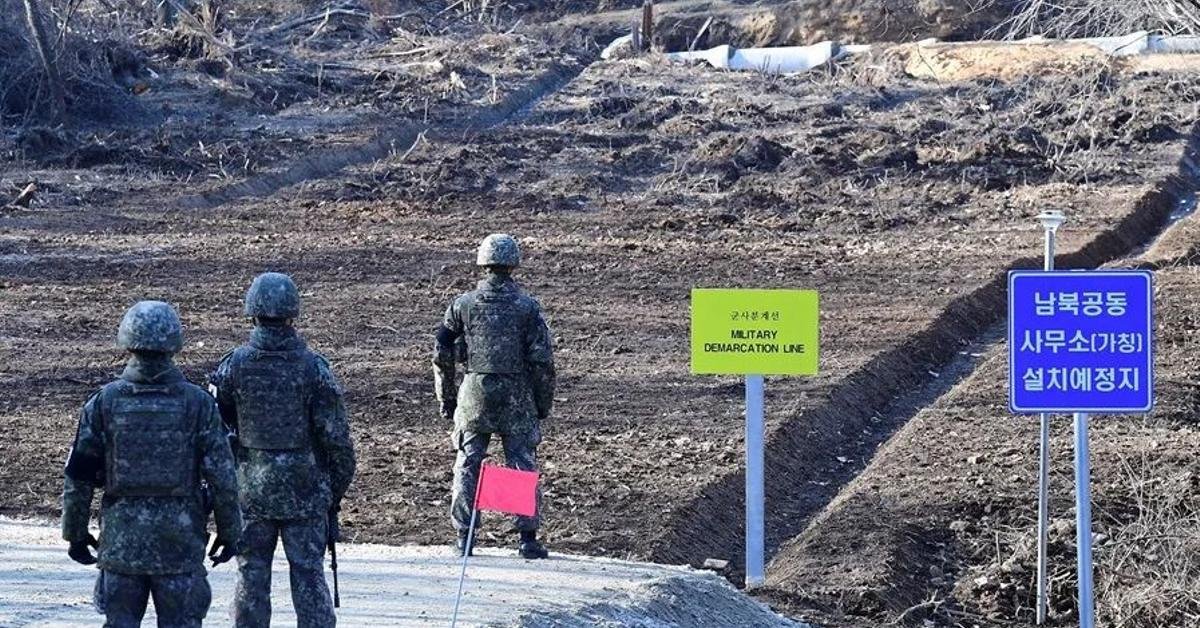
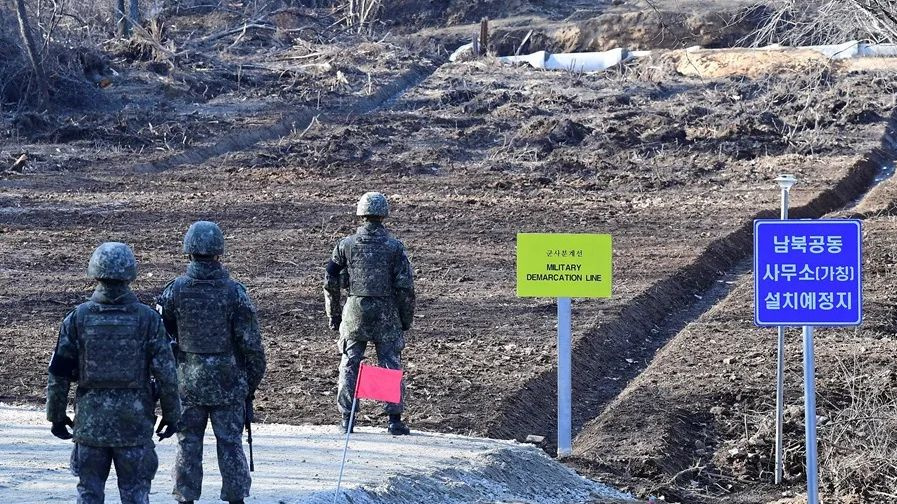
    After the division, the North inherited the bulk of the industrial infrastructure developed during the Japanese occupation

    Korea offers a particularly instructive case. For around seven decades (little more than the same amount of time that the Cuban dictatorship has remained in power), the same nation has lived under two radically different political and economic systems. The results could hardly be more different.

    Although it may seem contradictory today, the post-war panorama did not favor South Korea. After the division, the North inherited the bulk of the industrial infrastructure developed during the Japanese occupation. Furthermore, while the South suffered from political instability, corruption, and extreme poverty during the 1950s and early 1960s, Pyongyang implemented the Chollima industrialization movement. Added to this internal factor was the massive support of the USSR and China (countries that already provided military and logistical assistance during the conflict) starting with the 1953 armistice. In that same year, Moscow wrote off North Korean war debts and allocated 1 billion rubles for the reconstruction of power plants, factories and infrastructure destroyed by the bombings.

    For its part, Beijing signed the Economic and Cultural Cooperation Agreement with Pyongyang; In addition to forgiving the debts of the conflict, the Chinese Government sent technical contingents and kept hundreds of thousands of soldiers of the People’s Volunteer Army in North Korean territory until 1958 to work directly on the rehabilitation of railways, bridges and buildings. Thanks to this, between 1954 and 1956 North Korea concentrated the largest flow of aid from the socialist bloc, with contributions from East Germany, Czechoslovakia and Poland, which promoted an industrial recovery that far surpassed that of the South. As a result, economic indicators of the time show that, well into the 1960s, GDP per capita, electricity generation, and even access to public health were notably higher in the North.


    Despite starting the 1960s with a considerable disadvantage compared to the North, South Korea came to position itself as one of the most advanced economies on the planet.

    However, despite receiving massive subsidies, energy assistance, and privileged access to Soviet bloc markets, these support mechanisms did not prevent North Korea’s structural collapse. The communist model ended up generating chronic poverty and widespread shortages that persist to this day, in addition to causing one of the most devastating famines of the 20th century in the 1990s. In this crisis, hundreds of thousands of people perished from lack of food while the State irresponsibly prioritized military spending and the development of its nuclear ambitions. The people could wait.

    South Korea’s evolution followed a radically different trajectory. Despite starting the 1960s with a considerable disadvantage compared to the North, despite being among the poorest countries in the world, it came to position itself as one of the most advanced economies on the planet. The protection of private property, trade openness, competition and integration into global markets created an incentive framework radically opposed to that of the North. As a result, South Korea not only escaped poverty, but built a cutting-edge industrial and technological fabric.

    Today, it is home to global giants such as Samsung Electronics and SK Hynix (world leaders in consumer electronics and pioneers in advanced semiconductors, including HBM memories essential for artificial intelligence), as well as Hyundai Motor and Kia Corporation, which export millions of vehicles to the world’s most demanding markets. Beyond electronics and automotive, South Korean leadership extends to strategic sectors such as highly complex shipbuilding, robotics, advanced displays, batteries for electric vehicles and an emerging aerospace and defense industry that already competes with Western powers.


    South Korea has become one of the world’s leading exporters of popular culture

    There is a particularly revealing way to measure this difference. And where an economy is capable of generating innovative and profitable companies, a market emerges willing to invest in them. The stock market is, therefore, a useful measure of a society’s ability to create wealth and project it into the future. The South Korean Kospi index brings together the country’s most important companies. Billions of dollars from investors around the world are allocated each year to these companies on the expectation that they will continue to innovate, export and generate value. Behind each point of the index are factories, research centers, engineers, patents and products that compete daily in international markets.

    Now let’s try the same exercise with North Korea. Let’s find your main stock index, identify your leading corporations or analyze market expectations about your future innovation. The task is surprisingly simple: there is nothing to analyze. North Korea doesn’t even have a stock exchange. And the problem, of course, is not the absence of a stock exchange, but the absence of the economic and institutional conditions that usually make it possible.

    The South Korean transformation is not limited to the economic and industrial sphere either. Over the past few decades, South Korea has become one of the world’s leading exporters of popular culture. K-pop, K-dramas, South Korean cinema, gastronomy and fashion have achieved a global influence that is difficult to imagine for a country that, just a few decades ago, was among the poorest on the planet. Millions of people consume South Korean cultural products, study the language, visit the country or incorporate elements of its culture into their daily lives. It is difficult to find a more striking contrast with North Korea, a regime whose main cultural export has been communist propaganda and its state spectacles.

    When we look at North Korea, East Germany, the Soviet Union or Cuba itself, a pattern emerges that is difficult to ignore. Systems that restrict private initiative, concentrate economic decisions in the State and limit competition generate a significantly reduced capacity to produce innovation, productivity and prosperity, regardless of whether or not they face embargoes, sanctions or external pressures.


    It was not embargoes, blockades or powerful external enemies that ruined the lives of North Koreans, it was the regime itself

    When, however, we look at cases such as South Korea, West Germany, Taiwan or Singapore, another pattern appears. Institutions that protect property rights, facilitate investment, and enable decentralized coordination of millions of economic decisions generate infinitely greater capacity to create wealth.

    It was not embargoes, blockades or powerful external enemies that ruined the lives of North Koreans. It was the regime itself. There was never a need to isolate North Korea from progress; the system took care of doing it itself. Communism ended up becoming the most effective blockade: it blocked individual initiative, innovation, investment, criticism, competition and, with them, a good part of the forces that generate prosperity. He blocked ideas when they challenged power, he blocked reforms when they threatened the privileges of the elite, and he blocked the opportunities of millions of people to build a better life. In short, it blocked precisely what allows a society to flourish. Sound familiar?

    If Cuba had followed a trajectory similar to that of South Korea, instead of following a path so close to that of North Korea, it would probably have been spared the greatest tragedy of its contemporary history: the Cuban Revolution. It is impossible to know how many companies would have emerged, how many scientific advances would have occurred or how many Cubans would have developed their life projects without being forced to emigrate. However, what we do know is that, almost seven decades after the consolidation of the regime, its leaders continue to cynically defend the supposed virtues of the system, attributing to others the consequences of their own failures and promising future solutions to problems that much of the world solved generations ago.

    Source link

    Related Posts

    The Cuban opposition and the transition to democracy
    Cuba

    The Cuban opposition and the transition to democracy

    June 7, 2026
    Femicide: Lisney Cárdenas agonized for eight hours in Camagüey
    Cuba

    Femicide: Lisney Cárdenas agonized for eight hours in Camagüey

    June 6, 2026
    Humanitarian aid: Colombia sends a humanitarian shipment of 100 tons to Cuba
    Cuba

    Humanitarian aid: Colombia sends a humanitarian shipment of 100 tons to Cuba

    June 6, 2026
    Opinión: Cuba no era un erial español ni fue un milagro norteamericano
    Cuba

    Opinión: Cuba no era un erial español ni fue un milagro norteamericano

    June 6, 2026
    Entrevista: “Cuba es un enfermo con fallo multiorgánico”
    Cuba

    Entrevista: “Cuba es un enfermo con fallo multiorgánico”

    June 6, 2026
    Flights: Major Canadian airlines leave Cuba indefinitely
    Cuba

    Flights: Major Canadian airlines leave Cuba indefinitely

    June 6, 2026
    Next Post
    At Extreme: MP asks that Erico Galeano’s sentence to 13 years in prison be firm – National

    At Extreme: MP asks that Erico Galeano's sentence to 13 years in prison be firm - National

    POPULAR NEWS

    Energy Minister calls Jamaica electricity blackout ‘unacceptable’; orders probe | News

    Energy Minister calls Jamaica electricity blackout ‘unacceptable’; orders probe | News

    June 6, 2026
    The UN Security Council will hold an emergency session at Ukraine’s request

    The UN Security Council will hold an emergency session at Ukraine’s request

    June 7, 2026
    “Unlike other political leaders, Nikol Pashinyan has a very good political sense”

    “Unlike other political leaders, Nikol Pashinyan has a very good political sense”

    June 7, 2026
    Azerbaijan and Iran brainstorm current status of bilateral relations

    Azerbaijan and Iran brainstorm current status of bilateral relations

    June 7, 2026
    Mazepin: International cooperation in potash sector discussed at meeting with Lukashenko

    Mazepin: International cooperation in potash sector discussed at meeting with Lukashenko

    June 7, 2026

    EDITOR'S PICK

    Read the DN this Friday, June 5th

    Read the DN this Friday, June 5th

    June 6, 2026
    “The campaign proceeded by creating artificial complications for our forces.” Gevorg Karapetyan

    “The campaign proceeded by creating artificial complications for our forces.” Gevorg Karapetyan

    June 6, 2026
    China and Russia will be wondering about the outcome of the American-Iranian conflict

    China and Russia will be wondering about the outcome of the American-Iranian conflict

    June 6, 2026
    Pope Leo asks to end divisive and polarizing narratives on his first day in Spain

    Pope Leo asks to end divisive and polarizing narratives on his first day in Spain

    June 7, 2026

    Recent Posts

    • The UN Security Council will hold an emergency session at Ukraine’s request
    • “Unlike other political leaders, Nikol Pashinyan has a very good political sense”
    • Azerbaijan and Iran brainstorm current status of bilateral relations
    • Mazepin: International cooperation in potash sector discussed at meeting with Lukashenko

      © 2026 Agentially - Navigating shifting sovereignties and global risk .

      Welcome Back!

      Login to your account below

      Forgotten Password?

      Retrieve your password

      Please enter your username or email address to reset your password.

      Log In
      No Result
      View All Result

        © 2026 Agentially - Navigating shifting sovereignties and global risk .

        This website uses cookies. By continuing to use this website you are giving consent to cookies being used. Visit our Privacy and Cookie Policy.