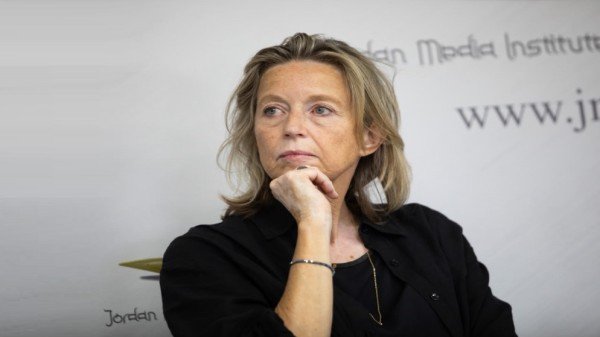
The European Union Special Representative for Human Rights, Kaisa Ollongren, confirmed that Jordan is of special importance to the European Union and is considered a valuable and reliable partner, noting that the two sides are linked by a strategic and comprehensive partnership embodied in high-level visits and regular dialogues on issues of common interest.
Speaking to Al-Mamlaka TV, Ollongren praised the role that Jordan plays as a factor of stability in the region and its ability to withstand the difficult regional circumstances, stressing that these issues top the agenda of cooperation between the two sides.
She said that her tasks focus on human rights in a broad sense, including international humanitarian law, international human rights law, democracy and governance, noting that security and displacement files are closely linked to these issues.
She added that she discussed a number of these files with Jordanian officials, expressing her admiration for what Jordan seeks to achieve and the level of existing cooperation between the two sides, including the Syrian file. She also indicated that cooperation between Jordan and the European Union extends to the framework of the United Nations and the multilateral system.
She stressed the importance of preserving the multilateral international system based on the rule of international law in light of the current geopolitical transformations, noting that Jordan and the European Union share the same vision regarding the necessity of defending this system.
Regarding human rights in Jordan, Ollongren explained that she held open and frank discussions on various relevant issues, stressing that there is an institutional and organized dialogue between Jordan and the European Union on human rights, democracy and governance.
She indicated that she met with representatives of the United Nations Relief and Works Agency for Palestine Refugees (UNRWA) and the United Nations High Commissioner for Refugees to discuss the situation of Palestinian and Syrian refugees, stressing that the refugee issue remains one of the most prominent issues at hand, especially in light of the reduction in UN budgets, even though the European Union is currently the “largest financier” of this work.
Ollongren stressed that human rights are facing increasing pressure in the region and globally, and that international humanitarian law is not sufficiently respected in the wars taking place in the region, which reinforces the importance of the strong partnership between the European Union and Jordan.
It warned of the risks associated with the deterioration of regional conditions and the possibility of new waves of displacement, noting the presence of large numbers of displaced people in Lebanon and the continuing state of uncertainty regarding developments in the situation in Iran.
Regarding women’s empowerment, Ollongren expressed her admiration for the level of education of women in Jordan and their attendance at universities and educational institutions, considering that increasing their participation in the labor market represents an important opportunity for Jordan, although participation rates are still low compared to education levels.
The European official stressed that the presence of women in various professional sectors and leadership positions improves the work environment, enhances diversity in the business sector, and contributes to the empowerment of women in Jordan.
She pointed out that the government seems aware of the challenges related to transportation, infrastructure, and child care, which are issues that should be addressed to enhance women’s participation in the labor market, expressing confidence that more women will enter leadership positions in the future.
She stressed that human rights situations differ from one country to another, but she considered Jordan one of the countries that is largely consistent with universal human rights principles and joint action mechanisms in the United Nations.