In the daily newsletter, we introduce the most important events and news that happened in the world during the past day.
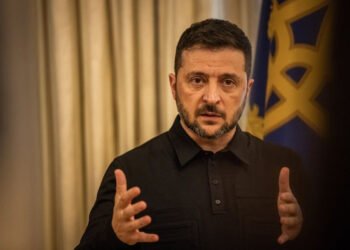
Zelensky invited Putin to a face-to-face meeting
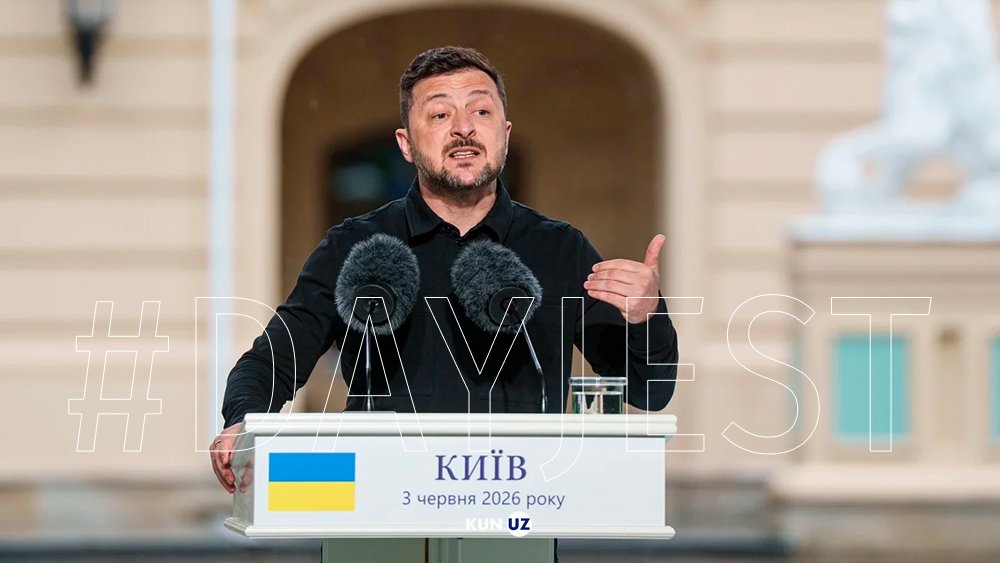
Ukrainian President Volodymyr Zelenskyy has called for a face-to-face meeting with Vladimir Putin in another attempt to end the war.
In an open letter to the Russian president, Zelensky said that peace can only be achieved through “direct dialogue” between Ukraine and Russia and called for a complete ceasefire during the negotiations.
According to the BBC, the tone of the letter was firm, even sarcastic, and Zelensky noted in the letter that “after 26 years in power (Putin’s) age is beginning to tell.” The letter also contained a formal offer:
“Ukraine offers to end this war through direct dialogue between us and you. I am proposing a meeting,” writes Zelensky. Zelensky said face-to-face talks could take place in neutral countries such as Switzerland or Turkey.
This is not the first such proposal of the Ukrainian leader. The Kremlin has hinted at previous suggestions that Zelensky could meet Putin in Moscow.
Zelensky said Russians are tired of war, Ukraine’s drone and missile attacks, gasoline shortages, and rising prices. “Don’t be afraid to choose a way out of this war. This is the main thing that is required of you now,” he said to Putin.
The noteworthy aspect of the letter is that Kiev openly admitted that the USA’s “attention is completely focused on the issue of Iran.”
In an interview with foreign journalists in St. Petersburg, Putin said that he is “undoubtedly ready and willing to reach an agreement with Ukraine.” However, he stressed the need for compromise. Putin believes that while Trump is preoccupied with Iran, the EU could have persuaded Zelensky to hand over the territories.
But Putin seemed to doubt whether a meeting or an agreement would take place at all: “Whether or not Mr. Zelensky is the legal representative of Ukraine is a question for lawyers and legal analysis,” he said.
Putin’s long-standing position is that Ukraine should completely withdraw its troops from four regions – Donetsk, Luhansk, Kherson and Zaporizhzhia – and abandon the idea of NATO membership.
Ukraine, on the other hand, categorically refuses to hand over the territories, saying that it will encourage Russia to a new invasion.
Hezbollah demanded a “comprehensive” ceasefire
Hezbollah has rejected the terms of a ceasefire reached between the Lebanese and Israeli governments in US-brokered talks.
“The cease-fire must be comprehensive — without separating the south from the rest of Lebanon and without giving Israel’s enemy freedom to kill,” said the group’s leader, Naim Kassim.
He also called on the Lebanese government to stop direct negotiations with Israel.
According to the Israeli and Lebanese governments, the proposed ceasefire is “contingent on a complete cessation of fire by Hezbollah and the withdrawal of all of the group’s soldiers from the South Litani sector.” The Litani River is located about 30 kilometers north of the Israel-Lebanon border.
Israeli Defense Minister Israel Katz said his forces would remain in southern Lebanon, near the border, and would not allow Lebanese citizens to return to their homes in the south of the country.
“Hezbollah” said that as Israel’s invasion continues, “resistance will continue.”
The US increased pressure on Cuba
On June 4, the United States imposed economic sanctions against Cuban President Miguel Diaz-Canel and several members of the family of the country’s former leader Raul Castro. The new measures come amid months of simmering tensions between Washington and Havana.
New sanctions of the Ministry of Finance affected the following persons:
-
The President himself, his wife and stepson;
-
Raúl Castro’s son and one of his grandsons.
Raul Castro is the brother of Fidel Castro, the former leader of the Cuban revolution. The 95-year-old politician no longer holds official positions, but still plays a key role in important decisions in Cuba.
Last month, the United States indicted Raul Castro over the 1996 downing of the planes.
Washington has been steadily increasing pressure on Havana in recent months. Representatives of the Cuban government accuse the United States of looking for an excuse to launch a military attack on the island. President Donald Trump has repeatedly threatened to “take over” this country.
Xi Jinping will visit North Korea
Chinese President Xi Jinping will visit North Korea on June 8-9. It is Xi’s first visit in nearly seven years as Beijing and Pyongyang try to restore ties.
According to the North Korean state news agency, Xi is making this visit at the invitation of Kim Jong-un.
The leader of North Korea sent troops and weapons to Russia and deepened relations with Moscow. After that, Beijing is trying to bring Pyongyang, its only official ally, back into its sphere of influence. According to analysts, this is also a signal to Moscow.
This will be the first foreign trip this year for the 72-year-old Chinese leader, whose trips abroad are becoming less frequent.
Since becoming China’s supreme leader in 2012, Xi Jinping has visited North Korea once and South Korea twice.
On the eve of the visit, Kim Jong-un visited the newly commissioned nuclear material production plant. There, Kim called for Pyongyang to “drastically” expand its nuclear arsenal.
Riots in Mexico on the eve of the championship
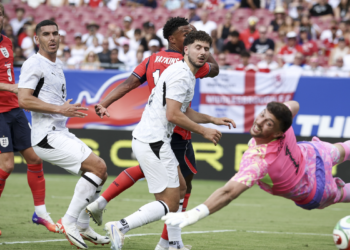
Eight days before Mexico City is set to host the World Cup, teachers and retired referees are holding mass protests.
On June 11, the opening match of the World Cup between Mexico and South Africa will be held at the stadium in Mexico City.
While Mexico was in the global spotlight, teachers and other groups staged marches and blocked major avenues. They said the protests could intensify if the government of President Claudia Sheinbaum does not meet their demands.
The National Union of Teachers is calling on the government to raise wages and repeal a 2007 law that reformed the pension and social security system. Because the president promised to cancel it in his campaign program.
President Sheinbaum said that he would not accept provocations and would not order the suppression of demonstrations by force.
Retired judges and graduate students also demonstrated in the center of Mexico City. They are protesting to demand severance pay and pensions following the sweeping 2024 judicial reform that reshaped the country’s judiciary.
Mexico will host 13 World Cup matches: five in the capital, and four each in Guadalajara and Monterrey.