The boy Abner, 14, keeps as a souvenir of a magical moment the photo of the tail of a whale in the sea taken by him.
Having autism, like his father, Jocemiel de Oliveira Pereira, Abner went with his brother Pietro, 12, and his mother, Reijane Souto dos Santos, in June last year, on a boat trip to see humpback whales in Ilhabela (SP).
“He paid attention to every detail of the sea,” says his mother about her eldest son. The family added to the statistics of a type of tourism that has increasingly attracted visitors outside the summer season to this region of north coast of São Paulo.
With the humpbacks, visitors arrive. The whales’ passage period along the north coast runs from May to August. In 2025, there were 836 recorded sightings in the archipelago — a record. This year, around a hundred have already been seen, but the biggest movement is concentrated in July.
According to data from the Ilhabela Tourism Department, last year around 25 thousand people went to the city just to see whales. The number is more than double the 12 thousand visitors in 2024.
“We could not have imagined (the consequences) even in our most optimistic expectations”, says Heloiza Gomes de Lacerda Franco, president Associação Comercial Ilhabela.
For her, this is the third wave of great tourist impact in recent years in the city. The first started with the cruise ships at the beginning of the millennium. Then came beach weddings and now whales.
In the second semester, the Humpback Whale Project, which has one of its bases in the city, will carry out a type of census with data crossing to find out what the economic and behavioral effects are in the municipality.
“Last year we did research on our own and we believe that the number of people will increase in 2026”, says Aurélio Rufo, tourism coordinator at Ilhabela City Hall. “It’s a market that has been growing a lot, with more service providers and tourists coming to our region.”
Boats that used to leave with sailors and guides for the region’s beaches now have biologists on board. The stops today are at the sea and no longer on the sand. The huge cetacean, up to 16 meters long and weighing 40 tons, is the one who dives when it decides to jump close to the vessel.
Businessman Marcos Cará, 49, from the tour operator Maremar, invested last year in the purchase of a new boat, the fifth in his fleet. At the peak of the whale season, the five go to sea twice in the same day (departures in the morning and early afternoon) with up to 150 people who paid almost R$500 for a few hours at sea.
“Financially, the cetacean season represents more than just summer, sun and beach. People come from all over the world”, he says.
According to Cará, during the sighting season there is no demand for traditional beaches, such as Bonet and Castelhanos Baywhich can be reached by boat or jeep.
In total, during the summer season, from December to March, the island received around 867 thousand visitors. The projection for the months of May to August is a 7% increase in the flow of tourism, reaching just over 674 thousand tourists, not just those who go there to watch whales.
“Projections for the year 2026 will see an additional 2.3 million tourists per year,” says the city hall.
PASSAGE ROUTE
With the ban on hunting in the mid-1980s, this population returned to areas they historically occupied, such as Ilhabela.
The migration of these animals along the coast of north coast began to attract attention about a decade ago, explains biologist Rafaela Souza, 40, coordinator of the project base in Ilhabela.
Annually, these whales depart from South Georgia and the South Sandwich Islands, close to Antarctica, and travel along the coast of São Paulo until they reach the Brazilian Northeast for reproduction.
But there are exceptional cases. Julio Cardoso, one of the founders of the ProBaleia Association, says that in 2019 he photographed a humpback in Ilhabela that had been identified in Australia in 2007 and 2013. “It left Australia, the Pacific, came to the Atlantic and arrived here in Ilhabela.”
With records from researchers and activists in the region, the journey of these whales, of more than 14 thousand km, was described in a recent article published in the journal Royal Society Open Science.
Last Tuesday (2), Cardoso followed the Sheet during around five hours of navigation and stops in the channel south of the island, which served for the official opening of the 2026 humpback season. Together, the two boats spotted eight whales.
Photos of four of them, one taken by the reporter, can serve to identify those who passed by that day.
The identification of a humpback whale generally occurs based on the image of the lower part of the animal’s tail, which is unique to each individual — a kind of fingerprint.
Cardoso states that Ilhabela is the neighboring San Sebastian They can no longer be seen just as a passing area, but as a feeding area, mainly for younger whales, juveniles, which stay there between one season and another.
“This is a new phenomenon and we are still preparing to publish a publication about it,” he says.
On the boat where the Sheetbiologist Isabelle Avolio, 31, environmental educator at the Humpback Whale Project, wrote down data on the whales seen and the conditions of the expedition, such as location of the sighting, temperature, wind speed, among others, which provide statistics and serve as parameters for studies.
According to biologist Rafaela Souza, the last survey carried out by aerial sampling, in 2022, pointed to a population of 35 thousand animals during immigration along the Brazilian coast. A new study will be carried out in the second semester.
“Since the beginning of this census we have seen the population growing. Therefore, we are waiting to confirm whether this continues to happen or has stabilized”, he says.
Source: Humpback Whale Project, based on Ibama ordinance 117, dated 12/26/1996
If the number of animals and tourists increases, concerns also increase. It’s not difficult to know where a humpback is, even if it’s submerged. Just look at the clusters of boats and jet-skis.
To intensify inspection, Ilhabela City Hall concluded a tender to hire 120 boat trips with biologists and drone operators by 2027.
The role of biologists is to explain how responsible tourism is carried out. The drone images with infractions will be sent to Ibama (Brazilian Institute of Environment and Renewable Natural Resources), which may fine anyone who does not respect sighting rules, determined in a conciergesuch as maintaining a minimum distance of one hundred meters from the animal or not limiting the observation time to 30 minutes.
Awareness work is also carried out in marinas.
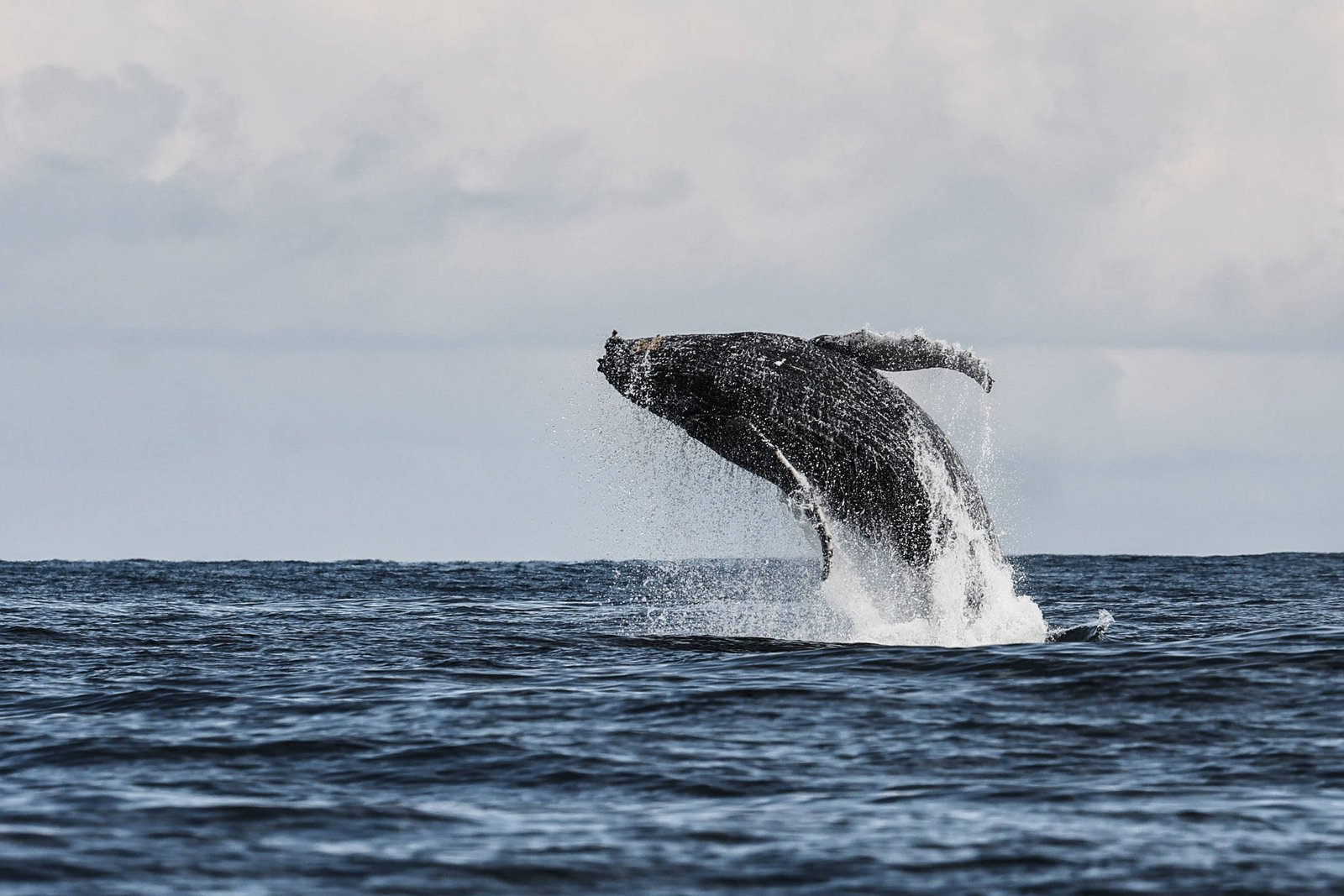
On the 2nd, in a controlled environment in the region of Borrifos beach, in the south of the island, two humpbacks swam without fuss close to three or four boats. They appeared without exposing themselves to the bow or left side of the boat, where there were eyes and cell phones ready. Suddenly, a huge noise like an explosion in the water to the right. It was the first of three huge jumps from one of them.
After the spectacle, the whale made one last dive, leaving its tail clearly visible, as if it wanted to leave its mark. It should be cataloged as SP-0829.
SERVICE
Click to find accredited tour operators
You must make an advance reservation with the operator
Price
From R$250, but can reach R$1,000 depending on the service offered, which may even include breakfast and food on board.
Stamp
- In the case of Ilhabela operators, check if the vessel has a sticker with the seal “Ilhabela, Whale-Friendly City” to find out if it is accredited and the crew is trained.
Sources: Ilhabela and São Sebastião City Hall
Journalists traveled at the invitation of Ilhabela City Hall