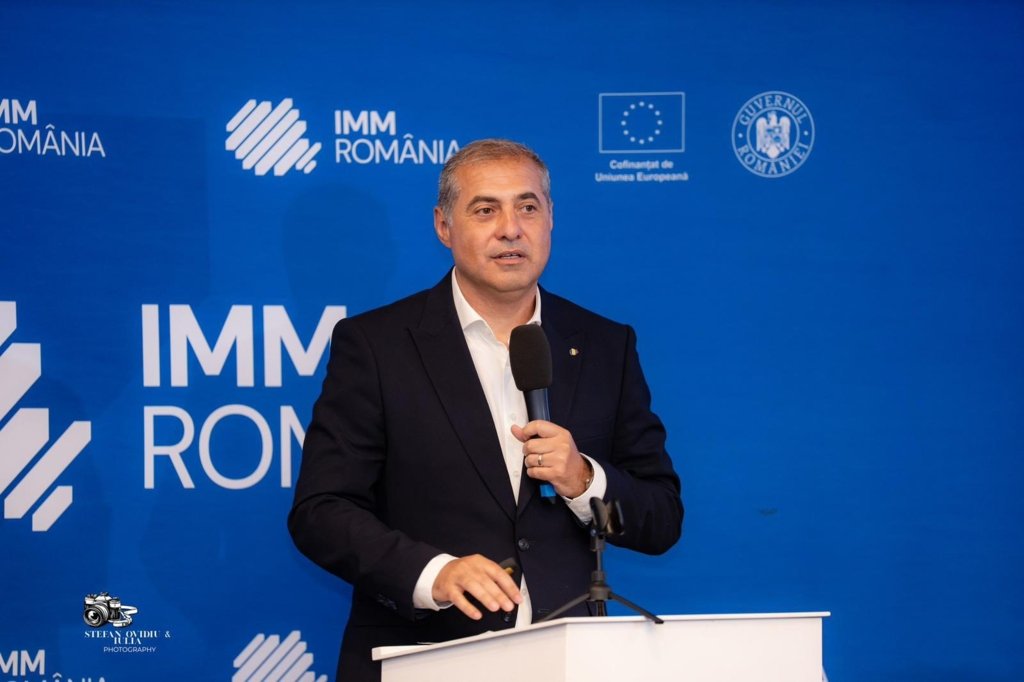

Florin Jianu, president of IMM Romania PHOTO Facebook/Florin Jianu.
A survey conducted by SME Romania, among more than 2,000 entrepreneurs, shows that inflation, economic instability and the lack of a functional Government seriously affect the business environment, and almost 10% of companies are considering layoffs or even closing their business.
Rising energy, fuel and raw material costs, along with falling sales and a lack of resources for investment, are the main problems reported by entrepreneurs, who warn that the increase in the minimum wage from July 1 could increase prices and pressure on companies.
In this context, the business environment asks the future Government to reduce labor taxation, lower VAT and urgent measures to stimulate investments and stabilize the economy, ProTV News shows.
“A bad news for the next period is that the minimum wage in the economy will increase from July 1, 2026 to 4,325 gross lei per country. The bad news is that the entrepreneurs declare that there will be price increases in the future, that the prices will continue to rise, that the staff will be reduced and, attention, something that did not appear on our radar, in our research: almost 10% of the surveyed entrepreneurs declare that they will close the companies. This, I confess to you, is a first, it did not appear in our previous analyzes (…) To the question “How is the activity of your company affected, considering the devaluation of the leu during this period?”, 80% of the respondents declared that the costs of production and provision of services have already increased, what we see further, that the volume of production and services provided has decreased and, attention, in third place, 23.2% declare that there will be layoffs of employees”, he mentioned Florin Jianu.
The government has determined that from July 1 the minimum wage will increase. The gross will increase from 4,050 lei to 4,325 lei, so an increase of 275 lei. Net, however, the increase is no longer as high. Employees will have an extra 119 lei in their pocket, and the state is the one that earns more from taxes and higher contributions paid by employers.
From July 2026, the hourly rate will be 25,949 lei/hour for a full work schedule of 166,667 hours, on average, per month. The increase represents an increase of 6.8%, which in absolute value means 275 lei in gross amount.
In net value, the salary will be 2,699 lei (with the deduction of 200 lei), the net increase being 125 lei. In Romania, a number of 831,382 employees currently benefit from the minimum gross basic salary guaranteed in payment, the Ministry of Labor also stated. A number of 1,759,027 employees will benefit from the increase in the gross minimum basic salary per country.
What entrepreneurs demand
Florin Jianu also states that inflation, economic instability and the lack of a functional Government affect 74.2% of entrepreneurs, who complain about rising costs, falling sales and a lack of resources for investment, while only 1.9% say they have no problems.
The entrepreneurs ask the future Government to reduce labor taxation, dividend tax and VAT, along with measures to reduce budget expenses, increase the absorption of European funds and stimulate investments in the economy, added the president of IMM Romania.
“The first three problems that entrepreneurs expect the future Government to solve show one thing, which is that entrepreneurs are suffocated by taxes and fees. They expect the reduction of labor taxation by 5 percentage points, the reduction of the dividend tax, as it was before at 5%, the reduction of VAT or the return to the previous VAT. Also, the reduction of budget expenditures, the increase in the absorption of European funds and investments in infrastructure and in the real economy are issues on which the future Government should solve quickly, in the understanding of small and medium-sized enterprises”, said Florin Jianu.
In his opinion, the increase in VAT to 11%, respectively 21%, is also felt “by the decrease in the volume of services and products sold, by the increase in the prices of products and services with the value of the VAT increase and by delays in receipts due to the lack of liquidity”.
“Only 1.4% of entrepreneurs declare that they have increased their receipts during this period. So, with all these increases, with all these price increases, receipts have not increased during this period. This shows us that the solution is not, in fact, the increase of VAT and the increase of fees and taxes,” he added.