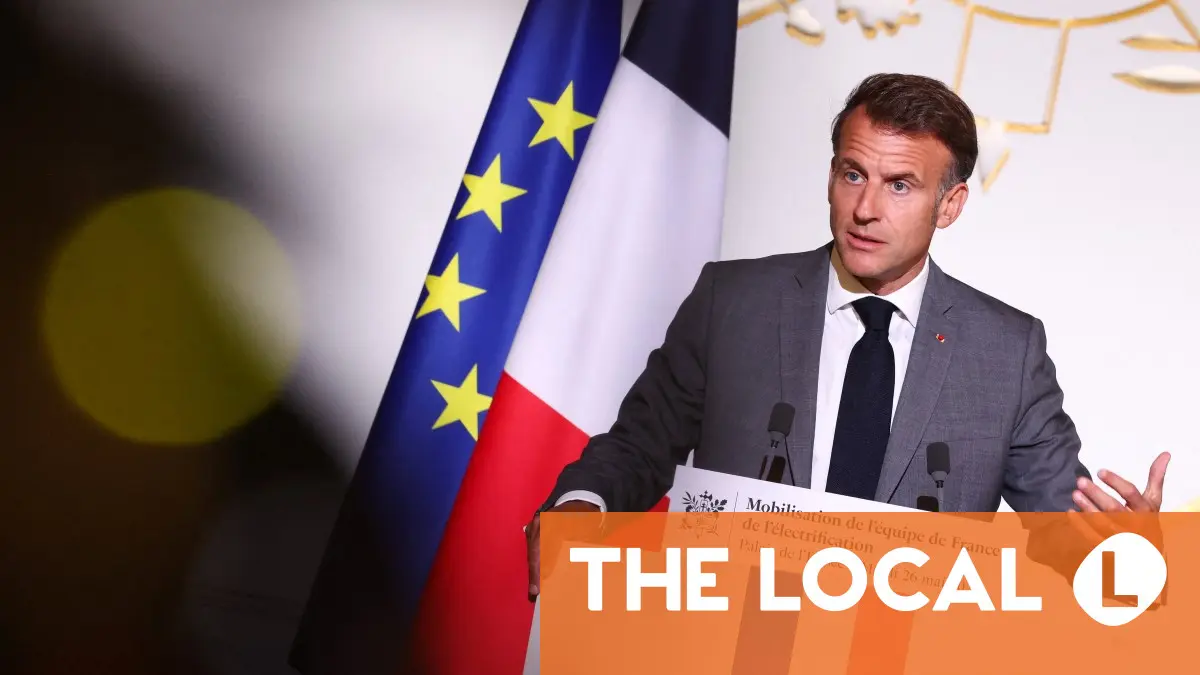
With almost a year of his presidency left to run, Emmanuel Macron has effectively lost control of his government and his succession – John Lichfield looks at where it all went wrong for the young man once touted as the future for France.
In less than a year, Emmanuel Macron will cease to be President of the Republic. Put another way, Macron’s endless goodbye still has more than 11 months to run.
He surrendered real power when he lost a snap parliamentary election almost two years ago. Three quarters of French people say that he has been a poor president. He remains respected, and occasionally effective, abroad.
In the campaign to replace him in the Elysée Palace next April, Macron is playing no role – save that of bogeyman for the Left and Far Right. His would-be successors in the Centre, Edouard Philippe and Gabriel Attal, scarcely mention him.
It seems that Macron would like to see a presidential run by another of his discarded Prime Ministers, Jean Castex, who now heads the SNCF, the state-owned railways. But that train shows no sign of leaving the station.
President Macron still has an important contribution to make in European and global affairs. He is chairing the G7 summit in Evian-les-Bains next month. Domestically, he has lost control of the government, his own party and all influence over his succession.
He is only 48. It is a sad end to a political career – even though perverse French precedent suggests that Macron is likely to become popular and respected in “retirement”.
Whose fault is his failure? Does it make a Far Right victory next year inevitable? Emmanuel Macron presented himself in 2017, and again in 2022, as the last bastion against Lepennism. If Marine Le Pen – or more likely Jordan Bardella – wins next Spring, it will be the ultimate rout and humiliation for Macronism
Nine years ago Macron, promised France a painless revolution. Unlike previous French revolutionaries, he would not build barricades, he would destroy them. The weight of the French state had stifled the nation’s commitment to Liberty; he would release France’s native energy and genius. The power of corporate, class and racial vested interests had squashed France’s commitments to Egality and Fraternity; he would make France a land of opportunity.
The master key to all these changes would be the European Union – a reinvigorated France at the core of a more purposeful and ambitious EU, open internally, but more protective of its “strategic” interests in the world.
Macron succeeded, where previous Presidents had failed, in reducing French unemployment (though sadly it is now rising again). He helped to make France the most attractive European destination for foreign investors. He preached the the concept of a “strategic Europe” to stand up for European values and prosperity long before the idea was validated by the bullying of Vladimir Putin and Donald Trump.
And yet Macron has also taken France into a political quicksand with no secure government, a record budget deficit and €3 trillion in accumulated debt. Much of the extra trillion euros added to the French debt in the last nine years can be attributed to Covid and efforts to soften inflation after Russia invaded Ukraine.
But Macron was always more interested in cutting taxes than shrinking the French state. The painful explosion in the deficit is partly a result of his conviction that France could grow painlessly out of debt.
The slow debacle of pension reform can also be traced back to the “original sin” of his promise of painless change. Macron said that he could persuade people to work longer while avoiding an increase in the minimum retirement age. He could not.
He was forced to abandon his convoluted points plan for pensions and impose a cruder reform, increasing the standard retirement age from 62 to to 64. Over 80 percent of French people opposed him.
To force through a pension reform against the wishes of four in five voters was an act of political courage but also suicide. It destroyed his second term.
Other explanations for Macron’s failures are available.
No recent French leader has been beset by so many external crises, from Covid, to the Ukraine war, to Donald Trump and the present Gulf war.
All democratic leaders are rapidly detested in the social media age.
Everyone hates a centrist. From the start, Macron was bashed from left and right. He failed to sustain a narrative of successful reforms even when they were successful.
He hastened the collapse of old centre-left versus centre right, political system but failed to build a solid, new grass-roots movement of the Centre.
But most of all, perhaps, Macron paid the price for overselling Macronism. He was more courageous in some ways than his predecessors but his “painless revolution” was neither painless nor revolutionary. He has not dismantled the barriers to a more successful France; he has collided with them.
The problem for his would-be successors is how to re-frame “centrism”. The French people, as ever, demand “change” but detest “changes”. Painful reform, however necessary, is unsaleable. The concept of painless, centrist reform – however necessary – cannot be reheated and served again.
Both Edouard Philippe and Gabriel Attal have promised a catalogue of new ideas this summer. So have the likely candidates of the Centre-Left. Will they have the courage to say that gain will require pain?
Bruno Retailleau on the Centre-Right wants everyone to get excited about immigration so that he doesn’t need to have any ideas about anything else.
Only the Extreme Right and Extreme Left have it easy. We will change everything, they say, and the bill will be paid by a) immigrants or b) the rich.