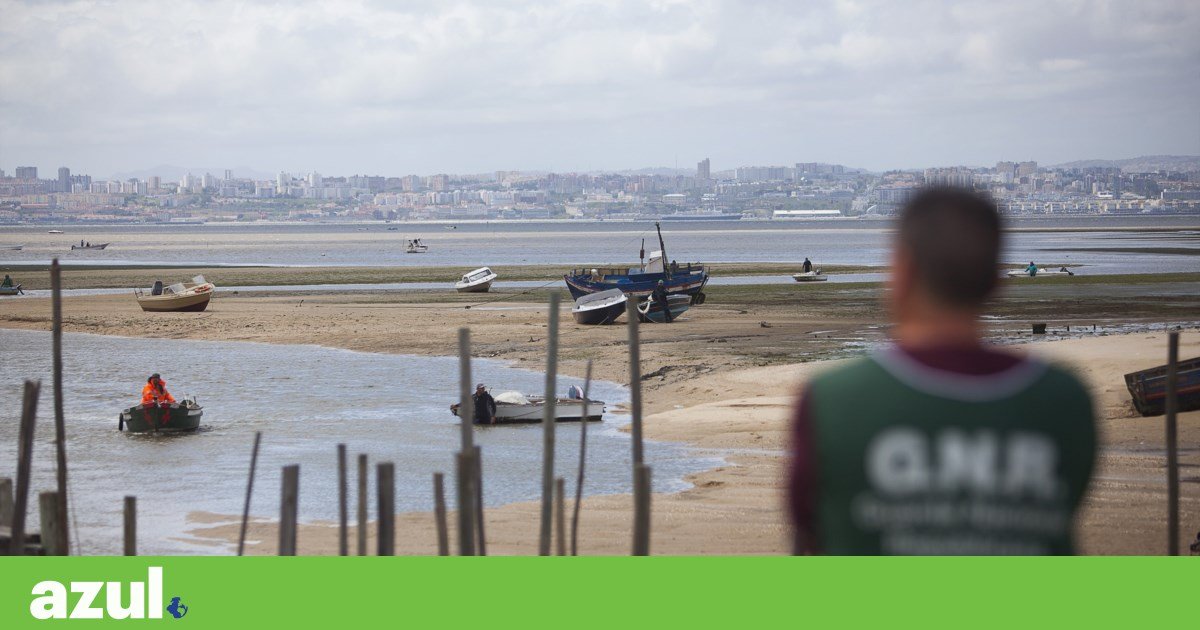
Bivalve collectors are, as of this Monday, subject to new rules, such as the obligation to register all movements of live molluscs in a document on paper, which is issued by DGRM.
According to the Ministry of Agriculture, it is now mandatory for bivalves to pass through a “national related establishment duly licensed and authorized by the General Directorate of Food and Veterinary (DGAV), before carrying out any type of transaction”. The Government changed the rules to combat illegal capture of Japanese clams in the Tagus River and other bivalves in other areas of the country.
“Collectors are now obliged to register all movements of live bivalve molluscs through a document issued by the General Directorate of Natural Resources, Security and Maritime Services (DGRM), exclusively on paper, valid only in national territory”, announced the ministry led by José Manuel Fernandes, in a statement.
According to the ministry, “the sale of live bivalve molluscs to wholesale and retail commercial establishments or directly to the final consumer can only be carried out after their registration and purification and/or dispatch by a national related establishment duly approved for the purpose”, with the exception of catchers with fish supply contracts, to whom these rules do not apply.
With these changes, the Government intends to guarantee “traceability and health conditions” of bivalves, which cannot be shipped from national territory, “except when there is a supply contract, without passing through a duly licensed establishment”.
“Primary producers, until the TRACES platform is available, must register the movements of live bivalve molluscs, through the use of accompanying documents on paper, issued in books by the DGRM, in national territory.
It is also now mandatory, in the absence of a supply contract, for live bivalve molluscs (MBV) to pass through a related national establishment (purification plants, shipping centers or deposits) licensed and duly approved by DGAV, a requirement that will be applicable to the entire continental territory and to all bivalves”.
Related establishments must meet six criteria, such as “compliance with the applicable rules for the purpose of approving the activity of first sale (delivery) of bivalves”, not being “flagged by the authorities for the practice of illicit activity”, reporting data to Docapesca, through an application defined for this purpose, confirming the validity of the catcher’s license, “by reading the QR Code”, reporting anomalous situations to the DGRM.
A request to add the first sale activity “must be submitted by related establishments to the DGRM, through the Balcão Electrónico do Mar (BMar)”, the ministry also states.
Before moving forward with these changes, the director general of Natural Resources, Security and Maritime Services prohibited, on January 21, 2026, the capture of Japanese clams in the Tagus until hygiene, work, safety and traceability conditions are guaranteed.
The ban, as he pointed out, allowed inspection actions to be carried out and “to study, together with the various stakeholders, a new model that allows the identified problems to be avoided, not just for the Japanese clam harvesting in the Tagus, but for the harvesting of all bivalves”.
The National Maritime Authority (AMN) and the Food and Economic Security Authority (ASAE) carried out an inspection action on March 27 on the Tagus River, which led to the seizure five vessels used in illicit practice, the identification of 11 people and the seizure of three vehicles carrying around half a ton of Japanese clams.