The French newspaper Figaro points to the long road and the difficulties that still remain and underlines the controversial laws on the judiciary adopted by the Serbian parliament, the lagging reforms in Bosnia and Herzegovina (BiH) due to political disputes, and the political dead end in Kosovo that prevents any reform.
“A large part of the region as a whole is lagging behind, late in the process leading to EU membership,” Figaro believes.
In all reviews, the media in the EU emphasize that possible membership must be in accordance with the merits of the implemented reforms.
The French economic daily Lezeko notes that “Serbia, a heavyweight of the region with 6.5 million inhabitants, is the most problematic due to its weak integration into the EU’s foreign and security policy, especially when it comes to Russia.”
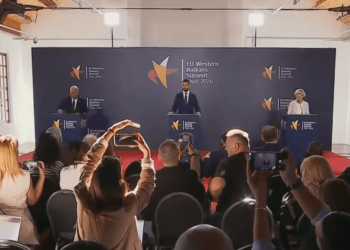
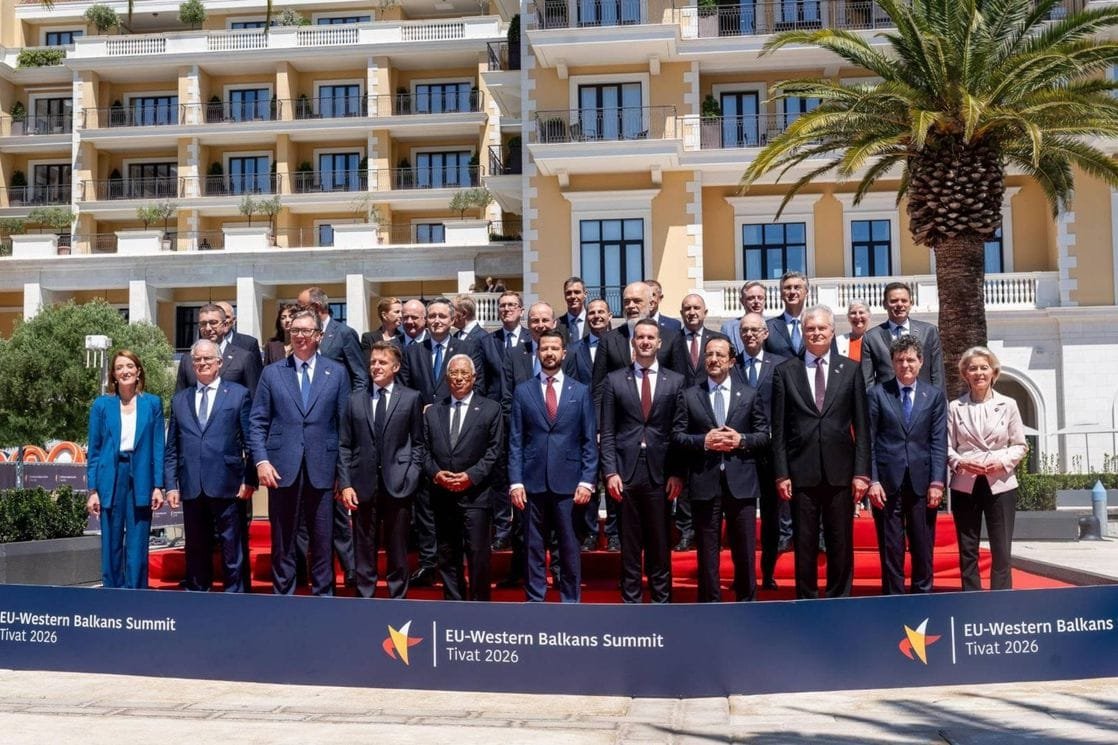
The German Deutsche Welle points out that Montenegro is leading the way towards membership, but also that the German Chancellor Friedrich Mertz indicated that “the road is still long, but feasible”.
The French newspaper Mond draws attention to the fact that the countries of the Western Balkans still face key tasks – combating corruption, organized crime and strengthening the independence of the judiciary.
Mertz and French President Emmanuel Macron told Podgorica that they will help Montenegro reach the threshold of the EU as soon as possible, the reports point out, although the Paris economic daily Lezeko believes that Podgorica still has “a lot of crazy business” ahead of it.
At the same time, Lezeko states that Montenegrin Prime Minister Milojko Spajić, a former employee of the American bank Goldman Sachs, is adept at visiting financial centers with the aim of encouraging investors, and today he is trying to convince the leaders of the old continent to accept opening the doors of the Union.
Spajić assures the EU leadership that the Union already had 28 members by the time Great Britain left, and that small Montenegro, “with only 600,000 inhabitants, would require only minimal financial measures in the Union’s budget”, the French newspaper reports.
And, as he adds, a working group has already started drafting the contract on Montenegro’s accession to the EU.
“Although the 27-members want to include many protective clauses in the accession agreements for the region, especially when it comes to the rule of law, in order to avoid the backsliding in democracy, seen in Hungary under Viktor Orbán’s rule,” adds Lezeko.