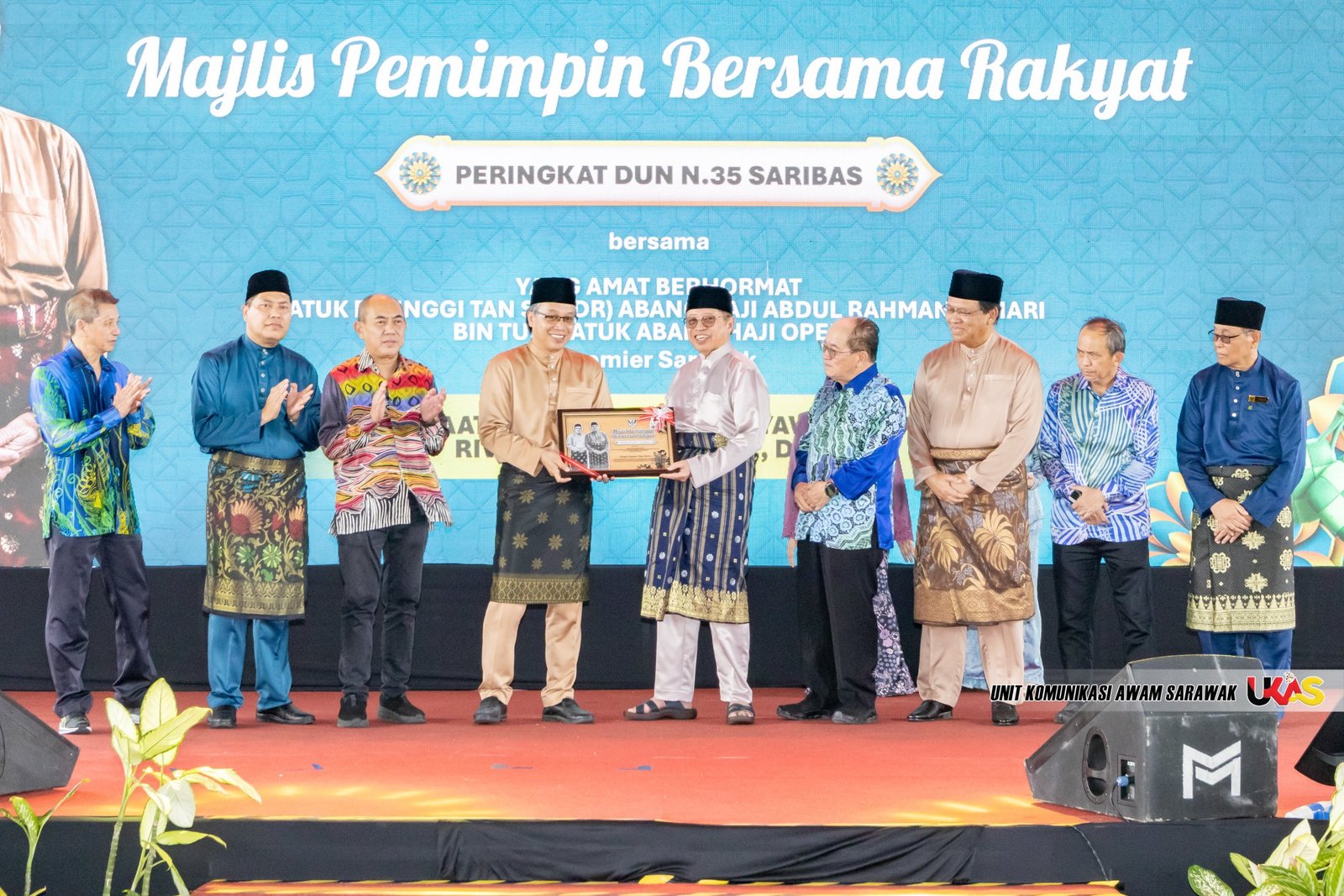

Mohamad Razi (fourth left) presents a memento to Abang Johari. From third left are Rentap, Uggah, and Dr Abdul Rahman. – Ukas photo
KUCHING (April 17): Sarawak is set to mark another major infrastructure milestone next month with the opening of the Batang Lupar 1 Bridge, which at 4.8km is set to be the longest river crossing bridge in Malaysia.
The RM900 million project forms part of the state government’s ongoing effort to strengthen connectivity across central Sarawak by replacing ferry services and significantly reducing travel time between Kuching and surrounding divisions.
Premier Datuk Patinggi Tan Sri Abang Johari Tun Openg said the bridge is among key infrastructure projects implemented under the Post Covid-19 Development Strategy (PCDS) 2030.
“Insya Allah, this May we will be using the longest bridge across a river in Malaysia, a bridge that we built with our own efforts and our own funds, worth RM900 million,” he said during an event with Saribas constituents at Riveria Sport Centre in Debak.
He said the bridge would eliminate dependence on ferry services, which rely on diesel and are highly exposed to fluctuations in fuel prices.
“Imagine if we use ferries. Ferries run on diesel. If diesel prices increase threefold, ferry costs will also increase threefold,” he said, adding that such increases would ultimately be passed on to users.
Abang Johari said improved road connectivity, including the Second Trunk Road, would further reduce travel time between Kuching and central Sarawak once the full infrastructure network is completed.
He said the 142km journey from Sejingkat to Sri Aman could be completed in about one hour and 15 minutes if travelling at an average speed of 90km per hour.
From Sri Aman, he said, it would take about 20 minutes to reach Betong, while the journey from Kuching to Debak would take less than two hours.
“Meaning we can have breakfast in Kuching and lunch in Debak,” he said.
Abang Johari said Sarawak’s ability to finance major infrastructure projects is supported by stronger state revenue, including income from oil and gas-related sources, allowing the government to expand development spending.
He said the state proceeded with the construction of more than 20 bridges worth nearly RM7 billion, despite cancellations by the federal government.
“We built them ourselves,” he pointed out.
On rural development, he said the government continues to expand electrification initiatives, including the shift from diesel-powered generators to renewable energy systems under the Sarawak Alternative Rural Electrification Scheme (Sares).
He said several interior areas, including parts of Baram, have already been converted to solar-based systems, ensuring more stable and cost-efficient electricity supply without reliance on diesel.
Abang Johari pointed out Lawas has already been connected to the state grid, while Limbang is expected to be fully integrated soon, moving Sarawak closer to eliminating diesel-based electricity generation.
He stressed Sarawak’s development direction is guided by sustainability, digital transformation, and emerging economic sectors, including carbon trading and hydrogen energy.
“We must ensure our development keeps pace with global changes,” he said.
Among those present were Deputy Premier Datuk Amar Douglas Uggah Embas; Deputy Minister in the Premier’s Department (Project Coordinator for Regional Development Agencies, DBKU and Islamic Affairs) Datuk Dr Abdul Rahman Junaidi; Deputy Minister for Youth, Sport and Entrepreneur Development I Datuk Gerald Rentap Jabu; and Saribas assemblyman Datuk Mohamad Razi Sitam.