Armenia, a Caucasian nation of three million people, is holding parliamentary elections on Sunday under the watchful eye of Moscow, which is stepping up pressure on the former Soviet republic to maintain its influence, Reuters reported.
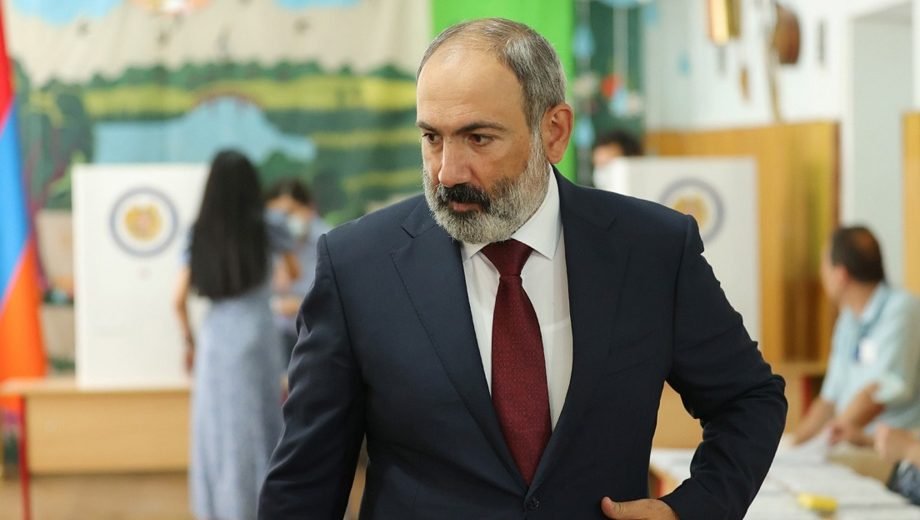
Armenia, a former Soviet republic with close historical ties to Russia, is the target of threats from the Kremlin, which is trying to prevent Yerevan’s rapprochement with the Western world under the leadership of outgoing Prime Minister Nikola Pashinyan.
Last week, Russia threatened the country with binding measures related to their agreements to supply cheap oil and gas if Yerevan continues its steps towards joining the European Union (EU).
In 2025, Armenia adopted a law aimed at starting the EU accession process. Pashinyan, a pro-Western ally of US President Donald Trump, is widely favored in polls to win the June 7 election as leader of his Civil Contract (KP) party, facing several pro-Russian parties.
In power since 2018, the 51-year-old former journalist announced on Wednesday that he will travel to Russia after the election to meet with Russian President Vladimir Putin, according to Russian news agency Interfax.
Russian intimidation of Yerevan, along with a series of restrictions and temporary bans on Armenian exports, reflects Moscow’s overall loss of influence, which is mired in the war in Ukraine.
From Havana to Caracas, via Belgrade and the Central Asian steppes, the Kremlin’s influence is waning among its former allies, who are courted by the EU and the United States.
Armenia has long benefited from Moscow’s largesse and hosts a Russian military base. But a partnership agreement between Yerevan and Washington was signed last month, further irritating Russia.
“Of course, we are deeply concerned about the approach of the Armenian authorities to the Euro-Atlantic community, whose essential policy is directed against Moscow,” the spokeswoman for Russian diplomacy, Maria Zakharova, told reporters recently.
For Russian analysts, Russia is facing a concerted attempt by the West, as in other parts of the world, to push it out of the South Caucasus region, of which Armenia is a part.
Ukrainian President Volodymyr Zelensky’s visit to Armenia at a meeting of European leaders last month caused tensions.
Since then, Russia has temporarily banned the import of many Armenian products, threatened to freeze oil and gas exports, pulled its ambassador from Armenia and hinted that Yerevan could be excluded from the Eurasian Economic Union, a Russian-led trade bloc.
Moscow also complains of growing “hostility” in Europe, as it offers the prospect of membership to countries where Russia once had influence.
Viktor Orbán, a Hungarian ally of Vladimir Putin and an opponent of EU aid to Ukraine, lost power in April to a pro-European candidate.
Serbian President Aleksandar Vučić, also a Russian ally, has also been under pressure from the Kremlin since his country decided to end the visa-free regime for Russians as part of the EU accession process.
Moscow’s influence is also being eroded in Transnistria, a separatist enclave occupied by Russian forces and internationally recognized as part of Moldova, whose current political leaders aspire to EU membership.
Follow us on our Facebook and Instagram page, but also on X account. Subscribe to PDF edition of Danas newspaper.