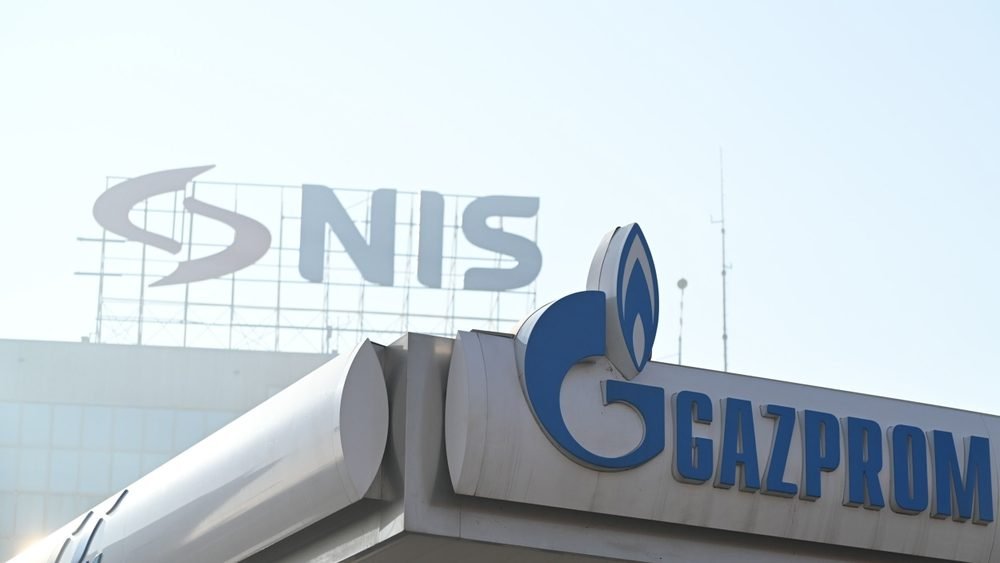
The uncertainty surrounding the Oil Industry of Serbia (NIS) continues. On Saturday, June 6, another extended deadline approved by the US administration as a deadline for solving the issue of the change in Russian ownership expires.
Danas interlocutors believe that this deadline will also be extended, and that the uncertainty surrounding the NIS will continue for some time.
Hungarian MOL is still mentioned as the main potential buyer of the Russian stake in NIS. This is what both the Russian and Serbian sides claim, stating that the talks between Gazprom Neft and MOL continue and that a solution for the future of NIS is still being sought.
The latest information, announced by the Minister of Mining and Energy, Dubravka Đedović Handanović, is that MOL is from the US Office of Foreign Assets Control (OFAC). requested an additional 30 days for negotiations in connection with NIS.
“On their part, there is certainly a will to find a solution,” said Đedović Handanović at the summit in St. Petersburg.
NIS’ operating license expires on June 16, and the minister stated that the chairman of Gazprom Nefta’s Board of Directors Aleksandar Dyukov confirmed to her that the company will request a new license extension.
In the meantime, the tensions between MOL and the Serbian state, which culminated about a month ago, have subsided. As Serbian officials claimed at the time, the two parties could not reach an agreement on the operation of the NIS refinery and other issues that Serbia considers its red lines in the event that MOL becomes the new owner of the company.
However, Đedović Handanović recently stated that the positions of the two sides are closer and yes expects a satisfactory outcome of the negotiations.
Messages are coming from all sides that they are negotiations in the final phasebut their final epilogue is still awaited.
The offer of Serbian businessman Ranko Mimović is still in circulation, who confirmed for Beta on Wednesday that he sent the CEO of Gazprom Aleksej Miller irrevocable letter of intent to purchase of the entire ownership of Gazprom and Gazprom Neft in NIS.
He claims that his company KFT Senator Treasury GT7 Dva has financial resources of two billion euros for the purchase of a majority Russian share.
According to him, if MOL wanted to buy NIS, it would have done so by now. “MOL’s agreement on the purchase of NIS existed while Viktor Orbán was the Prime Minister of Hungary. The current government is not in favor of that purchase, nor does MOL have the funds, and besides, there are problems in Croatia,” said Mimović.
He pointed out that, according to unofficial information, MOL wants to close the NIS Refinery in Panačevo after 24 months if it buys NIS, and the Hungarian company’s goal is to only get about 400 NIS pumps to sell its derivatives.
Danas interlocutors, however, still believe that Mimović’s offer should not be taken too seriously.
“Buying time, probably no negotiations at all”
The analyst of IPOPEMA Securities brokerage Vladan Pavlović sees the latest developments in connection with NIS, primarily MOL’s request for an additional 30 days, as buying time.
“At the very least, the probability is increasing that this is about buying time, and that there probably won’t be any negotiations at all, I think that’s clear to everyone now,” Pavlović points out for Danas.
When asked whether OFAK will agree to an extension of the deadline this time, Pavlović replied that such a possibility exists.
According to his opinion, there is clearly no buyer, so, as he says, it is not impossible for the extension of the alleged negotiations to be approved, because the alternative would be the reintroduction of full-scale sanctions.
“It’s hard to believe that anything is really still being negotiated. At the very least, an agreement should have already been reached, and some fine details should have been dealt with by lawyers. Obviously, that’s not the case here. Stories that the negotiations are complex are just fiction, unless it’s working on a model that would involve the return of ownership,” believes Pavlović.
According to him, the offer of the KFT Senator company, which is backed by Serbian businessman Ranko Mimović, should only be understood in the light of “misleading the domestic public”.
“Mimović’s offer is like Gunvor’s offer, but at a lower level”
Vasko Kelić, an associate researcher at the Center for Economic Research of the Institute of Social Sciences, tells Danas that it is difficult for him to imagine that the deadline will be extended by one month, because, as he indicates, it is twice as long as the previously approved extension.
“I don’t know what kind of progress it would have to be to allow such a delay at this moment, but everything is possible. A possible extension of 10 days seems more realistic to me (to coincide with the sales and license deadlines) or at most until the end of the month,” says Kelić.
When asked how he comments on the statements of Serbian officials, which range from assessments that negotiations with MOL are difficult to expectations of a satisfactory outcome, Kelić says that such messages seem to him to be a communication strategy aimed at the public, primarily domestic, but also American decision makers.
As he points out, the goal of such a strategy is to increase the significance of the probably relatively limited progress achieved in the negotiations with MOL, in order to present its own work in a more positive light and ensure a new extension of the deadlines.
“If we talk about the minister’s statement, she is probably also influenced by what she heard in Saint Petersburg. Although she may have been sent messages there that are positive regarding the possibility of an agreement, this does not necessarily mean that things are really moving significantly towards a solution. In any case, when it comes to the main course of negotiations between the Russian and Hungarian sides, the Government of Serbia is primarily the recipient of messages, not the decisive actor,” emphasizes Kelić.
Speaking about Mimović’s statement that he sent an irrevocable letter to Miller, Kelić believes that this announcement should not significantly affect the perception of his offer, since, our interlocutor reminds us, he had sent messages to various actors involved in the NIS story several months ago.
“If by some chance there really is a positive response from the Russian side to Mimovic’s offer, it will probably be a signal that it is a questionable deal that will have difficulty getting approved by OFAK, something similar to Gunvor’s failed offer for Lukoil, but at a lower level,” concludes Kelić.
Let us remind you, the Swiss trader of energy products Gunvor gave up on the purchase last year part of Russia’s Lukoil assets abroad after US authorities signaled they would not approve the transaction because of the company’s alleged ties to the Kremlin.
Follow us on our Facebook and Instagram page, but also on X account. Subscribe to PDF edition of Danas newspaper.