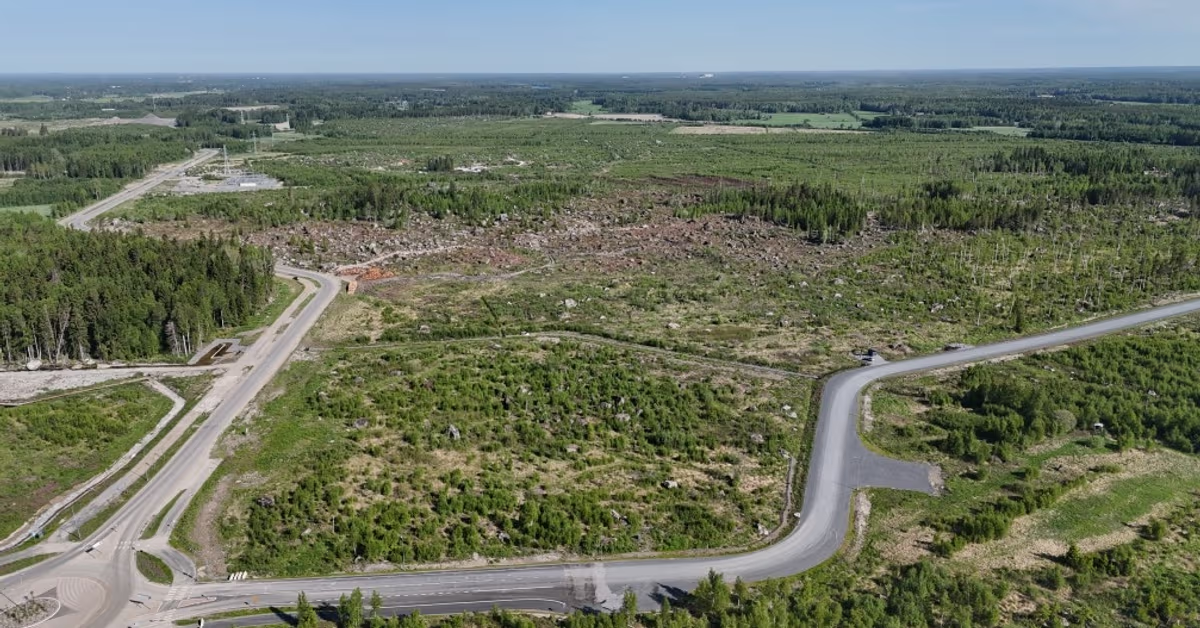
The data giant has committed to expanding the production of renewable electricity to counterbalance its use, according to Vaasa’s mayor.

Microsoft has signed a preliminary agreement to buy about 190 hectares in the Vaasa region of western Finland for a possible data centre.
Of the area covered by the agreement, about two-thirds is located in Vaasa and the rest on the Korsholm side of the municipal border, an area dubbed Gigavasa.
According to a Microsoft press release, the location was chosen due to its industrial environment and infrastructure.
“It’s fantastic to move forward with the project and collaborate with Vaasa and Korsholm. Finland is an important country for us, and we are committed to investing here in the long term,” Microsoft Finland CEO Teemu Vidgrén said in the statement.
“It feels really good”
Microsoft, which has had operations in Finland since 1992, is now building its first data centres in southern Finland.
Vaasa City Manager Tomas Häyry sees Microsoft as a reliable, international player that is welcome in the Gigavasa area.
If the project is realised, he says, it will bring the region more expertise in data and energy, while boosting its position as a global energy technology hub.
“It feels really good. We’ve been working for several years to develop the area and now we have an international player coming there, so we’re very satisfied,” Häyry told Yle on Friday.
More renewable electricity production
Häyry responded to local concerns about energy consumption and prices, saying that Microsoft Finland has “a strict principle that they will not use the electricity that’s in the grid today, but have [instead] committed to increasing the production of renewable electricity as much as they use”.
According to Häyry, Microsoft will have to invest in energy infrastructure together with Fingrid and the local network.
“We have several wind power projects that have been at a standstill. I believe they will gain new momentum with this news,” he said.
Operators of data centres seek out places where electricity prices — and the emissions from that energy — are relatively low. Finland’s electricity is relatively cheap, partly due to the expansion of wind power.
Finland’s cool climate also makes it easier to cool the data centres, while the heat from the facilities can be repurposed for local district heating.
This initial agreement is valid until the end of the year, when it could be extended by a year. According to Häyry, more details about the plan may be confirmed by next autumn.