After weeks of fragile truce between Washington andTehranLimited clashes return to test the limits of American patience. While the American President insists Donald Trump In order to avoid an all-out war, recent developments reveal a growing dilemma: how to contain Iranian escalation without sliding into a widespread confrontation in… The Middle East?
Trump’s red line
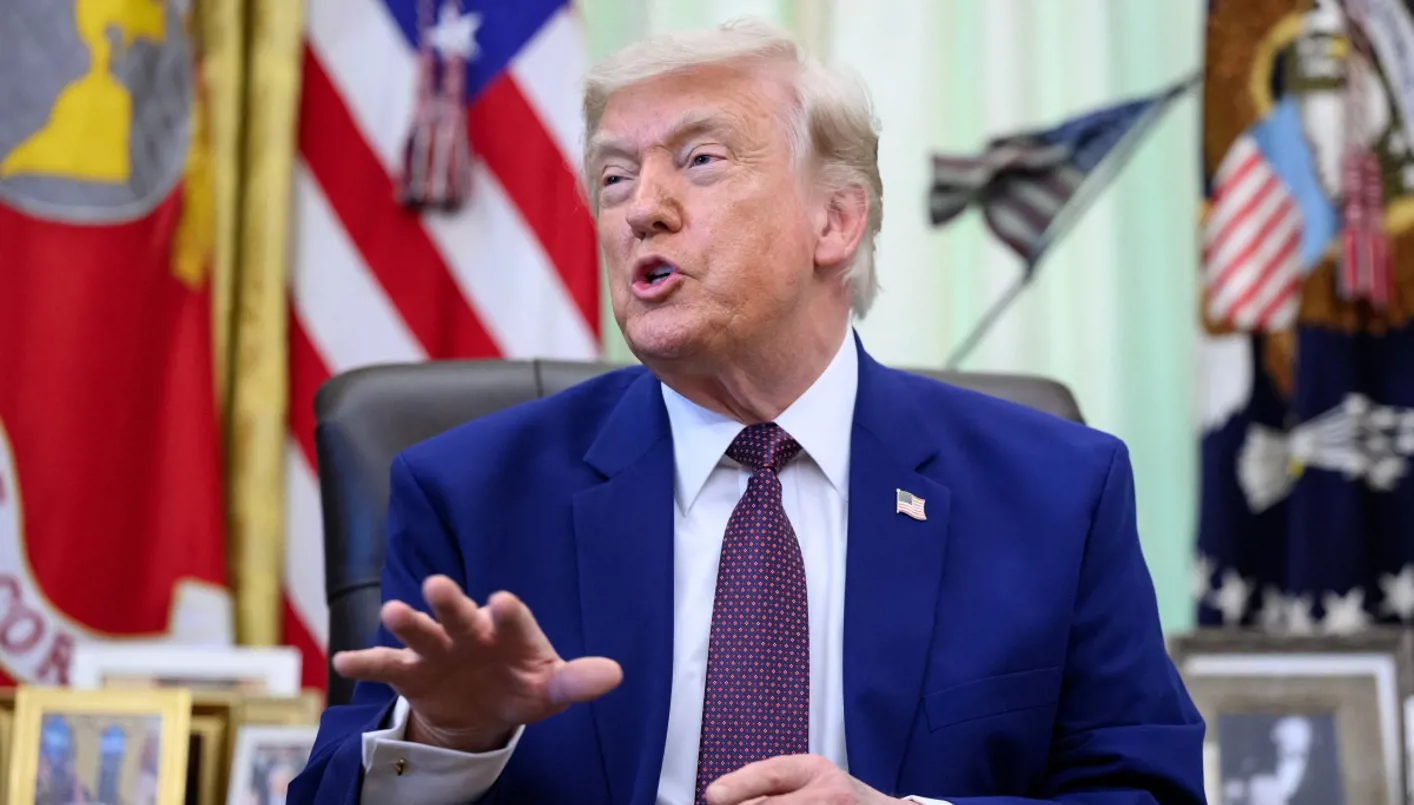
At a time when clashes continue, a Wall Street Journal report reveals a striking shift in the way Trump is managing the crisis. Instead of threatening a broad response to every Iranian provocation, it appears that… The white house He drew a more specific red line: the killing of American soldiers. This shift raises questions about whether Washington has moved from a policy of deterrence based on escalation to a strategy aimed at containing tension.
US officials said that Trump informally informed his aides that he would consider ending the ceasefire with… Iran If Tehran kills American soldiers.
Trump’s reluctance to reignite the war suggests that he may be willing to endure small clashes for weeks or even months to avoid a broader conflict in the Middle East.
Lebanon is at the heart of the US-Iranian negotiations…a red line or a negotiating card?
Trump is hesitant…and “besieged”?
I entered US This week, Iran is in some of the most violent clashes since the ceasefire came into effect in early April, as Iran fired missiles and drones at American bases in the region and an airport. Kuwait International. The attacks led to the death of one person.
American officials said that the repeated attacks increased pressure on Trump and cast doubt on the long-term sustainability of the ceasefire. At the same time, the US President has repeatedly said that he is close to signing an agreement to end the war that reopens it Strait of Hormuzand eliminates Iran’s nuclear programIt removes the country’s stock of enriched uranium.
The intensification of fighting in the Strait of Hormuz and Iran’s escalation against regional targets intensify the diplomatic dilemma facing Trump. The question before him is whether he will sign an agreement with Iran that falls far short of his goals, or will he insist on the conditions he wants but is unlikely to obtain?
Trump rejected the latest Iranian proposal last Friday, telling aides that Iran needs to make serious concessions upfront, not over a long period. Iran, however, says it will not negotiate on its nuclear program until the United States lifts the freeze on its assets, or offers some other financial gain.
It takes days to negotiate each proposal and proposal, compounded by the time it takes to pass the new text through Iran’s fractured leadership structure. Trump is tired of the intermittent negotiations, while analysts say he feels the pressure of the worsening diplomatic situation.
Analysts believe that the American president is “stuck” and “besieged.” The Iranians are showing their willingness to bear pain, and this puts the president in a bad position.
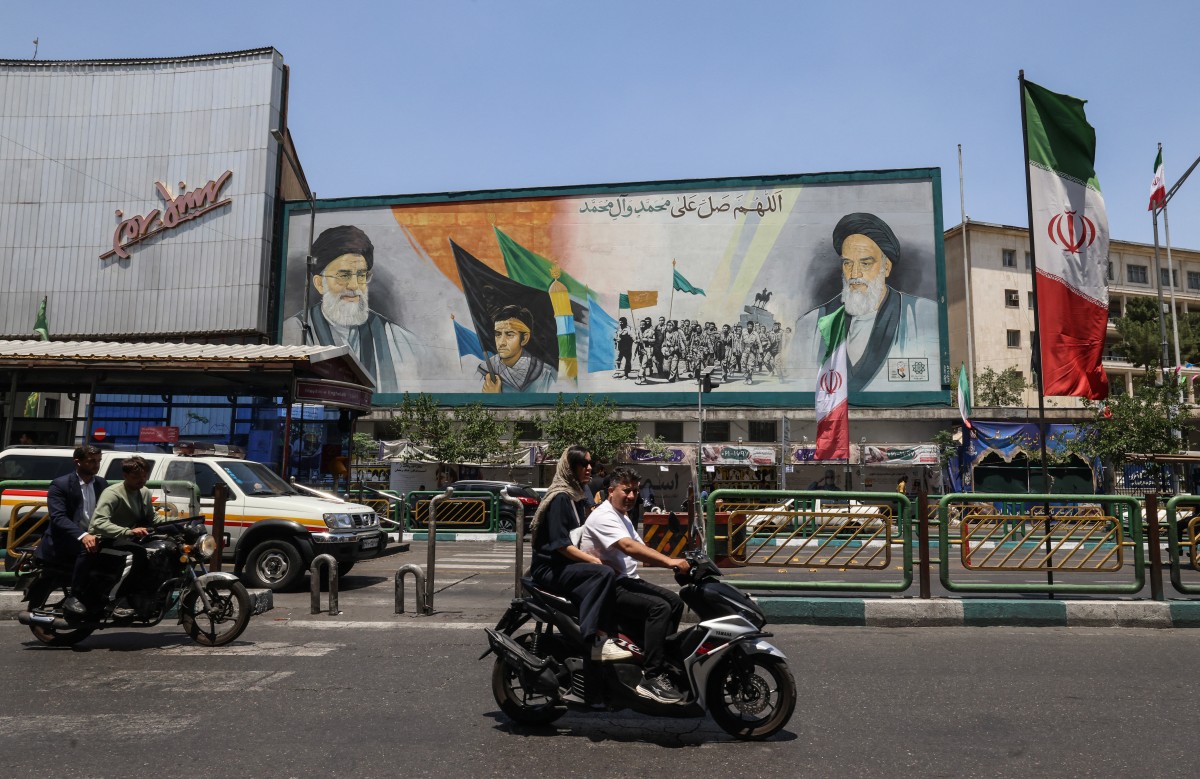
Iranians walk past a banner showing a picture of the late Supreme Leader Ruhollah Khomeini and his late successor Ali Khamenei in Revolution Square in Tehran, June 3, (AFP).
Washington… containing escalation?
Doctor of Political Science and International Relations, Nabil Al-Khoury, told Al-Nahar, “The reports that talked about Trump placing restrictions on expanding military operations against Iran and linking any large-scale escalation to the killing of American soldiers, as a red line, came at a remarkable time, coinciding with the US House of Representatives’ vote in favor of imposing restrictions on Trump’s military powers towards Iran, after four Republican representatives joined the Democrats to pass the resolution.”
However, he considers that “it is too early to talk about a radical shift in the Trump administration’s strategy towards Iran, as the American approach is still based on the maximum pressure equation in its military-diplomatic form, that is, maintaining the threat of using military force in parallel with the negotiation process,” noting that “the American administration realizes that the element of deterrence and the ability to escalate constitute one of the most important pressure cards in any negotiations with Tehran, whether with regard to the nuclear program or regional security arrangements.”
opinion
Did the war on Iran establish a fundamental contradiction between America and Europe?
For two days, military planners from more than 30 countries met in London in the last week of April with the aim of developing a detailed plan to reopen the Strait of Hormuz. The meeting came a few days after Paris hosted a meeting of 51 countries to show diplomatic support for a multinational defense initiative to protect navigation in this vital waterway as soon as conditions permit.
Al-Khoury explains that Trump gives the negotiations process his full opportunity, and this results in, on the one hand, the continuous brandishment of force, and on the other hand, self-restraint and cold-blooded behavior with any escalation or in response to any provocation or misunderstanding. Trump is therefore trying to provide the conditions for the success of the agreement, but without any fundamental concession. This makes the possibility of escalation in the future not excluded.
Therefore, Al-Khoury asserts that what we are witnessing so far “does not reflect a change in the essence of the American strategy,” and the issue is not related to “containing escalation” as much as it is an attempt to manage the delicate balance between the necessities of military deterrence on the one hand, and internal political pressures and the fear of sliding into a comprehensive regional war on the other hand.