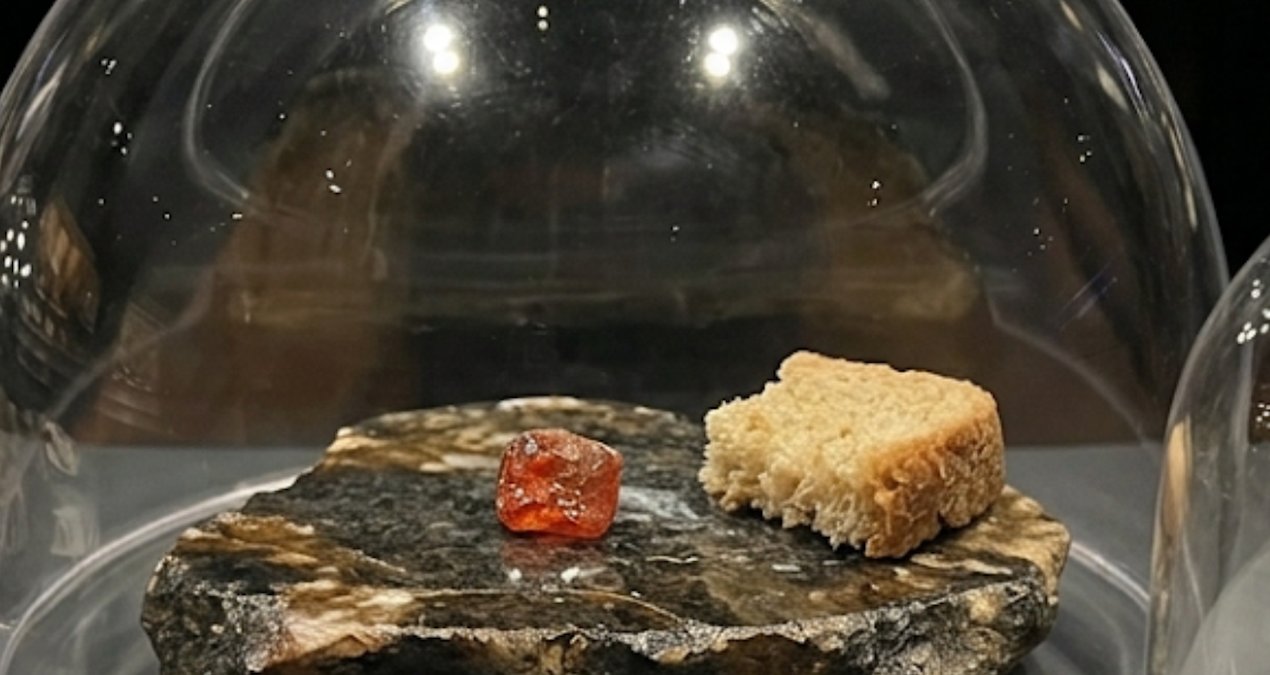
A tiny crystal found among the water-eroded pebbles in the Mogok region of Myanmar, known for its precious stone beds, took its place in the history of science as the rarest mineral, only a single example of which was detected in the world. The mineral, officially registered by the International Mineralogical Association (IMA) and called “Kyawthuite”, weighs only 1.61 carats (about 0.32 grams). This weight is equivalent to the mass of a single large bread crumb that can be scraped off a table with a fingertip.
APPROVED BY OFFICIAL AUTHORITIES
Kyawthuite was accepted as a valid and completely new mineral species by the International Mineralogical Association (IMA) in 2015 and was added to the official list with its registration number. The only sample in question; It was analyzed in detail and published in the literature in a joint study conducted by Anthony R. Kampf from the Los Angeles County Natural History Museum, George R. Rossman and Chi Ma from the California Institute of Technology (Caltech), and Peter A. Williams from Western Sydney University.
THE ONLY APPROVED MINERAL
According to data provided by Mindat, a mineral database managed by the Hudson Mineralogical Institute, kyawthuite is the only approved mineral in its own bismuth-antimony oxide group. In laboratory analyses, the prominent physical and chemical properties of the stone were recorded as follows:
– It consists of the elements bismuth, antimony and oxygen.
– It has a grayish orange-red color, a transparent surface and a diamond backing that contains shine.
– 5.5 on the Mohs hardness scale (harder than copper coins, softer than quartz).
– It has a high density of approximately 8.3 grams per cubic centimeter.
IT IS TRANSPORTED BY WATER
The place where the mineral was detected was announced as Chaung-gyi-ah-le-ywa village, which is an alluvial area where gravel and sand carried by streams accumulate. Experts estimate that the mineral first occurred in coarse-grained “pegmatite” rocks formed by the condensation of rare elements in the final stages of magma cooling and was transported by water over time.
IT WAS PROTECTED IN THE MUSEUM
This single crystal, which is considered a scientific reference (type specimen) for its registered uniqueness in nature rather than for its market demand or gem value, was taken under protection. In order to serve as a resource for future studies, the official copy is exhibited and preserved at the Mineralogical Sciences Department of the Los Angeles County Natural History Museum under catalog number 65602.
All copyrights of the articles, news and photographs published on the website www.sozcu.com.tr belong to Mega Ajans and Rek. Tic. It belongs to A.Ş. It cannot be quoted without permission, even by citing the source.