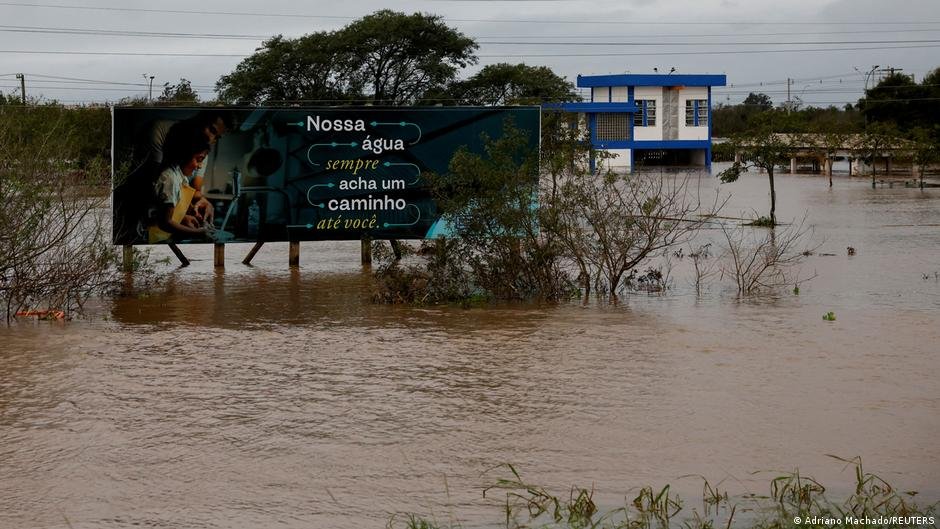
With 80% probability, the El Niño phenomenon It will appear again this year and may have strong intensity, which will aggravate droughts and intense rains, as well as the risk of heat waves both on land and in the ocean, the World Meteorological Organization (WMO), the UN agency specialized in meteorology, announced on Tuesday, June 2, 2026. El Niño will likely occur between June and August, increasing the risk of extreme weather events in the coming months.
“The science is clear: El Niño is reaching our doors in the coming months (…). El Niño conditions will add fuel to the fire of a warming world and its impact will be even more severe, reaching further and crossing borders with devastating speed,” the United Nations scientific body has warned. He also estimates that “the chances of this episode continuing at least until November are around or exceed 90%,” he added.
According to data provided to the press, between the end of April and mid-May, the sea surface temperature in the Pacific area used as a reference was already on the threshold of an El Niño phenomenon, and this condition was being fueled by subsurface temperatures above average by more than 6 ºC.
WMO: Early warnings save lives
The head of the WMO, Argentine scientist Celeste Saulo, said that we must prepare for a potentially strong El Niño event, and I assure you that your organization will collaborate with other scientific entities to anticipate what is coming as soon as possible so that governments, humanitarian entities and all sectors that are sensitive to the climate can make their predictions in advance.
“Advance seasonal forecasts and early warnings are essential to saving lives and mitigating the impact on our economies and our communities,” he recalled.
The most recent El Niño occurred between 2023 and 2024, and was one of the five strongest on record, resulting in record global temperatures.
Generally, the El Niño phenomenon begins to develop between March and June, and reaches its maximum intensity between November and February.
Its effects on global temperatures are typically most pronounced in the year after it develops.
The WMO indicated that there is no decisive evidence that climate change increases the frequency or intensity of El Niño episodes, but what is known is that it can amplify its impacts.
This is because a warmer ocean and atmosphere increases the available energy and humidity, which are the elements necessary for extreme weather events such as heat waves and heavy rainfall.
Although each El Niño event is known to be unique in its evolution, impact and other characteristics, when it occurs there is increased rainfall in parts of South America, the southern United States, parts of the Horn of Africa and central Asia.
At the other extreme, it is associated with droughts in Central America, northern South America, the Caribbean, Australia, Indonesia and some regions of southern Asia. (EFE, AFP, DPA)