The World Bank (WB) has lowered its economic growth forecast for Moldova this year from 2.9% to 1.9%. The budget deficit will remain high, and inflation will decrease only in 2027. The WB presented another report on the economy of Moldova Moldova Economic Update. NM tells the main thing from the updated WB forecast, and how it relates to the situation in the Middle East and employment.
Economic growth forecast for Moldova
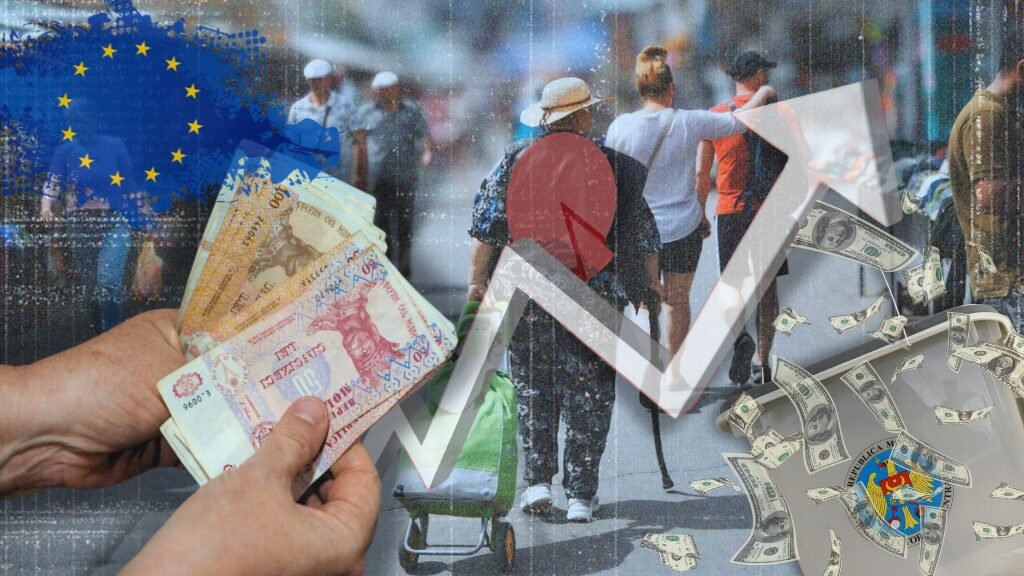
This year, according to the WB forecast, the trend of GDP growth in Moldova will continue, although it will be lower than last year – at 1.9% versus 2.4% in 2025. Moreover, in November last year, the WB expected that the Moldovan economy would grow by 2.9% in 2026.
“The trend (of economic growth) continues, but there is the problem of external shocks, which will most likely manifest itself in the second and third quarters of this year,” said World Bank economist Marcel Kistruga at the presentation of the World Bank report on May 26.
According to him, the crisis in the Middle East will negatively affect Moldova in two directions: a slowdown in foreign trade and imported inflation.
In 2027, according to World Bank forecasts, GDP could grow by 2.9%, and in 2028 – by 3.2%.
Impact of Moldova Growth Plan on GDP
WB experts modeled the impact of investments on economic growth within the framework of the Moldova Growth Plan (Economic Growth Plan – a package of financial assistance worth € 1.8 billion, designed to double the economy of Moldova within ten years and accelerate European integration).
According to the World Bank forecast, only the investment component of the program will ensure an average GDP growth of 2.5% annually in 2026–2030. By comparison, in the base case without additional investment, average growth would have been 2.2%. If we also take into account the effect of reforms, then economic growth can reach 3.5% per year, according to the World Bank.
Inflation will remain above the target corridor set by the National Bank – 5%+-1.5%. According to the World Bank forecast, inflation in 2026 will be 7.2%.
“This will be driven by high energy costs and rising prices for fertilizers, which will create additional pressure on food prices. In the future, in the medium term, inflation will gradually decline to the lower limit of the target corridor (without taking into account potential tax reform),” the WB report says.
In 2027, inflation, according to the bank’s forecast, will be 5.5%, and in 2028 – 5%.
Trade deficit
The World Bank also believes that Moldova’s high energy costs and structural trade imbalance will maintain a high current account deficit.
WB experts predict that the budget deficit in the medium term will remain above 4% of GDP.
Risks for the Moldovan economy
In its report, the World Bank identified several risks for the Moldovan economy:
— problems in the labor market and rising wages in the public sector may increase inflation;
— protracted conflicts in Ukraine and the Middle East continue to support volatility in energy and fertilizer prices;
— a slowdown in the economies of key trading partners, such as Romania and Germany, could limit economic growth;
— continued high prices for oil and imported energy can keep inflation high, reducing real incomes and particularly affecting vulnerable households.
Employment
A separate section of the WB report was devoted to the situation on the labor market in Moldova.
Last year in Moldova, the employment rate of the population aged 15 to 64 was 52%, while in the EU this figure reaches 75%, and in upper-middle-income countries – 70%.
The World Bank noted that after the recession in 2020, employment in Moldova is gradually recovering, but remains low by international standards. The most active age groups remain 35–44 and 45–54 years old, while the participation of young people (15–24 years old) and older people (55–64 years old) is significantly lower.
WB experts also noted that, according to a 2024 survey, the main reasons for refusing to work are related to limited mobility due to family responsibilities – 42%, salary level – 31%, as well as working conditions not related to payment – 18%.
The World Bank believes that the Moldovan authorities should stimulate employment by regulating part-time employment, expanding childcare and elderly care services, strengthening the work of employment services, updating migration policy, simplifying the procedure for obtaining residence and work permits, as well as other measures.
Subscribe to our Telegram channel @newsmakerlive. Everything that is important to know right now about Moldova and the region quickly appears there.
Want to support what we do?
You can contribute to quality journalism by supporting us one-time through the E-commerce system from maib bank or by taking out a monthly subscription to Patreon! This way you will become part of changing Moldova for the better. Thanks to your support, we will be able to implement even more new and important projects and remain independent. No matter how you support us, you will receive a small gift. Follow the link to become our partner. It’s not difficult and even pleasant.