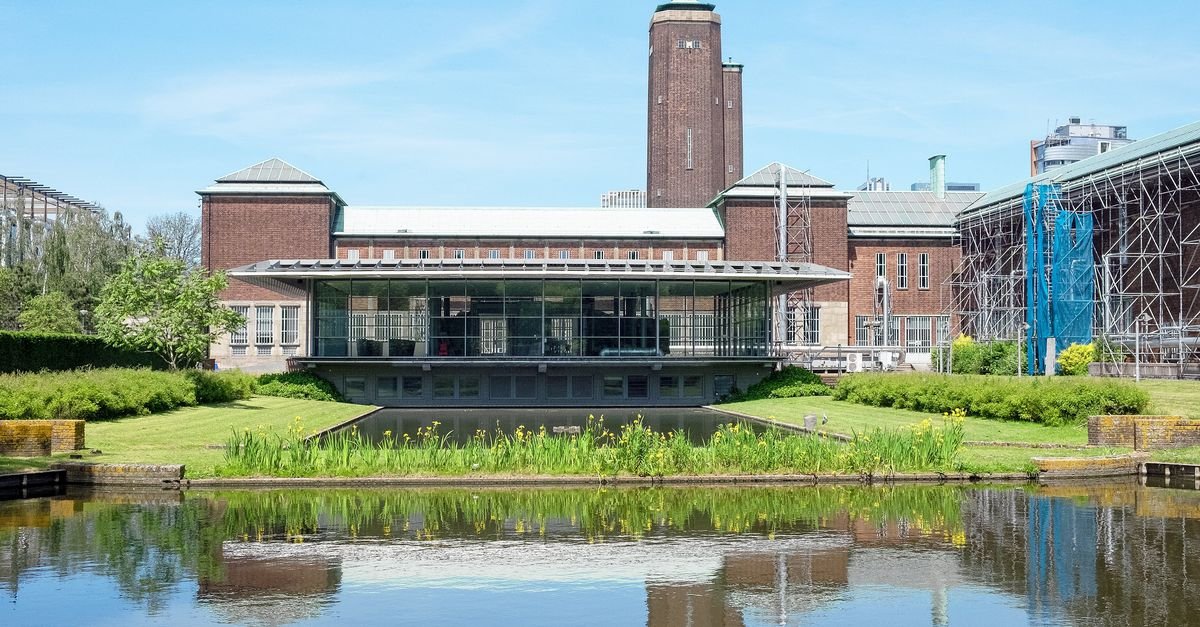
The Rotterdam Museum Boijmans Van Beuningen has been refusing to cooperate in a provenance investigation into more than 2,100 works of art in its own collection for four years. The request for this restitution investigation comes from a former Jewish bank, which believes it has a claim to the works of art. The bank sold the collection in 1940 to Rotterdam businessman Daniël George van Beuningen, whose name appears on the facade of the museum. They allegedly did this under pressure, due to an impending German invasion, and for an amount that, according to the heirs, was far below the real value.
According to experts, the museum’s attitude to the restitution request, one of the largest ever in the Netherlands, is exceptional. The Netherlands has a generous refund policy, but correspondence between Boijmans and the lawyer of the bank Lisser & Rosenkranz shows that the museum has kept the door tightly closed since the first contact. In 2024, director Ina Klaassen wrote in a letter to the bank: “The museum sees no reason to engage in a discussion with your clients to explore any kind of solution or compensation.” The museum is not even willing to cooperate with an independent investigation by the national Restitutions Committee, which provides a solution to these types of disputes.
Looted art expert Helen Schretlen, co-author of the 2002 book Contested Possessionabout the settlement of looted art after the Second World War, mentions the museum’s attitude not done“I have never experienced a museum refusing to investigate a serious claim,” she says. “A museum is supposed to look for solutions, not stand in the way.” David Barnouw, former researcher at the NIOD Institute for War, Holocaust and Genocide Studies, which investigates claims on behalf of the Restitutions Committee, is also critical of such an attitude.
The works of art whose provenance is now disputed are part of the Koenigs collection, perhaps the most important, most valuable art collection in the Netherlands. The importance of this collection is difficult to overestimate artistically, historically and financially. The collection consists of 2,600 drawings and dozens of paintings, with masterpieces by artists such as Hieronymus Bosch, Peter Paul Rubens, Rembrandt van Rijn, Vincent van Gogh and Leonardo da Vinci. The total financial value could reach one billion euros, experts confirm NRC has spoken.
:format(webp)/s3/static.nrc.nl/wp-content/uploads/2026/05/29101440/290526WEE_2033942380_koenigsPortret.jpg)
The collector Franz Wilhelm Koenigs, Berlin circa 1915.
Photo Public Domain
The collection was assembled by the German banker and art collector Franz Wilhelm Koenigs. In 1931 he pledged the art collection to the Jewish bank Lisser & Rosenkranz, then based in Amsterdam, for a loan of 1.5 million guilders. On April 2, 1940, the bank went into liquidation, according to the descendants of the shareholders due to increasing threats from Germany. When Koenigs was unable to pay off his debt at that time, the collection came into the possession of the bank. A week later, the collection of approximately 2,500 works was sold to Van Beuningen for 1 million guilders. A few years earlier, the collection was insured for an amount of 4.5 million guilders.
According to the bank’s descendants, the timing of the sale and the fact that the sales price was far below market value proves that Van Beuningen benefited from the impending invasion. This is supported by the fact that that year Van Beuningen sold 528 drawings from the Koenigs collection to the Nazis for the yet-to-be-built Führer Museum, for an amount of 1.4 million guilders. The initial deal with the bank ultimately provided Van Beuningen with approximately 2,000 works, 400,000 guilders and, by donating the collection after the war, his name on a museum.
The museum said in a statement NRCthat the liquidators’ request is “of a different order than the involuntary loss of possession of private individuals and art dealers as a result of the Nazi regime.” According to the museum, this is the core of their dismissive attitude. The statement refers to a letter dated April 2, 1940, from the bank to Franz Koenigs, which states that the collection only serves as settlement of the outstanding debt, not to “in addition, to obtain an additional benefit from the sale of these paintings and drawings”. At the request of NRC There is no clear answer as to why the museum refuses to have the claim independently assessed.
Fight for restitution
The collection is now located in several places, including Russia, England and America. The largest part is managed in the Netherlands: 205 works of art as part of the so-called NK collection of the Dutch state, recovered objects that were stolen by the Nazis or purchased (whether or not under duress). Applicants can submit a research request directly for works that fall under this collection. The other more than 2,100 works are owned by Museum Boijmans Van Beuningen. Four paintings and four drawings are owned by the municipality of Rotterdam. To conduct provenance research into work outside the NK collection, the owner and applicant must go to the Restitutions Committee together.
Since 1997, several proceedings and lawsuits have been initiated by the descendants of the German banker and art collector Franz Wilhelm Koenigs, the namesake of the collection. These came to nothing, because the various authorities ruled that the transfer of ownership by Koenigs to the bank was lawful and heirs could not lay claim to the collection. Now the descendants of the shareholders of the Jewish Lisser & Rosenkranz bank are also taking action.
A museum that refuses to cooperate in an investigation into a claim puts itself in a bad light
To strengthen their claim, the liquidated Lisser & Rosenkranz bank, which was liquidated and closed in 1962, was revived in 2023. Two liquidators were appointed who claim to have a claim on the collection. In 2023, at their request, the Restitutions Committee started an investigation into the 205 works that fall under the NK collection. This investigation is still ongoing and the outcome may not be available for years.
The bank achieved its first successes abroad, without the intervention of Restitution Committees. In 2024, a settlement was reached in England prior to the sale of a work by Jacques Jordaens, which was auctioned for 354,410 euros. These proceeds were divided between the then owner and the bank. Last month, the Harvard Fogg Museum released the drawing attributed to Rembrandt Portrait of a man back to the heirs as part of a “friendly agreement.” This work is now in the possession of the group of descendants, who will first have research done on it, after which they will sell it.
:format(webp)/s3/static.nrc.nl/wp-content/uploads/2026/05/28141552/290526WEE_2033942380_jordaens.jpg)
The auctioned work of Jacques Jordaens.
Photo Public domain
The chance of ‘a friendly agreement’ with Museum Boijmans Van Beuningen seems very small, according to correspondence between the museum and the lawyer of Lisser & Rosenkranz who NRC saw. Non-cooperation with a museum’s provenance investigation is exceptional, experts say. Former NIOD researcher David Barnouw: “A museum that refuses to cooperate in research into a claim puts itself in a bad light. To do that as a museum, you have to be very sure of the provenance of objects. But even if you are, it is better to cooperate with a provenance investigation.”
The German Lothar Fremy has extensive experience with restitution cases as a lawyer and represents the current liquidators of the bank. “I have never experienced a museum refusing any cooperation,” he says. “This is not in line with Dutch restitution policy. It is unfair that a party suddenly comes up with new rules.”
Museum Boijmans Van Beuningen sees it differently and declares that it has been cooperative. The museum can provide evidence of this, even after additional questions NRCnot well substantiated. In general, the museum says it does not shy away from going to the Restitutions Committee and even actively approaches heirs.
The museum is currently cooperating with the investigation into the NK part of the collection, a spokesperson said. “Despite the belief that this request is of a different order, the museum has cooperated with every question that the Restitution Expertise Center asked the museum. This is in the context of the museum policy to share as much archive material as possible transparently with the public.” For now, the museum wants to wait for the verdict on the NK part of the Koenigs collection.
The museum also refers to a ruling by the English restitution committee in 2024. It rejected another restitution claim from the bank on three Rubens paintings from the Courtauld Institute of Art. According to that committee, it cannot be proven that it was a ‘forced sale or a sale at undervalue’. In its statement, Boijmans Van Beuningen refers to this “clear statement” as substantiation of their position. The bank counters that these two cases cannot be compared, because this does not concern the same ‘deal’ with Van Beuningen.
The Rotterdam municipality also owns a number of works from the collection. Councilor for Education, Culture and Events, Saïd Kasmi, says he has every confidence in the museum’s handling of refund requests, “this is done with all due care. The museum will undoubtedly do so in this case.”