/
In a whirlpool of political confusion that indicates confusion in decision-making centers in Washington, US President Donald Trump makes contradictory statements that undermine the credibility of any alleged diplomatic path to stop the war against Iran and Lebanon.
At a time when he proudly declares that the truce negotiations with Iran are proceeding “at an accelerated pace,” and acknowledges that the Iranians are ready for an agreement, he finds no embarrassment in declaring, through his “Truth Social” platform or in other interviews, that he “does not care” if these entire negotiations collapse, describing them as “boring.”
This sharp contrast in the rhetoric extending from the threat of a blockade and re-launching aggression against Iran to the claim of reaching agreements in Lebanon in cooperation with the Lebanese government reveals a desperate attempt to restore an image of deterrence that has been eroded by field realities, whether Iranian or Lebanese.
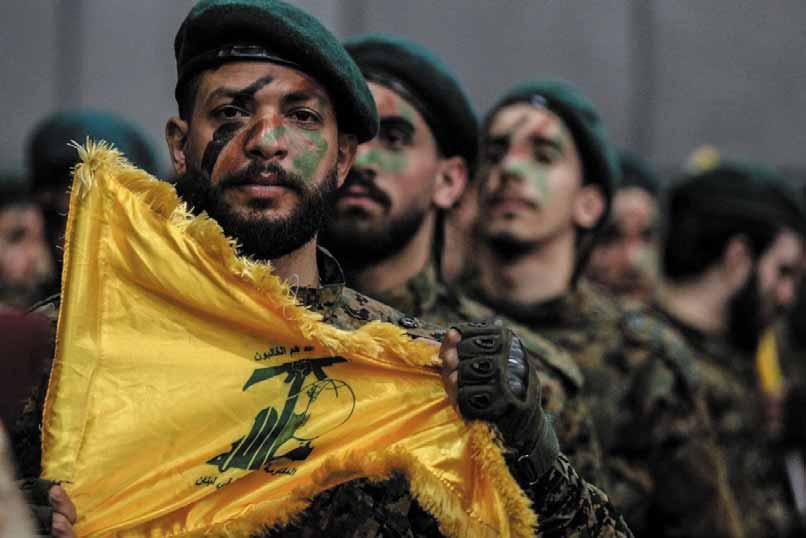
“Unity of the squares” proved that it is not just a slogan, but rather a doctrine of physical deterrence that imposed new balances that forced Washington and “Tel Aviv” to recalculate, after the security of the southern suburb of Beirut became organically linked to the paths of Tehran and the Straits of Hormuz and Bab al-Mandab, in a scene that exposes the predicament of the Prime Minister of the Israeli occupation Benjamin Netanyahu, who is drowning in the lust for geographical expansion without a strategic horizon, and in light of The escalation of resistance operations at any point where the occupation attempts to establish itself, and this matter has become clear through video clips documented by the lens of the military media.
Unity of arenas: the strategic “doctrine of deterrence.”
Since the launch of the American-Israeli aggression against Iran last February, and the expansion of the aggression against Lebanon days later, the “separating the fronts” bet, which Washington and Tel Aviv spent months engineering, has collapsed, transforming from a “strategic plan” into a major “political fall” that has turned the magic against the magician.
Tehran realized early on that retreating on one front meant encroaching on all, so it linked the tracks together organically and indivisibly, and this was embodied on the ground and politically during the past twenty-four hours.
In a showy escalation that appeared to be an attempt to restore “lost prestige,” Netanyahu issued – on Monday – threats to attack the southern suburb of Beirut, claiming that his forces had returned to “Beaufort Castle” stronger than ever before, coinciding with “Security” Minister Yisrael Katz renewing his threats that “the fate of the suburb in Beirut will be like the fate of the settlements in the north.”
But this Israeli bravado did not last long, as it quickly dissipated under the weight of the decisive Iranian response that immediately followed the threats, so that the Israeli challenge turned into a state of retreat.
On the diplomatic track, Tehran took a decisive decision to stop talks and exchange messages with the United States through mediators, as Tasnim Agency confirmed that the continuation of the occupation’s crimes in Lebanon – which is an integral part of the conditions of the regional ceasefire – has undermined the negotiating track to its foundations. Foreign Minister Abbas Araqchi stressed that the ceasefire is “an indivisible whole,” and that any violation on the Lebanon front is a comprehensive violation of the entire agreement.
In the field, Iran was not satisfied with diplomacy, but rather moved to “demonstrate” the deterrence equation, as the commander of the Khatam al-Anbiya Central Headquarters issued an unprecedented warning to the settlers to leave the north immediately, declaring that any targeting of the suburb would turn “the Galilee, the Golan, and Haifa” into military zones open to attacks by the Iranian armed forces.
This response – which coincided with the announcement by Revolutionary Guard Intelligence that crossing the red lines was a direct war that required opening new fronts and activating options for closing the Strait of Hormuz and Bab al-Mandab – put Netanyahu and Katz before a bitter reality: their threat had become merely a “cry in a vacuum,” after Tehran turned the decision in the suburb into a red line organically linked to the decision of the entire region.
As a result of this “field retreat,” news leaked of a sharp American rebuke of Netanyahu, with Trump rebuking him, describing him as “crazy,” and warning that the policy of destroying the suburb further isolates “Israel” internationally and undermines all political rescue paths that Washington provides for his government.
Thus, Netanyahu turned from “threatened” to “prisoner” of a deterrence equation that does not give him the luxury of choosing the time or place for aggression, after he realized that the cost of tampering with the suburb would be paid from the depths of his “besieged entity” and that the Israeli threat began to produce an existential drain on his internal front.
Attempts to neutralize Lebanon
Washington was not satisfied with attempts to influence the major regional negotiating tracks, but rather worked in parallel to activate a “parallel track” aimed at isolating the Lebanese file from its Iranian-backed regional influence. The American-Israeli plan sought, through side channels and with Washington’s blessing, to withdraw the papers of solution from the Iranian sphere of influence on Pakistan’s table, by holding direct negotiations in Washington between the Lebanese Ambassador Nada Hamada Moawad and the Israeli Ambassador Yechiel Leiter, which was demonstrated in a meeting sponsored by the US State Department on April 14 last year.
This attempt was a “maneuver to break the will,” and it faced a categorical rejection from Hezbollah, which described it as “absurd” and a “free concession,” amid popular discontent that was translated into mass demonstrations in Beirut and several Lebanese regions.
The “lateral diplomacy” did not stop there. On May 30, the Pentagon headquarters witnessed a round of American-Lebanese-Israeli military negotiations that lasted more than 9 hours. Despite the US War Department’s attempt to portray the meeting as a “fruitful security track” that paves the way for political sessions, official Lebanese sources confirmed that the Lebanese delegation did not obtain its demand for an actual ceasefire, nor even an easing of Israeli attacks, in light of Israel’s categorical refusal to withdraw from the occupied territories and its insistence on the demand to “dismantle Hezbollah.”
These meetings revealed the size of the gap between American promises and the Israeli reality, which sees negotiations as nothing more than a tool to impose surrender conditions, especially since the negotiations have returned to point zero, as Lebanese President Joseph Aoun stated during a call with US Secretary of State Marco Rubio that “a ceasefire by Israel is a priority,” something that “Israel” has not committed to in Gaza, Lebanon, or Iran, and will not adhere to in the future.
In the face of this diplomatic impotence, the Iranian move came to resolve the controversy. Yesterday, Monday, the Speaker of the Iranian Parliament, Mohammad Bagher Qalibaf, confirmed in a call with his Lebanese counterpart, Nabih Berri, that any agreement to end the war between Iran and the United States “will include stopping attacks on all fronts, especially in Lebanon,” stressing that Tehran will not only stop the course of negotiations, but will stand in its way unless Israeli crimes stop.
The failure of these parallel paths confirmed a field truth that does not lend itself to interpretation: that Lebanon is not a card that can be traded in the bazaars of international politics, but rather it is the heart of the axis of resistance whose security cannot be sustained except by its unity, from Iran and Iraq, through Lebanon and Palestine, all the way to Yemen.
Experience has proven that diplomatic attempts aimed at “neutralizing” Lebanon were nothing more than an lure of risks, and were of no use in the face of a fact proven by the field: that the “decision of peace and war” in the region has become immune to attempts at fragmentation and circumvention, whether through the intensification of the operations of the Islamic Resistance (Hezbollah) in southern Lebanon or through Iranian military preparedness, and is governed by an indivisible regional path.
At the heart of the scene, Netanyahu is floundering in the dilemma of “political survival.” His rejection of a ceasefire is not evidence of military ability, but rather an attempt to escape from internal failure towards external escalation. Therefore, deepening the aggression in southern Lebanon is nothing but a desperate adventure, while the military leaders live in a state of professional terror from Hezbollah’s marches and fear of being frank with the public about the reality of their impotence on the Lebanon front.
Netanyahu’s dilemma: escaping forward into the “Lebanon quagmire”
This Israeli exposure was not limited to the field, but extended to the political level, as Haaretz newspaper described Netanyahu and Katz’s threats to Lebanon as “hollow,” pointing to the stark gap between claims of a “stronger” return to Beaufort Castle and the reality that proves the limitations of these steps.
In this context, the “lion’s roar” promoted by Netanyahu has become nothing more than a “cat’s meow,” according to Maariv, which saw in the Israeli scene a “state” to which each party dictates its equations: the “Haredim” from within who refuse conscription, Hezbollah from without, which confronts incursion attempts and targets settlements in the north, and President Trump, who is trying to get out of the impasse he has put himself in with Iran.
The culmination of this impasse was evident in the criticism of Ehud Barak, who described Netanyahu’s government as “misguided,” stressing that his talk about “eliminating Hezbollah” was an “impractical and failed” proposal.
The data confirm that any expansion of the war will not be faced by a single front, but rather by a regional bloc that has proven to have the pressure cards that make the cost of aggression high. With them, the Israeli “preemptive wars” have become mere introductions to outcomes whose outcomes “Tel Aviv” will not guarantee, as the Islamic Resistance continues to intensify its qualitative operations in “Al-Shaqif”, “Dibbin” and “Al-Mutulla” across the Lebanese territory and in occupied Palestine, turning the field into a field of daily attrition, and confronting Netanyahu with the fact that his “escape forward” only brought him into a narrow corner, in which he rebukes him. His allies, and the Axis fronts are exhausting him from all directions, with Israeli insistence on destroying homes, bombing civilians, and issuing threats against Lebanon and Iran.
Therefore, what the region is witnessing goes beyond a round of aggression, to be the birthplace of a regional system in which the field is reformulating the rules of engagement. The security of the resistance in Lebanon is no longer a negotiable detail. Rather, it has become a “red line” in Iranian strategic doctrine, which means that any targeting of the southern suburb of Beirut will be met with a comprehensive regional decision that does not stop at the limits of response, but rather extends to redefine the “cost of aggression” in the region as a whole.
In the face of this reality, “Israel” is no longer able to bet on American cover, as the future confronts it with an existential dilemma, as the “unity of the arenas” has become besieging its “entity” from the inside and outside, turning every expansionist adventure of Netanyahu into a “trap”. In short, the compass is no longer set in Washington, but rather in the steadfastness of the field, which has begun to dictate its conditions, and turns Israeli “threats” into crises that undermine the structure of the entity and its ability to survive.
Source: Al-Mayadeen Net