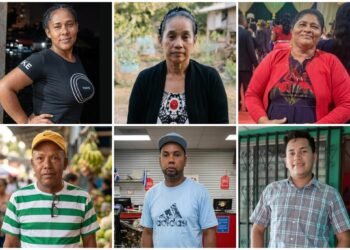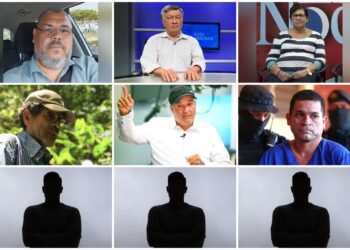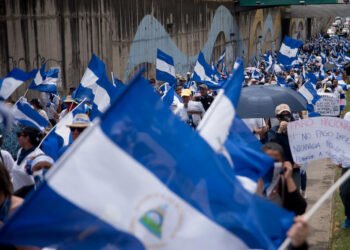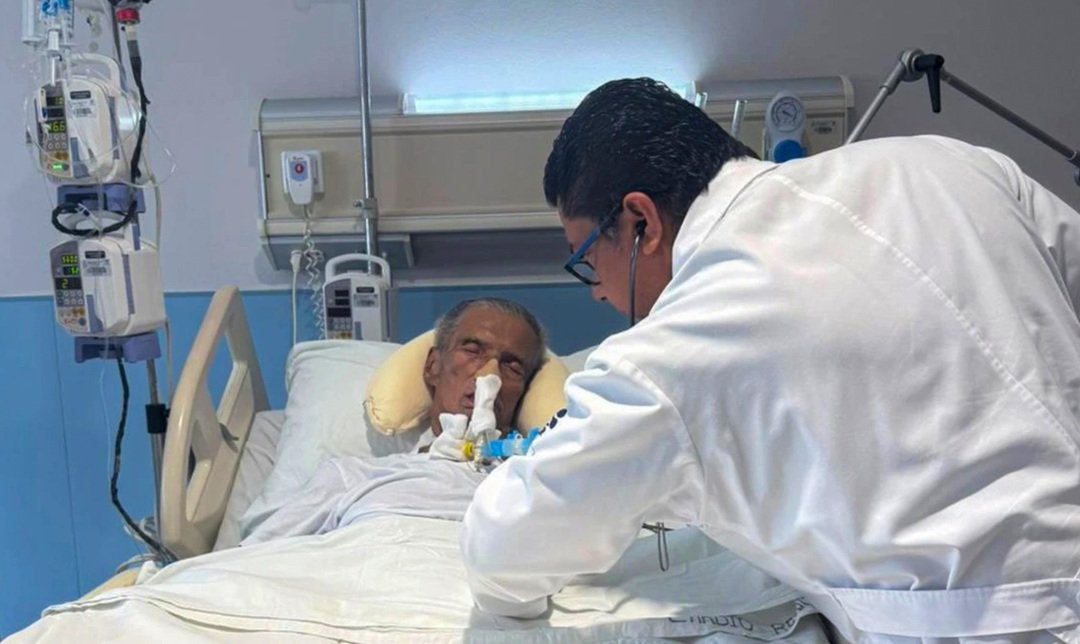
“At what point will they call us to tell us that our family member has died?” That is the question that the relatives of political prisoners in forced disappearance in Nicaragua ask themselves after the death of Brooklyn Rivera in state custody. While they denounce the risk faced by other detainees, the Mechanism for the Recognition of Political Prisoners described the case of the Miskito indigenous leader as “one of the most serious documented” in recent years.
Rivera, 73 years old, died on May 30, 2026 at 8:30 p.m., after more than 970 days of illegal confinement, which increases “uncertainty about the state of health and the conditions of confinement of other people currently in state custody.”
The relatives of five political prisoners also denounced that the case of the Miskito indigenous leader has increased fear that other detainees in the custody of the regime of Daniel Ortega and Rosario Murillo could die in the same circumstances.
“His death is not an isolated event: it is the predictable result of a systematic policy of disappearance, incommunication and deliberate abandonment,” they noted. The relatives of political prisoners who sign the statement are:
- Margine Blandon, relative of Jaime Enrique Navarrete Blandon, political prisoner since July 24, 2019.
- Dina Carolina Fagoth Rivera, daughter of Steadman Fagoth Muller, arbitrarily detained on August 14, 2024.
- Eugenia Salvadora Valle, relative of Víctor Boitano Coleman, missing since April 23, 2024.
- Thelma Brenes Muñoz, relative of Salvadora Martínez Aburto and Carlos Brenes Sanchez, in forced disappearance since August 14, 2025.
- Anonymous relative of a political prisoner in forced disappearance.
“Who will the next photos be of in a hospital in a dying state?” they ask in the statement. They add that the dictatorship “has not reported his whereabouts, has not allowed any communication or presented any evidence of his state of health.”
For the relatives of the detained people, “a State that perpetrates forced disappearance lacks moral authority.”
They ask for release and urgent medical attention
The signatories of the statement also recalled that among political prisoners there are “older adults, with serious chronic illnesses and without access to specialized medical care.”
Likewise, they requested the immediate release of their relatives and other political prisoners, official and immediate information about their whereabouts and state of health, and independent medical access through the International Red Cross.
“Any proof of life must meet minimum verifiable conditions: free and spontaneous declaration. A scripted video or a photograph without independent medical context does not constitute proof of life, it constitutes propaganda,” they concluded.
The death in police custody of Brooklyn Rivera immediately evoked the tragic patterns that preceded the deaths in state custody of political prisoners. Hugo Torres Jimenezhistoric guerrilla commander, in February 2022, and Humberto Ortega Saavedraretired Army general and brother of the dictator Daniel Ortega, in September 2024.
The other political prisoners who died in state custody are Carazo’s opponent Mauricio Alonso Petri and jurist Carlos Cárdenas Zepeda, who died less than a week apart after their recent arrests in August 2025.
Added to the list are lawyer Santos Flores, who reported sexual abuse by Daniel Ortega against his minor sister and died suspiciously in prison in November 2021, and the Nicaraguan-American Eddy Montesmurdered by a prison officer in a cell at the “La Modelo” prison, on May 16, 2019.
For the Mechanism, the death of Brooklyn Rivera cannot “be shrouded in the same silence that surrounded his disappearance.”
“The State of Nicaragua has the obligation to clarify the circumstances of his death, allow independent and impartial investigations and account for what happened during the more than two and a half years in which Brooklyn Rivera remained in its custody,” the organization said.
They denounce repressive patterns
“From the moment of his (Brooklyn Rivera) capture, the Nicaraguan authorities never publicly reported the existence of a criminal case, formal accusation or judicial process against him,” the Mechanism noted in a release published on June 3, 2026.
The Mechanism—made up of human rights organizations, relatives of politically imprisoned and released people, documentation spaces and networks of territorial and digital activists—underlined that for more than two and a half years, the regime never reported on the “whereabouts, state of health and legal situation” of the indigenous leader.
“The information available indicates that the conditions of detention and the lack of timely access to information contributed to generating a scenario of extreme vulnerability. For months, reports circulated about significant weight loss, respiratory problems and progressive physical deterioration,” the human rights organization reiterated.
According to the Mechanism, Rivera’s case brings together the following elements “recurrent in the persecution against people considered opponents of the regime”:
- Arbitrary detention.
- Prolonged disappearance.
- Absence of official information.
- Lack of effective access to judicial guarantees.
- Progressive deterioration of health conditions while remaining under state control.
European Union demands investigation
The European Union joined the requests of international organizations demanding an independent investigation into the circumstances of Rivera’s death.
“We call on the authorities to carry out a thorough, impartial and transparent investigation into the events leading up to his death,” the European External Action Service (EEAS) said in a statement. release.
“Brooklyn Rivera, a respected Miskito indigenous leader and former legislator, who has been detained since September 2023,” added the European Union, “we convey our condolences to his family, his community and all those who worked by his side.”