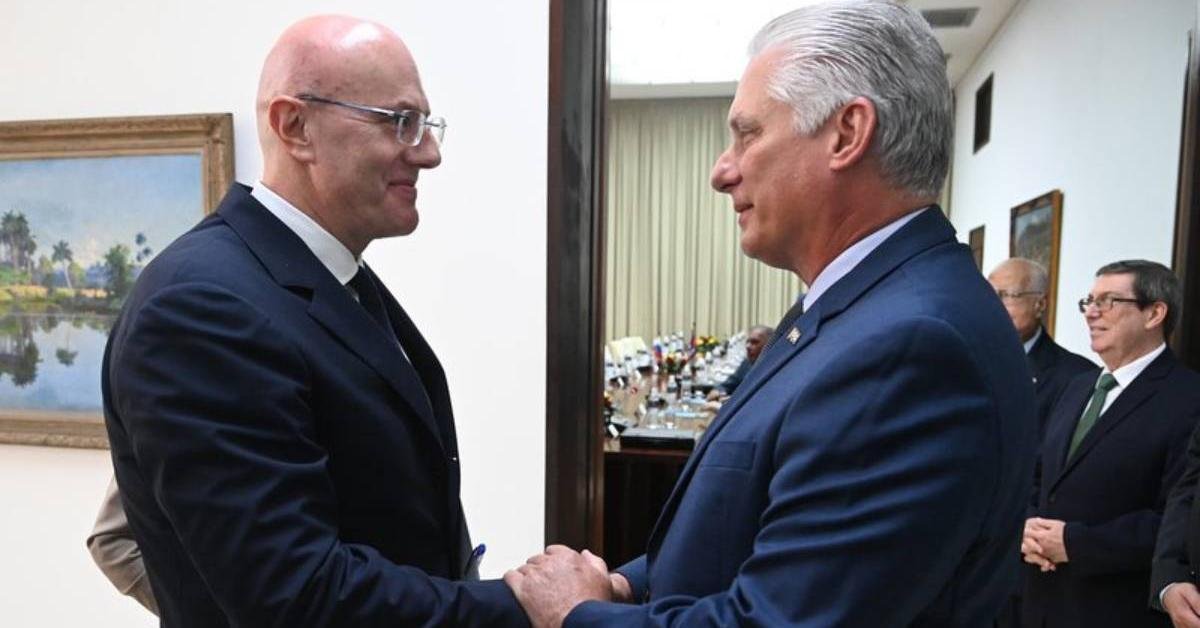
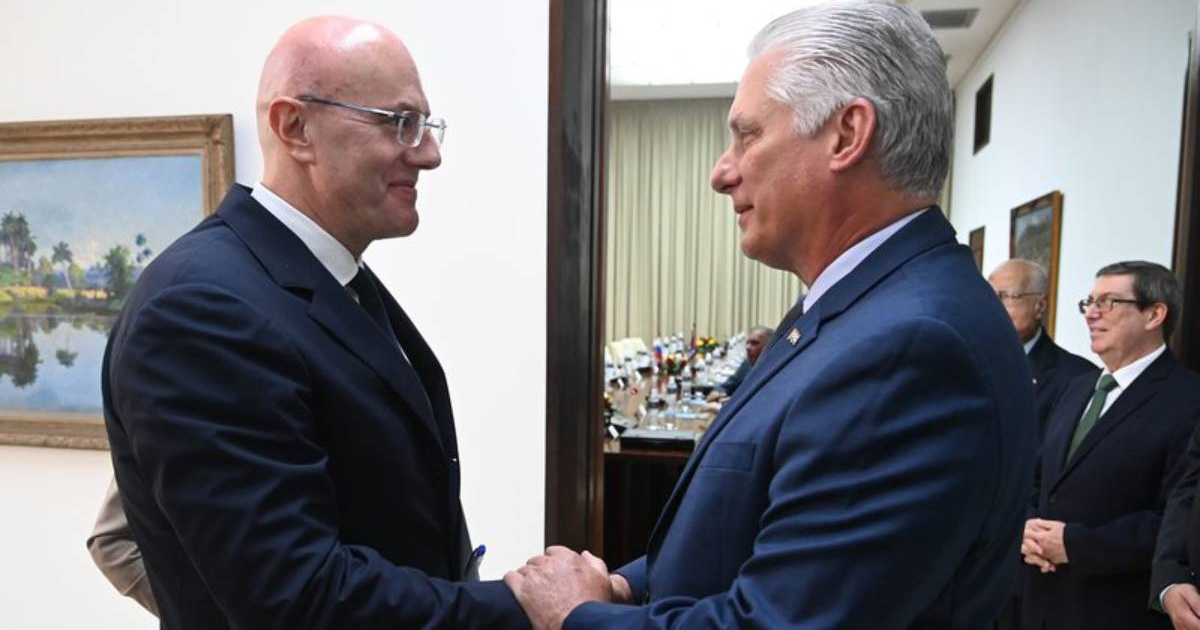
Havana/Russian Deputy Prime Minister Dmitri Chernishenko announced this Thursday, during the International Economic Forum in Saint Petersburg, that Cuba and Russia will sign a memorandum for the joint development of vaccines against oncological diseases.
“Last year Russia supplied Cuba with six tons of substances for the production of medicines, and today we will sign a memorandum on the joint development of oncological vaccines,” Chernishenko said during the Russia-Cuba business meeting, according to the Russian state agency TASS. The official added that Moscow is willing to offer the Island “solutions” in digital services, cybersecurity, medicine and business automation.
The announcement comes wrapped in language of technological cooperation, but it occurs in a country where patients must bring everything from syringes to antibiotics to hospitals, and where drug shortages have become part of the daily landscape. Cuban pharmacies, even in Havana, have had empty shelves for years, while the Government tries to showcase biotechnology as one of the few still exportable showcases in the system.
The memorandum announced this Thursday seems to continue a negotiation carried out in April
Cuba has a history of oncological therapies aimed at stimulating the immune system against already diagnosed tumors. Two examples are CIMAvax-EGF and Vaxira, therapeutic vaccines for advanced lung cancer developed by the Center for Molecular Immunology. The Cuban institution itself affirms that both have a health registry for non-small cell lung cancer in advanced stages.
The memorandum announced this Thursday seems to continue a negotiation carried out in April. Then, the Russian specialized media GxP News reported that the pharmaceutical company Promomed, BioCubaFarma and the Center for Molecular Immunology had agreed to work on a multivalent therapeutic vaccine against a wide range of oncological diseases. The project contemplates development, preclinical and clinical studies, registration and eventual availability for health systems, although no deadlines, budget or experimental results have been disclosed.
Chernishenko also assured that some 90 Russian companies are interested in supplying meat, dairy and fish products to Cuba.
Havana tries to show that, despite its financial isolation and the internal crisis, it retains allies capable of offering fuel, food, technology and medicine. Moscow, for its part, is strengthening its presence in the Caribbean and making medical cooperation part of a broader agenda of economic influence.
Chernishenko also assured that some 90 Russian companies are interested in supplying meat, dairy and fish products to Cuba, at a time when the Island is going through one of its worst food crises since the 1990s. The Russian offer comes while the Cuban Government is losing purchasing capacity, accumulating debts with suppliers and increasingly depending on bilateral agreements with politically similar countries.
The energy dimension of this dependence was already clear in March, when the Russian oil tanker Anatoly Kolodkin arrived in Cuba with some 100,000 tons of crude oil, a shipment that temporarily alleviated the fuel shortage.