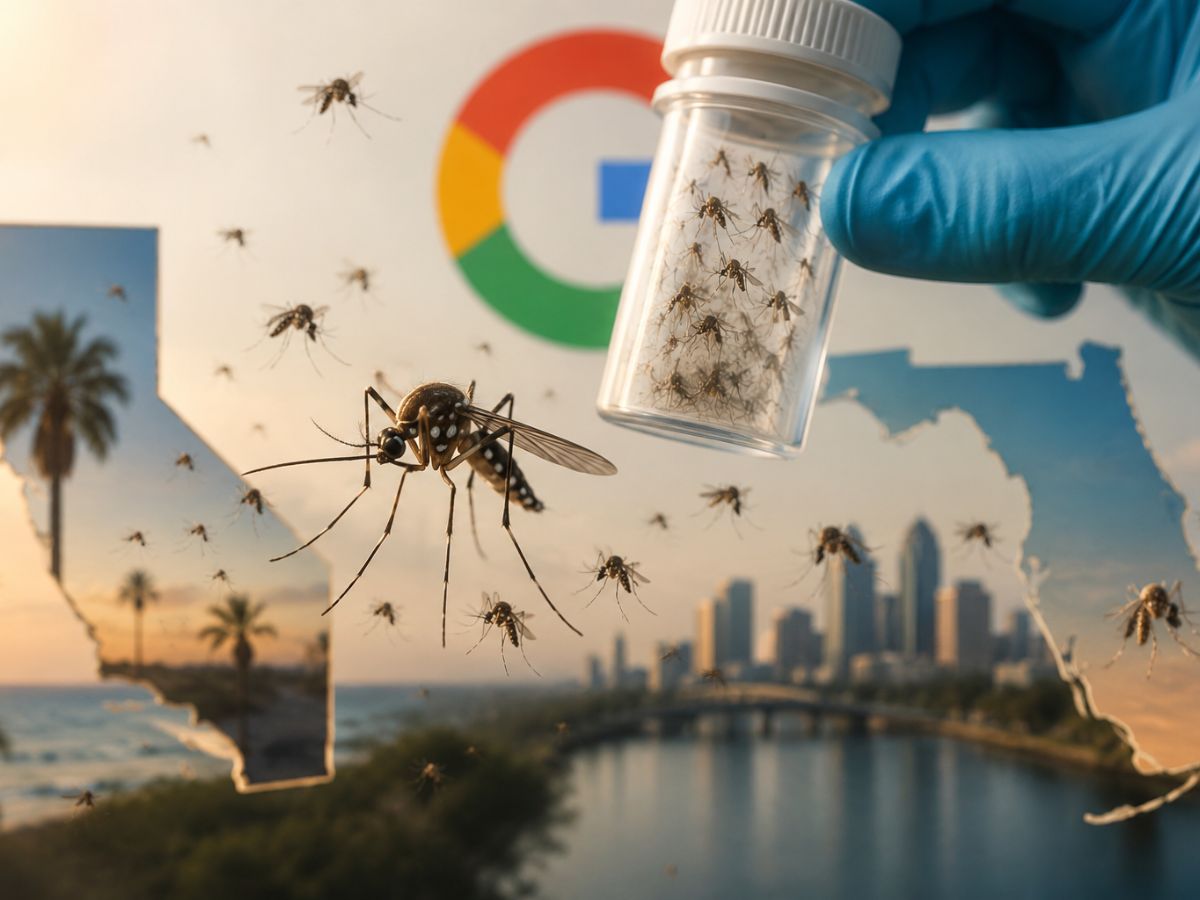
Company intends toGoogle“, through supported projects in the field of biotechnology, proceeding with a plan to release about 32 million genetically modified mosquitoes in a number of regions, with the aim of reducing the spread of insect-borne diseases, such as dengue, Zika, and chikungunya.
The idea is based on releasing genetically modified male mosquitoes that do not bite humans, so that they mate with wild females and transfer to them genetic traits that limit the survival of their offspring, which gradually leads to reducing the number of disease-carrying mosquitoes.
Those in charge of the project say that this technology may provide a more effective alternative that is less harmful to the environment compared to the use of traditional chemical pesticides, while critics believe that the release of large numbers of genetically modified insects requires long-term studies and monitoring to evaluate its potential environmental effects.
The project comes within the framework of global efforts aimed at combating mosquito-borne diseases, which infect hundreds of millions of people annually around the world, especially in tropical and subtropical regions.