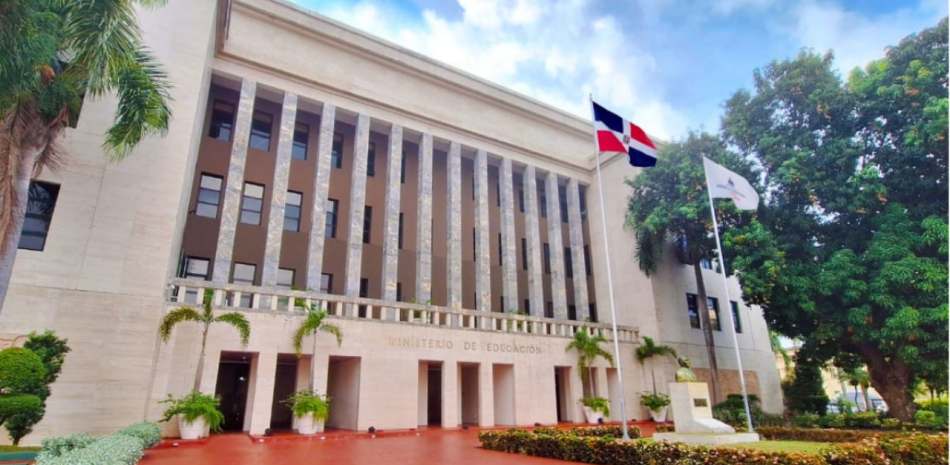
The Minister of Education, Luis Miguel De Campsissued the Departmental Order 011-2026which establishes new national guidelines on the use of mobile devices and screens in public and private educational centers in the country.
The measure arises in a international context marked by growing concern about the impact of excessive use of screens and social networks on learning, emotional health and school coexistence of children and adolescents.
“The discussion is no longer whether technology is part of education, but how we guarantee that contribute to learning and a healthier and more responsible digital coexistence,” said De Camps.
The regulations provide that each educational center must create internal protocols on the use of mobile devices, integrated into their coexistence manuals and prepared together with teachers, families and students. In addition, it promotes the reduction of screen time during the school day through active breaks and alternative activities.
Among the measures, a total prohibition of personal cell phones at the initial level, restrictions in Primary and a use regulated and supervised in Secondary under pedagogical criteria defined by each institution.
Through his account on mobile devices and screens in our schools, always prioritizing the comprehensive well-being of the students.”
Likewise, he noted that “we establish clear guidelines by levels: total prohibition in the Initial Level to protect early development, restriction in Primary and regulated and supervised pedagogical use in Secondary. We seek a healthy balance in the school environment.”
The order also incorporates provisions on privacy and data protectionprohibiting recording or disseminating images, videos or audios of students, teachers and administrative staff without prior consent. Likewise, it contemplates prevention measures against cyberbullying, digital humiliation and other forms of violence in virtual environments.
De Camps stressed that the country needs to move towards a more digital culture conscious and responsible facing the challenges of artificial intelligence and hyperconnectivity.
“The more digital a society becomes, the more important it is train citizens with criteriacritical thinking, responsibility and the ability to coexist healthily in both physical and digital spaces,” he stated.
The provision also provides exceptions for students with specific educational support needs who require technological tools for their learning or accessibility, as well as training programs aimed at teachers, administrative staff and families on digital well-being, data protection and responsible use of technology.