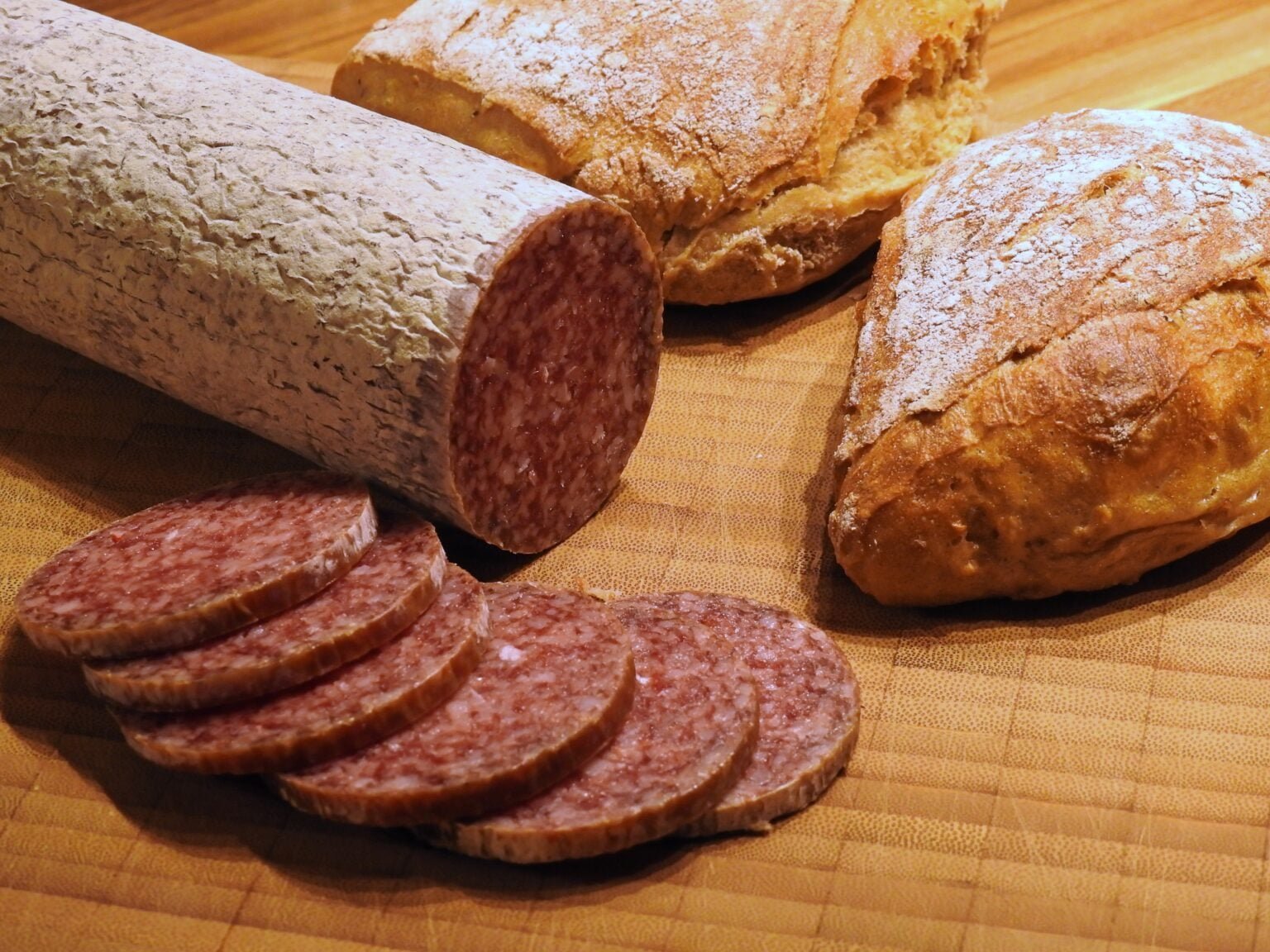

Hungary’s culinary heritage is enjoying international success. Based on the May ranking by the food and travel portal TasteAtlas, the two best types of salami in the world come from Hungary. Both Szeged salami (Szegedi szalámi) and Budapest winter salami (Budapesti téliszalámi) secured top spots in the global comparison with an outstanding rating of 4.4 points each.
TasteAtlas is considered one of the most important digital reference works for food enthusiasts and travelers. The platform functions as a kind of interactive world map of good taste and, based on thousands of user reviews, rates traditional dishes, local specialties, and authentic ingredients from around the globe.
The fact that two Hungarian classics lead the ranking underscores the worldwide popularity and high quality of Hungarian sausages.
Szeged salami is a slowly smoked, cylindrical pork sausage whose characteristic shape is rounded at one end and slightly slimmer at the end used for hanging. A distinctive quality feature is the fine noble mold that completely covers the exterior. It is characterized by its excellent firmness when sliced and is traditionally offered in four sizes: from the classic “Normal” variety (54 cm) to “Midi” (36 cm) and “Tourist” (19 cm), all the way down to the handy “Mini” (16 cm).
Production is subject to strict regional criteria. The pork used must come from animals over one year old that were raised and processed in the Hungarian counties of Bács-Kiskun, Csongrád, Békés, Hajdú-Bihar, or Baranya. Together with a select blend of spices and salt, the salami matures for at least 90 days. It owes its distinctive aroma primarily to the humid microclimate near the Tisza River, which promotes the perfect development of the regional mold flora.
TasteAtlas recommends slicing the salami paper-thin and enjoying it on its own, with fresh bread, or with fine cheese.
Here are the best salamis in the world: https://t.co/lKretQBtmy pic.twitter.com/5bXIL1zSqo
— TasteAtlas (@TasteAtlas) May 30, 2026
The Budapest winter salami also shares the top spot. It, too, is a smoked and dried specialty made from pork and lard. Only meat from castrated boars or sows not used for breeding is used in its production, and these animals must also be over one year old. While the Szeged specialty benefits from the climate of the Tisza River, here the humid air of the Danube ensures that the sausage develops its characteristic white-gray noble mold coating during the curing process.
In terms of flavor, the Budapest variety features a robust note of allspice, white pepper, and sweet Hungarian paprika. When sliced, a beautiful, mosaic-like pattern of light brown to red meat and pale white fat marbling is revealed. Gourmets particularly appreciate its tender, creamy texture, which makes the salami literally melt in your mouth.
After a curing period of at least 90 days, it is sold either whole or pre-sliced and vacuum-packed. It owes its name, “Winter Salami,” to its origins. In the past, climatic conditions and refrigeration capabilities allowed this specialty to be produced only during the cold winter months in Budapest and the surrounding area.
Whether from the banks of the Tisza or from the Hungarian capital on the Danube—the country’s salami tradition proves once again that artisanal perfection, centuries-old recipes, and the country’s unique climatic conditions pay off.
Anyone seeking authentic culinary delights cannot overlook these two world champions.

Via tasteatlas.com; Featured photo: Pixabay