Thursday, June 4, 2026
    The GeoStrategic Consensus
    No Result
    View All Result
    • Login
    • HOME
    • AMERICAS
      • Argentina
      • Brazil
      • Canada
      • Chile
      • Colombia
      • Costa Rica
      • Cuba
      • Dominican Republic
      • Ecuador
      • El Salvador
      • Greenland
      • Guatemala
      • Honduras
      • Mexico
      • Nicaragua
      • Panama
      • Paraguay
      • Peru
      • United States
      • Uruguay
      • Venezuela
    • ASIA-PACIFIC
      • Australia
      • Brunei Darussalam
      • Cambodia
      • China
      • Federated States of Micronesia
      • Fiji
      • Indonesia
      • Japan
      • Kiribati
      • Laos
      • Malaysia
      • Marshall Islands
      • Mongolia
      • Myanmar
      • Nauru
      • New Zealand
      • North Korea
      • Palau
      • Papua New Guinea
      • Philippines
      • Samoa
      • Singapore
      • Solomon Islands
      • South Korea
      • Taiwan
      • Thailand
      • Timor-Leste
      • Tonga
      • Tuvalu
      • Vanuatu
      • Vietnam
    • CARICOM
      • CARICOM – Non-English
        • Haiti
        • Suriname
      • CARICOM Associates
        • Anguilla
        • Bermuda
        • British-Virgin-Islands
        • Cayman-Islands
        • Curacao
        • Turks-and-Caicos
      • CARICOM English
        • Antigua and Barbuda
        • Barbados
        • Belize
        • Dominica
        • Grenada
        • Guyana
        • Jamaica
        • Montserrat
        • Saint Kitts and Nevis
        • Saint Lucia
        • Saint Vincent and the Grenadines
        • The Bahamas
        • Trinidad and Tobago
    • EURASIA
      • Armenia
      • Azerbaijan
      • Balarus
      • Georgia
      • Kazakhstan
      • Kyrgyzstan
      • Moldova
      • Russia
      • Tajikistan
      • Turkmenistan
      • Ukraine
      • Uzbekistan
    • EUROPE
      • Albania
      • Andorra
      • Austria
      • Bosnia and Herzegovina
      • Bulgaria
      • Croatia
      • Cyprus
      • Czech Republic
      • Denmark
      • Estonia
      • Finland
      • France
      • Germany
      • Greece
      • Holy See
      • Hungary
      • Iceland
      • Ireland
      • Italy
      • Kosovo
      • Latvia
      • Liechtenstein
      • Lithuania
      • Luxembourg
      • Malta
      • Monaco
      • Montenegro
      • Netherlands
      • North Macedonia
      • Norway
      • Poland
      • Portugal
      • Romania
      • San Marino
      • Serbia
      • Slovakia
      • Slovenia
      • Spain
      • Sweden
      • Switzerland
      • United Kingdom
    • MIDDLE EAST AND NORTH AFRICA
      • Algeria
      • Bahrain
      • Egypt
      • Iran
      • Iraq
      • Israel
      • Jordan
      • Kuwait
      • Lebanon
      • Lybia
      • Morocco
      • Oman
      • Palestinian Territories
      • Qatar
      • Saudi Arabia
      • Syria
      • Tunisia
      • Turkey
      • United Arab Emirates
      • Western Sahara
      • Yemen
    • SOUTH ASIA
      • Afghanistan
      • Bangladesh
      • Bhutan
      • India
      • Maldives
      • Nepal
      • Pakistan
      • Sri Lanka
    • SUB-SAHARAN AFRICA
      • Angola
      • Benin
      • Botswana
      • Burkina Faso
      • Burundi
      • Cabo Verde
      • Cameroon
      • Central African Republic
      • Chad
      • Comoros
      • Cote d’Ivoire
      • Democratic Republic of the Congo
      • Djibouti
      • Equatorial Guinea
      • Eritrea
      • Eswatini
      • Ethiopia
      • Gabon
      • Gambia
      • Ghana
      • Guinea
      • Guinea Bissau
      • Kenya
      • Lesotho
      • Liberia
      • Madagascar
      • Malawi
      • Mali
      • Mauritania
      • Mauritius
      • Mozambique
      • Namibia
      • Niger
      • Nigeria
      • Republic of the Congo
      • Rwanda
      • Sao Tome and Principe
      • Senegal
      • Seychelles
      • Sierra Leone
      • Somalia
      • South Africa
      • South Sudan
      • Sudan
      • Tanzania
      • Togo
      • Uganda
      • Zambia
      • Zimbabwe
    • HOME
    • AMERICAS
      • Argentina
      • Brazil
      • Canada
      • Chile
      • Colombia
      • Costa Rica
      • Cuba
      • Dominican Republic
      • Ecuador
      • El Salvador
      • Greenland
      • Guatemala
      • Honduras
      • Mexico
      • Nicaragua
      • Panama
      • Paraguay
      • Peru
      • United States
      • Uruguay
      • Venezuela
    • ASIA-PACIFIC
      • Australia
      • Brunei Darussalam
      • Cambodia
      • China
      • Federated States of Micronesia
      • Fiji
      • Indonesia
      • Japan
      • Kiribati
      • Laos
      • Malaysia
      • Marshall Islands
      • Mongolia
      • Myanmar
      • Nauru
      • New Zealand
      • North Korea
      • Palau
      • Papua New Guinea
      • Philippines
      • Samoa
      • Singapore
      • Solomon Islands
      • South Korea
      • Taiwan
      • Thailand
      • Timor-Leste
      • Tonga
      • Tuvalu
      • Vanuatu
      • Vietnam
    • CARICOM
      • CARICOM – Non-English
        • Haiti
        • Suriname
      • CARICOM Associates
        • Anguilla
        • Bermuda
        • British-Virgin-Islands
        • Cayman-Islands
        • Curacao
        • Turks-and-Caicos
      • CARICOM English
        • Antigua and Barbuda
        • Barbados
        • Belize
        • Dominica
        • Grenada
        • Guyana
        • Jamaica
        • Montserrat
        • Saint Kitts and Nevis
        • Saint Lucia
        • Saint Vincent and the Grenadines
        • The Bahamas
        • Trinidad and Tobago
    • EURASIA
      • Armenia
      • Azerbaijan
      • Balarus
      • Georgia
      • Kazakhstan
      • Kyrgyzstan
      • Moldova
      • Russia
      • Tajikistan
      • Turkmenistan
      • Ukraine
      • Uzbekistan
    • EUROPE
      • Albania
      • Andorra
      • Austria
      • Bosnia and Herzegovina
      • Bulgaria
      • Croatia
      • Cyprus
      • Czech Republic
      • Denmark
      • Estonia
      • Finland
      • France
      • Germany
      • Greece
      • Holy See
      • Hungary
      • Iceland
      • Ireland
      • Italy
      • Kosovo
      • Latvia
      • Liechtenstein
      • Lithuania
      • Luxembourg
      • Malta
      • Monaco
      • Montenegro
      • Netherlands
      • North Macedonia
      • Norway
      • Poland
      • Portugal
      • Romania
      • San Marino
      • Serbia
      • Slovakia
      • Slovenia
      • Spain
      • Sweden
      • Switzerland
      • United Kingdom
    • MIDDLE EAST AND NORTH AFRICA
      • Algeria
      • Bahrain
      • Egypt
      • Iran
      • Iraq
      • Israel
      • Jordan
      • Kuwait
      • Lebanon
      • Lybia
      • Morocco
      • Oman
      • Palestinian Territories
      • Qatar
      • Saudi Arabia
      • Syria
      • Tunisia
      • Turkey
      • United Arab Emirates
      • Western Sahara
      • Yemen
    • SOUTH ASIA
      • Afghanistan
      • Bangladesh
      • Bhutan
      • India
      • Maldives
      • Nepal
      • Pakistan
      • Sri Lanka
    • SUB-SAHARAN AFRICA
      • Angola
      • Benin
      • Botswana
      • Burkina Faso
      • Burundi
      • Cabo Verde
      • Cameroon
      • Central African Republic
      • Chad
      • Comoros
      • Cote d’Ivoire
      • Democratic Republic of the Congo
      • Djibouti
      • Equatorial Guinea
      • Eritrea
      • Eswatini
      • Ethiopia
      • Gabon
      • Gambia
      • Ghana
      • Guinea
      • Guinea Bissau
      • Kenya
      • Lesotho
      • Liberia
      • Madagascar
      • Malawi
      • Mali
      • Mauritania
      • Mauritius
      • Mozambique
      • Namibia
      • Niger
      • Nigeria
      • Republic of the Congo
      • Rwanda
      • Sao Tome and Principe
      • Senegal
      • Seychelles
      • Sierra Leone
      • Somalia
      • South Africa
      • South Sudan
      • Sudan
      • Tanzania
      • Togo
      • Uganda
      • Zambia
      • Zimbabwe
    No Result
    View All Result
    Agentially
    No Result
    View All Result
    Home AMERICAS Nicaragua

    Colombia elects president amid polarization, violence and uncertainty

    The Analyst by The Analyst
    June 3, 2026
    in Nicaragua
    Colombia elects president amid polarization, violence and uncertainty


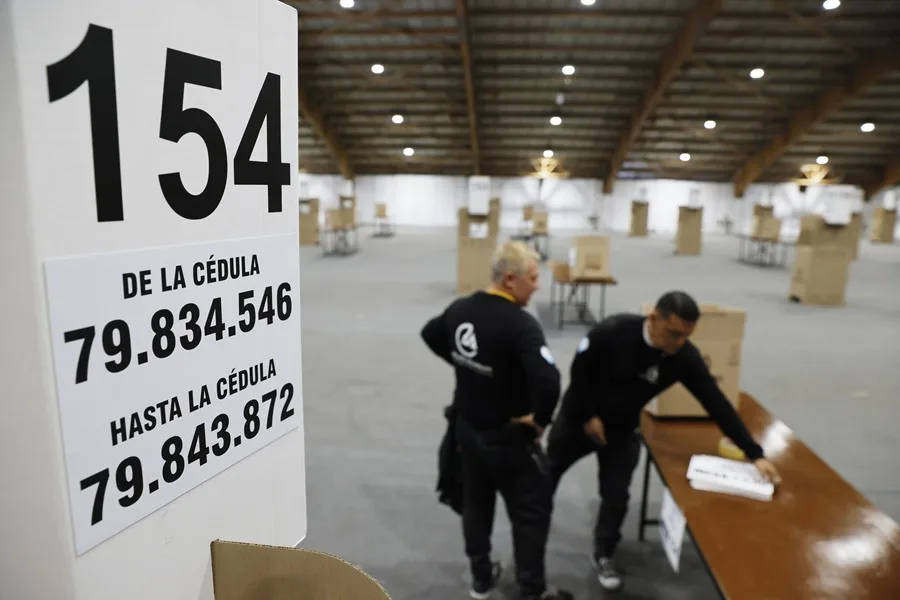
    Colombia goes to the polls today (May 31, 2026) to elect its next president — the legislative election was held in March — with an official candidate as the favorite, a fragmented right-wing opposition, armed groups that have expanded their operational capacity, citizen unrest with insecurity and corruption, an intense campaign on social networks powered by AI, marked by high emotionality and misinformation, and a fiscal legacy that will force the next government to undertake a severe adjustment. Added to this is the institutional tension that marked the end of the campaign: the Council of State ordered Petro to refrain from disseminating electoral propaganda.

    READ ALSO

    The legacy of Rubén Blades in the Caja de las Letras

    La guerrilla masacrada en Nueva Guinea en 1979

    The Registry Office said that everything is ready, called on citizens to vote and on political actors to respect the results. More than 41 million Colombians are eligible to vote, including 1.4 million residing abroad. They will do so in one of the most unequal countries in the region, with 31.8% of its population living in poverty and in a context of maximum polarization.

    The stakes are unusually high. Voters will decide whether to prolong the political cycle inaugurated by Gustavo Petro in 2022 — who, by constitutional mandate, cannot seek re-election — or if there is a turn to the right, in line with the predominant trend today in Latin America.

    Petro’s legacy

    A balanced balance of his four years in government shows mixed results.

    Petro expanded the agenda by placing issues such as inequality, the environment, agrarian reform and the energy transition at the center of public debate. The economy exceeded expectations. Unemployment closed 2025 at 8.9%, its lowest level so far this century. The minimum wage had a strong increase (17%). Multidimensional poverty fell below 10% for the first time, three points less than in 2022. Tourism experienced a historic boom. Remittances reached a record of 13 billion dollars. GDP grew 2.6% in 2025, driven by household consumption and the service sector.

    However, these social advances coexist with fiscal imbalances of considerable magnitude. The government has been spending excessively, collecting few taxes while the Central Bank keeps interest rates low. As a result of all this, public debt reached 63.7%—its highest level in a quarter of a century—, private investment fell to two-decade lows, and the country registered the second largest fiscal deficit in Latin America, equivalent to 6.4% of GDP.

    The central question that the next president inherits is whether the social advances achieved can be sustained without a recovery in productive investment and without a deep fiscal correction that analysts estimate between 4 and 5% of GDP.

    Three main candidates

    Voters will have to choose between radically different visions, both to improve the economy and to confront drug traffickers in the country that produces two-thirds of the world’s cocaine. The contest is concentrated around three figures. Senator Iván Cepeda, candidate of the ruling Historical Pact (left), is the leader, with support levels ranging between 38% and 40%. On the traditional right is Senator Paloma Valencia, close to Uribism, with a voting intention of between 18% and 22%. Further to the right appears Abelardo de la Espriella, who registers between 25% and 32%. Meanwhile, the centrist candidates—Sergio Fajardo and Claudia López—have plummeted in the polls.

    More than a conventional dispute between left and right, Colombia is experiencing an intense struggle within the conservative camp itself. The competition for second place and passage to runoff has become one of the central axes of the campaign.

    Cepeda is Petro’s political heir, although not his replica. His political inspiration is José Mujica. His career is marked by more than three decades of human rights activism and legal confrontation with different centers of power, particularly with Álvaro Uribe. For his followers, he embodies the continuity of the political transformation that began in 2022. In addition, the recovery of Petro’s popularity in recent months—polls place it at around 50%—has become a key asset for his candidacy. To a large extent, this election also functions as a plebiscite on the current president’s management: continuity or change.

    De la Espriella (the Tiger) represents a totally different profile. A wealthy lawyer with a controversial career—among his clients was Alex Saab, designated as Nicolás Maduro’s front man—he has built an outsider image that combines Milei’s “chainsaw”, the heavy hand and intensive use of social networks in the style of Bukele, along with elements of the politics-spectacle associated with Trump.

    The polarization has advanced to the point that Uribism represented by Senator Paloma Valencia—considered until a few years ago the expression of the hardest right—appears today as the moderate option within the conservative camp.

    The return of violence

    Petro’s “total peace” policy failed. Illegal armed groups have strengthened by doubling their members, the homicide rate was the highest since 2021, cocaine production is at record levels and the civilian population has been trapped in violence: 40.8% of Colombians consider that the main problem is public order.

    The Ombudsman’s Office has warned that these organizations continue to veto candidates, limit campaign activities and exercise control over large areas of the national territory. The Electoral Observation Mission identified 386 municipalities at risk of violence, equivalent to 34.4% of the Colombian territory. These data show that political violence has ceased to be a marginal phenomenon and has once again occupied a central place in electoral dynamics. This is not only a security problem, but a democratic challenge. Lower participation in certain regions could affect decisive margins in an election that, despite polarization, remains highly competitive and uncertain.

    What’s coming: runoff and uncertainty

    The most likely scenario is a second round on June 21. Since the introduction of the ballot, Colombia has elected almost all of its presidents in that instance. The only exceptions were Álvaro Uribe’s victories in 2002 and 2006.

    Cepeda would have assured his place in the runoff. The unknown is which right-wing candidate will accompany him. In recent weeks, several polls show De la Espriella consolidating ahead of Valencia, a scenario that was unthinkable months ago. However, the polls were already wrong in 2022 with Rodolfo Hernández and they could do it again. The high volatility of the electorate, the incidence of territorial violence and the growing weight of social networks make any conclusive forecast difficult. In such a competitive race, the undecided and those who decide their vote in the final days will be decisive. The percentage of electoral participation – usually mid-level between 53 and 58% – could also be key.

    In short: regardless of who arrives at the House of Nariño on August 7, the new president – ​​without his own majority in Congress – must respond to four priority issues: the deterioration of security, a severe fiscal imbalance, the crisis of the health system and persistent corruption. Winning the election will only be the first step. The real challenge will be to build agreements, recover the capacity of the State and provide results to an increasingly impatient and demanding citizenry. Not only the governability of the next four years will depend on this, but also the strength of Colombian democracy.

    Source link

    Related Posts

    The legacy of Rubén Blades in the Caja de las Letras
    Nicaragua

    The legacy of Rubén Blades in the Caja de las Letras

    June 3, 2026
    La guerrilla masacrada en Nueva Guinea en 1979
    Nicaragua

    La guerrilla masacrada en Nueva Guinea en 1979

    June 3, 2026
    Why a real opposition is needed for political change in Nicaragua
    Nicaragua

    Why a real opposition is needed for political change in Nicaragua

    June 3, 2026
    A state crime against Brooklyn Rivera, indigenous leader of Nicaragua
    Nicaragua

    A state crime against Brooklyn Rivera, indigenous leader of Nicaragua

    June 3, 2026
    They collect almost 59 billion córdobas in taxes in Nicaragua
    Nicaragua

    They collect almost 59 billion córdobas in taxes in Nicaragua

    June 3, 2026
    Next Post
    Ukrainian drones strike St. Petersburg, hours before ‘Putin’s Davos’ opens

    Ukrainian drones strike St. Petersburg, hours before ‘Putin’s Davos’ opens

    POPULAR NEWS

    The EAEU countries called on Armenia to hold a referendum on joining the European Union

    The EAEU countries called on Armenia to hold a referendum on joining the European Union

    June 3, 2026
    Accès restreint – Le Monde

    Accès restreint – Le Monde

    June 4, 2026
    La Belle Vie: Surviving the heatwave in Paris and living in tiny apartments

    La Belle Vie: Surviving the heatwave in Paris and living in tiny apartments

    June 4, 2026
    AI stocks on the stock market: This winner gained 7,000 percent in three years

    AI stocks on the stock market: This winner gained 7,000 percent in three years

    June 4, 2026
    Telex: Romanians proved, according to the head of state, that a Russian drone fell on the Galac panel house

    Telex: Romanians proved, according to the head of state, that a Russian drone fell on the Galac panel house

    June 4, 2026

    EDITOR'S PICK

    ZHTF hands over seeds donated by charity – iWitness News

    ZHTF hands over seeds donated by charity – iWitness News

    June 3, 2026
    Elleni Katalanos: The Anglo-Cypriot chef behind The Green Greek

    Elleni Katalanos: The Anglo-Cypriot chef behind The Green Greek

    June 3, 2026
    Icelandair flight canceled due to lack of security

    Icelandair flight canceled due to lack of security

    June 3, 2026
    The National Alliance concludes the first year of the Family Development Centers in partnership with 3 ministries.. video

    The National Alliance concludes the first year of the Family Development Centers in partnership with 3 ministries.. video

    June 3, 2026

    Recent Posts

    • Accès restreint – Le Monde
    • La Belle Vie: Surviving the heatwave in Paris and living in tiny apartments
    • AI stocks on the stock market: This winner gained 7,000 percent in three years
    • Telex: Romanians proved, according to the head of state, that a Russian drone fell on the Galac panel house

      © 2026 Agentially - Navigating shifting sovereignties and global risk .

      Welcome Back!

      Login to your account below

      Forgotten Password?

      Retrieve your password

      Please enter your username or email address to reset your password.

      Log In
      No Result
      View All Result

        © 2026 Agentially - Navigating shifting sovereignties and global risk .

        This website uses cookies. By continuing to use this website you are giving consent to cookies being used. Visit our Privacy and Cookie Policy.