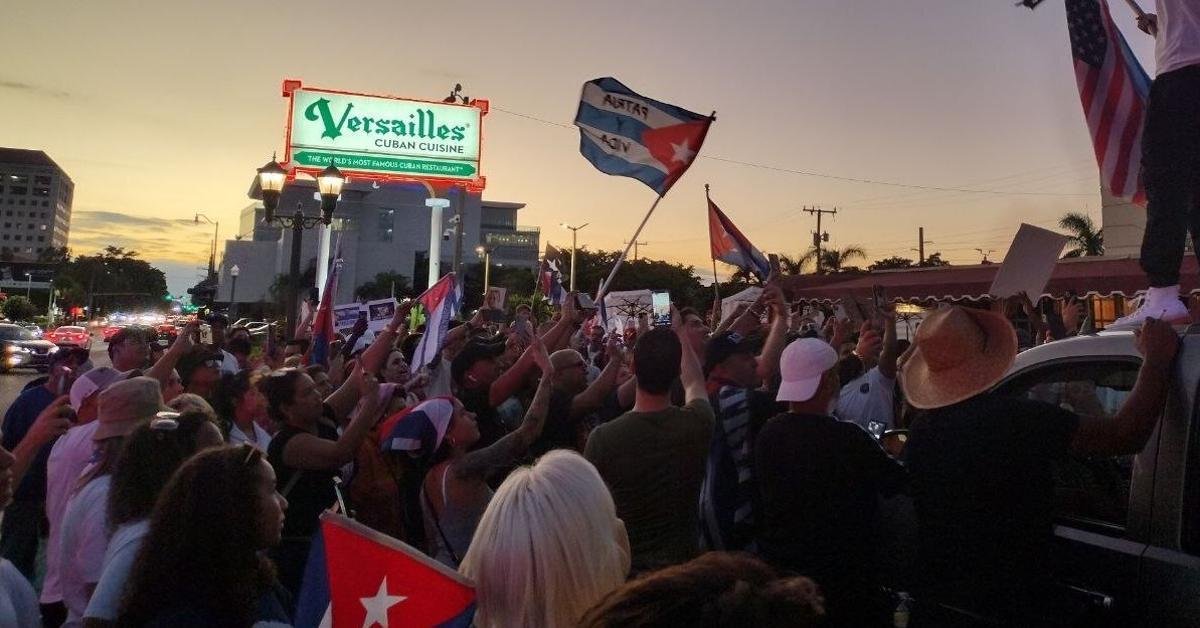
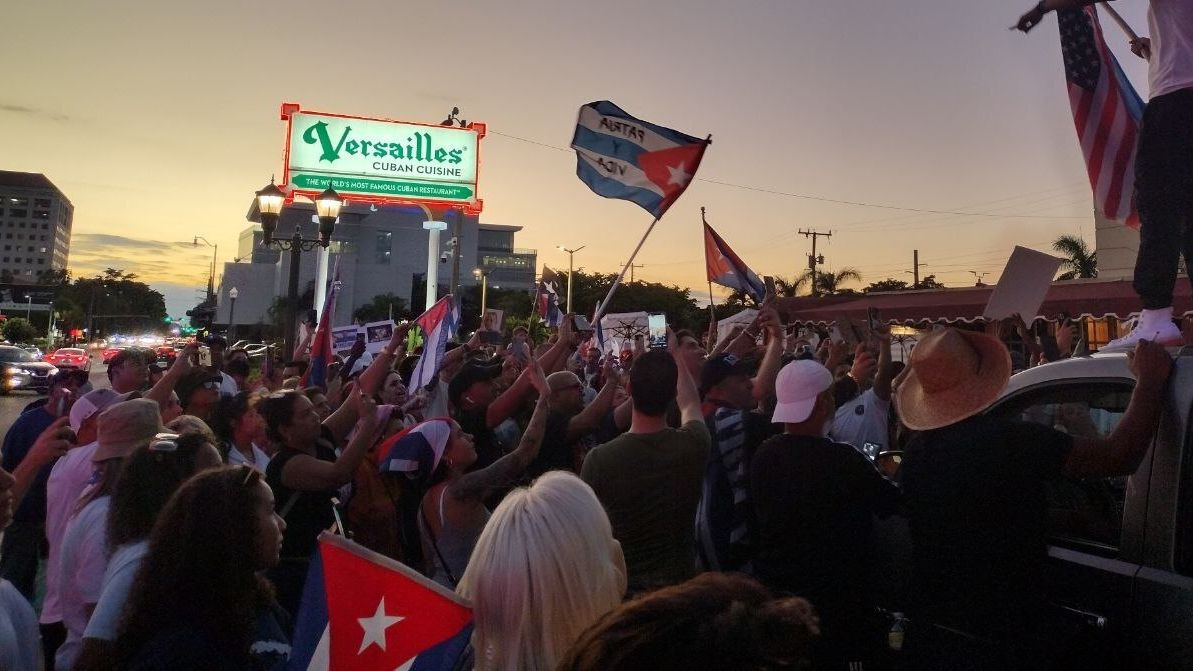
Madrid/Support for Washington’s military intervention on the island is today even greater among Cubans who arrived in the United States after 2000 (88%) than among those who went into exile between the 1960s and 1970s (80%). It is one of the data revealed by a survey carried out by the Miami Herald in Miami-Dade, Broward, Palm Beach and Monroe counties, Florida, the results of which published this Thursday. That figure, in particular, suggests that the hardening of positions is not only linked to the memory of the initial exile, but also to more recent experiences in Cuba.
79% of those surveyed – 800 people, both Cubans and Americans with dual nationality or ancestry on the Island – are in favor of “some type of military intervention”, almost the same percentage that rejects any negotiation that does not imply a change of regime.
Specifically, 78% oppose agreements that allow the current political system to continue in exchange for economic reforms, while 77% express dissatisfaction with any improvement in living conditions that is not accompanied by a transition towards democracy. Likewise, 68% reject conversations that could strengthen the Cuban Government, even if these contribute to alleviating the country’s crisis.
38% support an “intervention that combines regime change with attention to the humanitarian crisis” on the Island
Of those in favor of intervention, 36% favor direct action to overthrow the regime, while 38% support an “intervention that combines regime change with attention to the humanitarian crisis” on the Island. Only a minority rejects any type of armed action.
Such a level of support has surprised even the analysts interviewed by the Miami Herald. Fernand Amandi, president of Bendixen & Amandi International and one of those responsible for the study, compares the current moment with the context of the Bay of Pigs invasion – which marks the 65th anniversary this Friday – when Cuban exiles tried to overthrow the Government of Fidel Castro with American support.
According to Amandi, the message from the community is clear: there is a “green light” for Donald Trump’s Administration to adopt more forceful measures, including military ones, against the Cuban regime.
Regarding the distribution of responsibilities, 73% of those surveyed attribute the economic and humanitarian situation of the Island to the regime, and not to the US sanctions. This perception reinforces support for pressure measures, such as limiting energy supplies, which is also supported by two thirds of the participants.
In terms of ties with Cuba, yes, the survey indicates a progressive weakening. 76% of those surveyed have not traveled to the Island in recent years, and 59% do not send remittances or help to family members. Factors such as the economic crisis, immigration restrictions and family reunification in the United States seem to have reduced these ties, estimates the Herald.
Even among Democratic voters there is considerable rejection of negotiations without political changes
Likewise, interest in returning or investing in Cuba is limited. 76% rule out returning to live on the Island even in a scenario of democratic reforms, and only 2% would invest while the current government remains in power.
The survey also introduces a relevant nuance in immigration matters. Despite its harsh stance towards the Cuban Government and support for the American government, the community broadly supports legal immigration: 81% support allowing Cubans to enter the United States, 76% ask for the resumption of suspended immigration procedures and 68% oppose deportations of people who comply with the law. These figures suggest a clear differentiation between policy towards the Cuban regime and the treatment of migrants.
At the political level, the survey shows strong support for the management of Trump and the Secretary of State, Marco Rubio, in relation to Cuba. The majority of those questioned identify as Republican (57%), compared to 17% of Democrats and 22% of independents. However, even among Democratic voters there is considerable rejection of negotiations without political changes, although this group is differentiated by its majority opposition to military intervention.
This, precisely, is one of the data that the Cuban deputy Carlos Miguel Pérez Reyes has highlighted, who has attacked on his social networks against the survey Herald. “The survey itself reports a very politically charged composition,” he criticized, just as the 800 involved in the study make up “a very, very specific geographic and political universe.” For the Communist Party legislator, “this survey does not even represent Cubans residing in the United States, much less the North American people.”