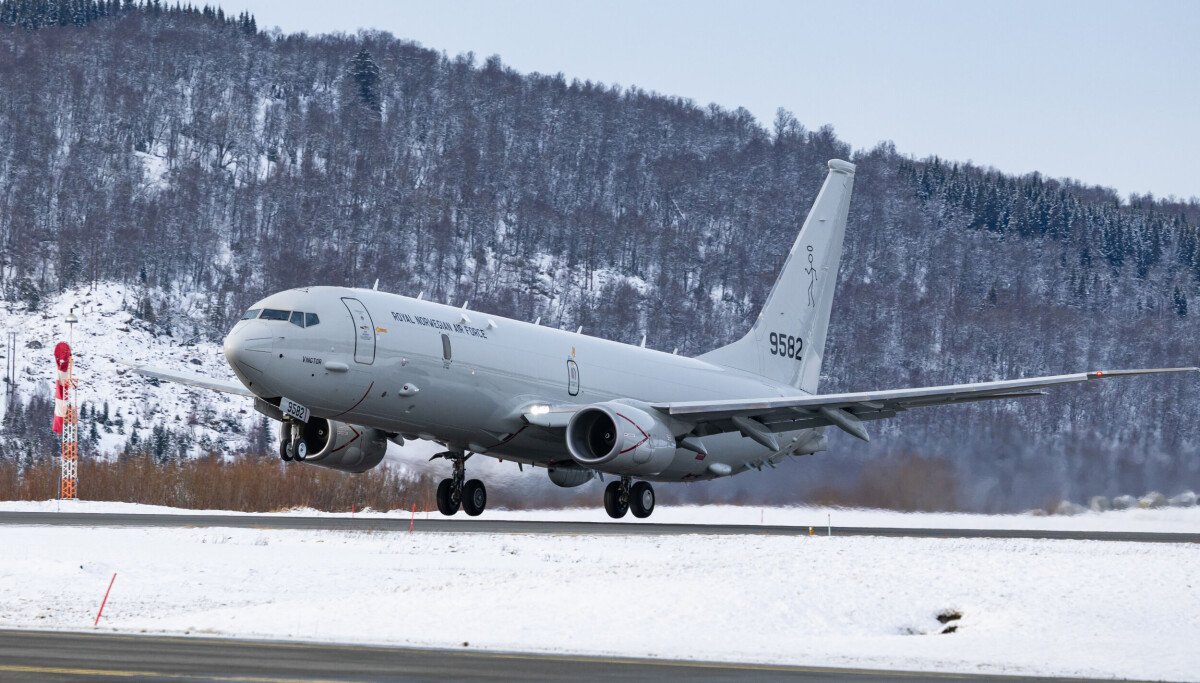
While President Trump mocks the defense of Greenland and has brought the relationship between the two NATO countries to freezing point, the people in the State Department (the US Department of State) have on 29 December given the nod that the Kingdom can buy three surveillance aircraft of the P8-Poseidon type from the American Boeing factories, according to a large number of military media, including the respected American military magazine Janes.
The deal between Boeing and the Kingdom of Denmark has an estimated value of 1.8 billion dollars – approximately 11.5 billion kroner – and includes, in addition to the planes themselves, training, support and advanced sensor systems.
While President Trump mocks the defense of Greenland and has brought the relationship between the two NATO countries to freezing point, the people in the State Department (the US Department of State) have on 29 December given the nod that the Kingdom can buy three surveillance aircraft of the P8-Poseidon type from the American Boeing factories, according to a large number of military media, including the respected American military magazine Janes.
The deal between Boeing and the Kingdom of Denmark has an estimated value of 1.8 billion dollars – approximately 11.5 billion kroner – and includes, in addition to the planes themselves, training, support and advanced sensor systems.
No contract has yet been signed between the parties, but P8-Poseidon has long been high on the Danish Ministry of Defence’s wish list. The planes therefore became part of Partial Agreement 2 on the Arctic and the North Atlantic, which Naalakkersuisut, the Faroese government and the parties to the defense settlement entered into in October.
Standard procedure
The US State Department’s approval of a potential trade is normal procedure in connection with the export of weapons systems. Back in May, the Swedish government gave permission for Denmark to possibly purchase Swedish surveillance aircraft of the Global Eye type as an alternative to the P8-Poseidon.
It is planned that P8-Poseidon will particularly strengthen the monitoring of the North Atlantic in the so-called GIUK gap between Greenland, Iceland, the Faroe Islands and Great Britain. P8-Poseidon is used today by a large number of NATO countries, in addition to the USA, among others Norway, Canada, Germany and Great Britain.
The new surveillance aircraft are primarily to replace the defence’s four Challenger aircraft, which were acquired in 1998 and which are about to wear out, but the P8-Poseidon is only part of the solution, so at some point other aircraft types may come into play. The Challenger aircraft are also used by the defense for other tasks in Northeast Greenland, where the small jets can land on diminutive dirt runways, just as the Challenger is also used for VIP flights with the royal family and the government.
Well-known aircraft type
The P8-Poseidon flew for the first time in 2009. The plane is based on Boeing’s 737 model, of which more than 4,600 copies have been sold since its launch in 1966. The aircraft type is well known to many in Greenland, where Air Greenland in collaboration with Jettime uses the aircraft on the Narsarsuaq and Billund routes, among others – and it has also been a Boeing 737 from the Danish company Airseven that has operated the summer route between Nuuk and Aalborg.
Unlike the current Danish Challenger aircraft, the P8-Poseidon can also carry weapons, for example mines, torpedoes and Harpoon missiles.
The P8-Poseidon has a cruising speed of 815 km/h and a range of 4,500 km. In connection with rescue operations and submarine hunting, the aircraft can stay over a position for approximately four hours, depending on the distance to the nearest airfield.
In Greek mythology, Poseidon was the god of the sea who creates waves by striking with his trident.