By Song Sang-ho
WASHINGTON, April 16 (Yonhap) — An official at the International Monetary Fund (IMF) said Thursday that South Korea has “substantial” energy buffers although it has vulnerabilities stemming from energy supply disruptions caused by the U.S.-Israeli war against Iran.
Thomas Helbling, deputy director of the IMF’s Asia-Pacific Department, made the remarks during a press conference on the economic outlook for the Asia-Pacific, as concerns continued over ongoing disruptions to maritime traffic through the Strait of Hormuz, a vital shipping route for oil, gas, fertilizer and other commodities.
“The (South Korean) government has been very proactive trying to mitigate the impact of the (energy) shock,” the official said.
“It benefits (from the fact) that it has substantial energy buffers. It has been proactive (in) encouraging other sources of energy,” he added.

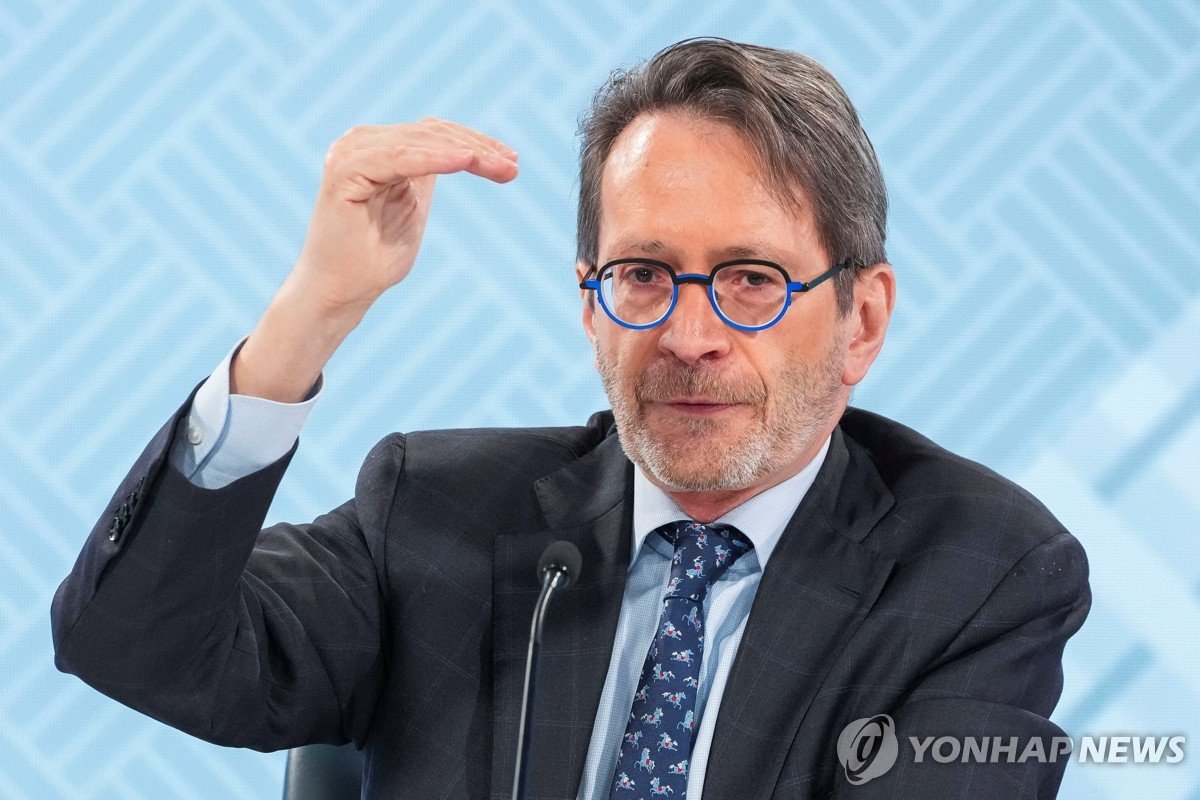
Thomas Helbling, deputy director of the International Monetary Fund’s Asia-Pacific Department attends the 2026 annual IMF/World Bank Spring Meetings in Washington on April 16, 2026, in this photo released by Reuters. (Yonhap)
He also pointed out South Korea’s vulnerabilities in the midst of the war.
“On Korea, as for the vulnerability, I think it’s … we see Korea in line with Asia as a whole. It’s (an) energy importing region,” he said.
Concerns over the economic repercussions of the war have deepened in South Korea as the Middle East conflict has pushed up energy prices and stoked fears of higher inflation. The Asian country has relied heavily on the region for energy imports to power its economy as China, Japan and other countries have.
During the press conference, Krishna Srinivasan, director of the IMF’s Asia and Pacific Department, said that Asia is “significantly” exposed to the energy shock, citing a set of reasons, including the region’s high energy-intensity, dependence on energy imports and its exposure to the shock through non-energy imports.

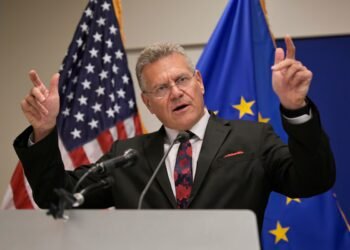
Krishna Srinivasan, director of the IMF’s Asia and Pacific Department speaks during a press briefing in Washington on April 16, 2026, in this photo released by AFP. (Yonhap)
sshluck@yna.co.kr
(END)