AI UNCERTAINTY:
While more than 30 percent of financial institutions have already adopted AI, they are still facing obstacles in integrating the technology
-
By Crystal Hsu / Staff reporter
Taiwan’s financial sector is entering a more volatile period as geopolitical tensions, currency and interest-rate pressures, and rapid advances in artificial intelligence (AI) reshape the industry’s outlook, PricewaterhouseCoopers (PwC) Taiwan said yesterday, citing interviews with local financial leaders.
Despite strong momentum in capital markets — with the TAIEX surpassing 30,000 points in early January and yesterday climbing above 36,000 on the back of the AI boom — underlying structural risks are building, the consultancy firm said.
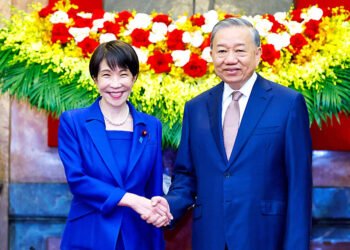
“Structural risks are increasing beneath the surface despite the stock rallies,” PwC Taiwan vice chairman and financial services leader Richard Watanabe (吳偉臺) said.
Photo: Clare Cheng, Taipei Times
Watanabe cited several growing uncertainties, including energy security concerns stemming from conflicts in the Middle East, the combined impact of interest-rate and exchange-rate volatility, and policy uncertainty from the US Federal Reserve.
Another concern is the increasing concentration of Taiwan’s economy in AI and technology sectors, which could amplify risks if the global tech cycle weakens, he said.
The insurance sector in particular faces what PwC Taiwan described as an unprecedented “double-rate risk,” referring to simultaneous fluctuations in interest rates and foreign exchange rates that could complicate insurers’ asset-liability management.
At the same time, AI is emerging as a major opportunity and a new operational challenge for financial institutions, PwC Taiwan said.
More than 30 percent of financial institutions in Taiwan have already adopted AI technologies, while nearly half have begun deploying generative AI tools, it said.
About 12 percent reported that AI adoption has increased revenue and reduced costs.
Financial institutions face obstacles in integrating AI due to incomplete data infrastructure, limited workforce readiness to apply AI tools and the need to protect sensitive financial data, PwC Taiwan chief operating officer for financial services Ellen Kuo (郭柏如) said.
“Financial services are fundamentally about risk management, and the highest level of risk management is creating certainty amid uncertainty,” Kuo said.
PwC Taiwan also examined the government’s effort to develop Taiwan into a regional asset management hub. Authorities are testing regulatory reforms in a pilot financial zone in Kaohsiung aimed at expanding financial products and easing financing restrictions to attract global capital.
Financial leaders said Taiwan’s wealth management sector benefits from structural advantages, including a strong manufacturing base led by semiconductors, emerging industries such as drones and low Earth orbit satellites, and high domestic savings.
Unlike regional hubs such as Hong Kong and Singapore, which position themselves as gateways for global capital, Taiwan’s financial institutions maintain deep ties with local family businesses and high-net-worth individuals.
That strength could create opportunities to serve domestic entrepreneurs and facilitate intergenerational wealth transfer, giving Taiwan a distinctive niche in the Asia-Pacific wealth management market, Kuo said.