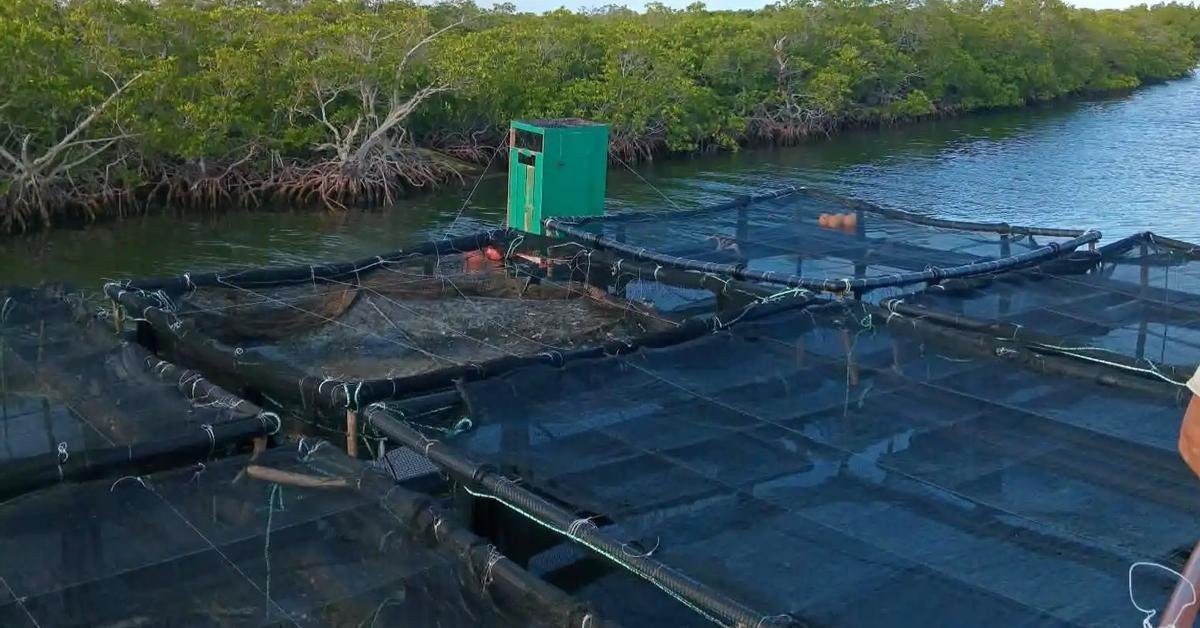
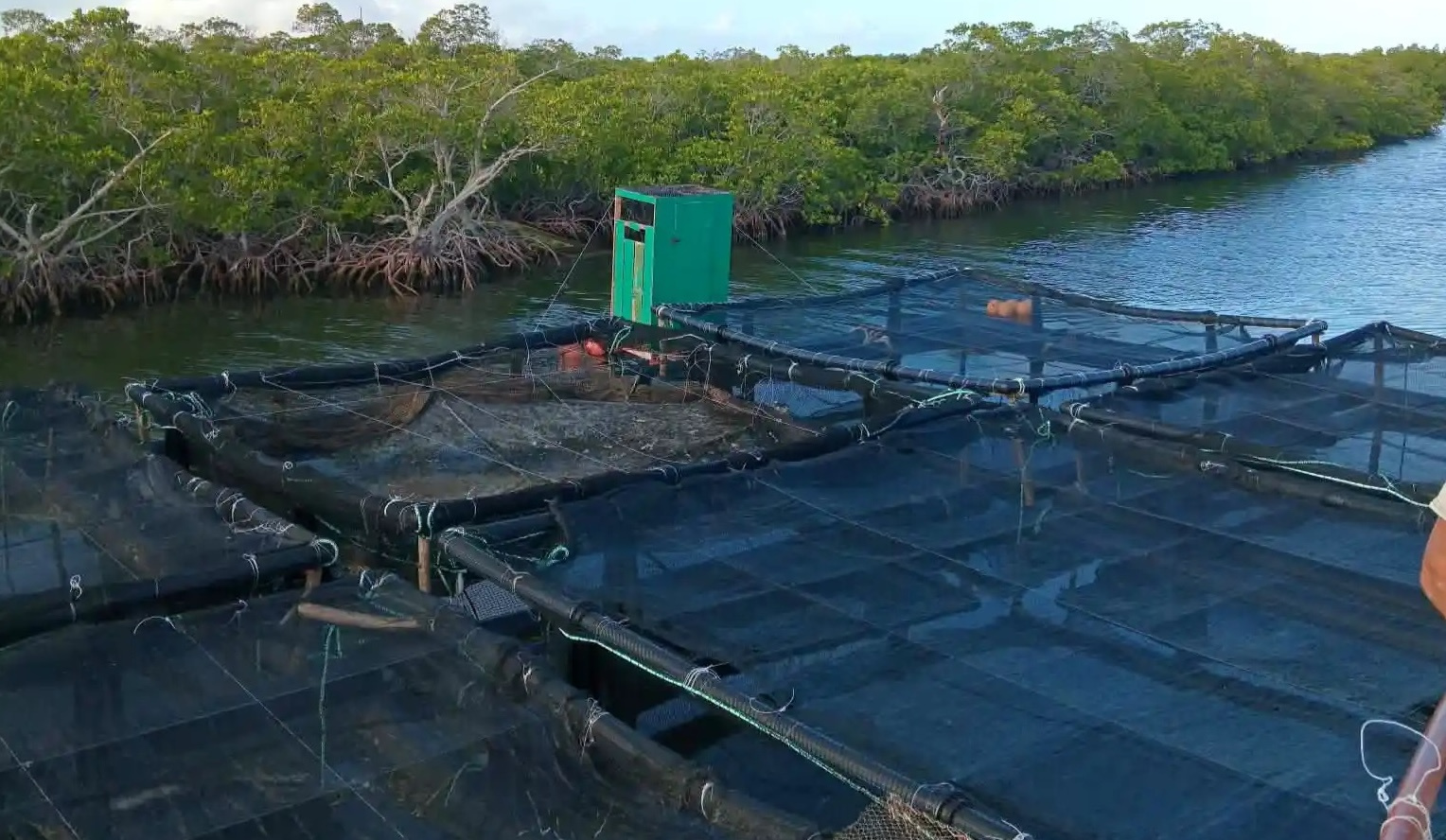
Madrid/In the midst of the unprecedented crisis that the country is suffering, any minimal achievement is cause for celebration in the official press. And an example is the “test” that the state company Cahamar in Quemado de Güines, Villa Clara, carries out with Vietnamese counseling to produce lobster for export, publicized this week by local media.
A year and a half after the project will startthe head of fishing operations at the head of this base economic unit, Rufino Rodríguez Sarduy, congratulates himself on the results achieved: “To date we have a survival of zero mortality, that is, our lobster has a fairly good vitality, one hundred percent.”
At the moment they have sold, “in three phases”, a total of 816 kilograms of lobster for export, “with an average weight of 573 grams.” The numbers are laughable, if we take into account the 136 tons of product that the Island obtained in 2024 and that the average weight expected for Cuban lobster normally exceeds 700 grams. Not to mention comparing it with the 80s, when the annual average was 11,565 tons. In the 1990s, the catch fell to an average of 9,327 tons and, between 2000 and 2007, it fell to 6,262 tons annually. Since then, it hasn’t stopped going down.
Cahamar authorities hope to “continue working with colleagues in Vietnam” and increase breeding capacity by 20 cages.
The Cahamar authorities hope, however, to “continue working with colleagues in Vietnam” and increase breeding capacity to 20 cages, making clear the importance of the sector for the national economy.
When the official press reported the progress of this agreement, just a year agoreferred to it as an “experimental project for the cultivation of lobsters in floating cages,” with “technical advice” from Viernamite and the objective of “strengthening food security” and “generating exports.”
So, with six months behind them, they had 1,500 specimens in development, distributed in six cages, gaining 120 grams per month, as Rodríguez Sarduy himself declared at the time. If these numbers were true, those lobsters would weigh more than a kilogram right now, and not almost half as much, as the official has declared on provincial radio these days.
The test, in any case, is part of the third phase of the specific agreement signed between Havana and Hanoi called Supporting Cuba in the Aquaculture Phasewhich has existed since 2009 and one of whose purposes is precisely the development of farms for the main crop species, not only lobster but also shrimp.
This ‘expertise’ is greatly needed by seafood, whose production has collapsed in recent years
The arrival of experts from Vietnam – one of the main benefactors of the Island– has proven good results in other production lines, notably rice. The Vietnamese Agri VMA was the first foreign company to obtain a land lease contract, specifically 1,000 hectares in Palacios (Pinar del Río), with the intention of reaching 5,000 in three years, in which they are planting rice that is much more fruitful than that of their Cuban colleagues, since its yield exceeds 7.2 tons per hectare, compared to 2 or 2.5 for producers on the Island.
You really need this one expertise to shellfish, whose production has collapsed in recent years. Shrimp, which in 2019 left 6,900 tons, remained at 1,100 in 2024, 84% less. As for lobster, 45% of tail production was lost in five years (248.6 tons compared to 136). The figures for 2025, which have not yet been published, are not expected to be better.
The fire that occurred Industrial Fishing Company in La Coloma, in Pinar del Río, last October, this is predicted, given that the plant is responsible for 45% of the lobster caught in Cuba and 80% of the bonito, both products of high value in the national market in dollars and internationally. The authorities’ preliminary calculations indicated that 110 million pesos would be needed –more than 200.00 dollars at today’s informal exchange rate– to fix the disaster, “a good part of it in foreign currency.”