THE STF (Federal Supreme Court) formed a majority this Thursday (16) to overturn the Santa Catarina law prohibiting racial quotas in state universities.
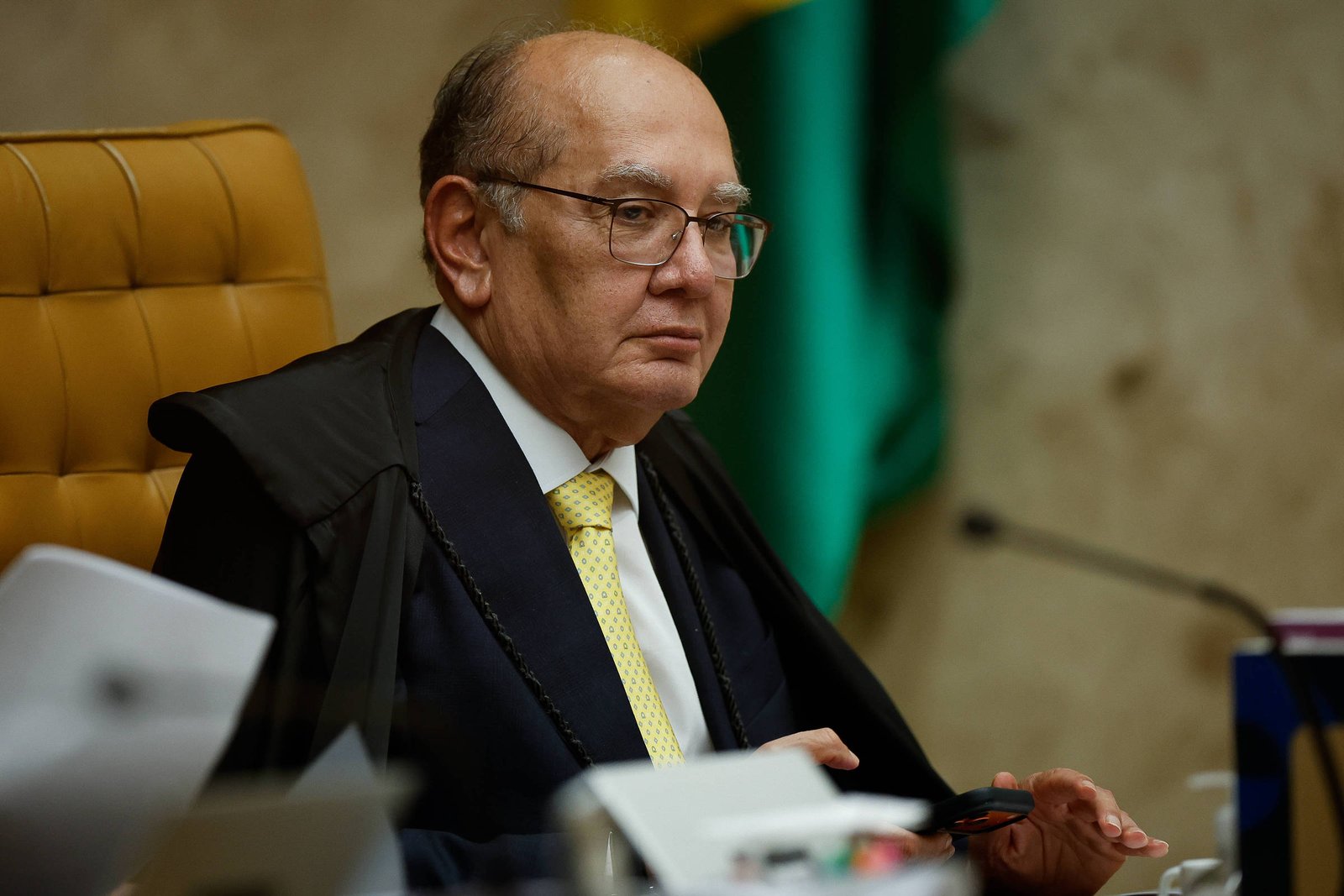
The trial takes place in a virtual plenary — a remote environment through which ministers cast their votes — since last Friday (10) and continues until next Friday (17). The case reporter, Gilmar Mendesvoted for the law to be unconstitutional.
The dean of the court argued that there was consolidated jurisprudence in the court in defense of the reservation of vacancies and criticized the government’s haste Jorginho Mello (PL) to approve legislation without, according to him, due analysis of the consequences.
“No attempt was made to hear even higher education institutions directly affected by the legislative proposal,” he said.
Gilmar’s position was supported by ministers Alexandre de Moraes, Flávio Dino, Dias Toffoli, Cristiano Zanin and Luiz Edson Fachin.
The demonstrations by Luiz Fux, André Mendonça, Kassio Nunes Marques and Cármen Lúcia are still missing.
Gilmar also spoke about the effects of affirmative actions in the country. “Policies of this nature, when used well, effectively implement the principle of equality, conceived as equal respect for differences and a mandate to combat material inequalities”, he stated.
In the vote, Dino said that the rapporteur’s vote accurately demonstrated that the central premise of the law, that racial quotas would violate the principle of equality, directly contradicts the understanding consolidated in the court.
“When assessing the imminence of the final term of validity of Law 12,990/2014 (Law on Racial Quotas in Federal Public Tenders), this Court established that the interruption of affirmative action of an ethnic-racial nature cannot do without prior assessment of its effects, the consequences of its discontinuation and the results achieved”, he stated.
Regarding Santa Catarina’s legislation, the minister said it was serious. In addition to not evaluating the results of public policy, the legislator used a basis recognized as unconstitutional by the Supreme Court. “The deficit of facts and legislative prognoses is, here, absolute.”
Likewise, Edson Fachin followed the understanding and stated that the declaration of unconstitutionality of the rule reaffirms the court’s commitment to the effectiveness of the fundamental objectives of the Republic, the construction of a free, fair and supportive society, the promotion of national development and the reduction of social and regional inequalities.
“Such commands are not merely programmatic in nature, but constitute binding normative guidelines, which have effects on all state action,” he said.
According to the president, affirmative actions fall within the scope of state duties to promote equality and function as instruments of distributive justice to correct disadvantages generated by historical-social factors.
“State neutrality in the face of profound historical asymmetries does not constitute a constitutional virtue, but a form of unconstitutional omission, as it ends up preserving and aggravating situations of systematic exclusion of historically vulnerable groups. It is, therefore, not a contingent political option, but a qualified constitutional obligation, especially required of public authorities, as guarantors of the dignity of the human person”, said Fachin.
In his defense sent to the Supreme Courtthe Santa Catarina government stated that the rule is constitutional, in addition to being appropriate to the “demographic singularities” of the state, which “boasts the highest proportion of white population in the country”.
In the statement sent to the minister, the Mello administration, through its Attorney General’s Office, states that 81.5% of the population of Santa Catarina declares herself whitewhile black and brown represent 18.1%. “Percentage significantly lower than the national average of 56.1%”, says the document.
The percentages are different from shown by IBGE (Brazilian Institute of Geography and Statistics) at 2022 Censusthe most recent. According to the survey, 76.3% of people from Santa Catarina said they were white, and 23.3% declared themselves black or mixed race.
According to the Census, the largest proportion of white people is not in Santa Catarina, but in Rio Grande do Sul, with 78.4%.
The action reported by Gilmar was proposed by PSOL, UNE (National Union of Students) and Educafro (Education and Citizenship of Afro-descendants and Needy People) and challenges the constitutionality of the law, approved by the Legislative Assembly in December and sanctioned by the governor on January 22.
The law is also questioned in the Court of Justice of Santa Catarina, which has already granted an injunction (provisional decision) suspending its effects.