It’s been five years since the Taliban seized control of Afghanistan after the government collapsed in August 2021. Since then, Canada has welcomed over 60,000 Afghan refugees.
Farkhunda Hashimy is one of them. She has been enjoying her new life and freedom in Saskatoon since her arrival with her family in 2023.
Hashimy was a high school student living in Kabul when the Taliban took control.
Life in Afghanistan was good before the regime takeover, Hashimy said. She had the right to go to high school, and pursue higher education and a career.
“After graduation I was planning to go to university, and in that year the Taliban took over and didn’t allow any girls to go to university and to do anything. No work, no job, no school, nothing.”
According to the United Nations, the Taliban has issued around 100 decrees that impact the daily lives of women and girls.
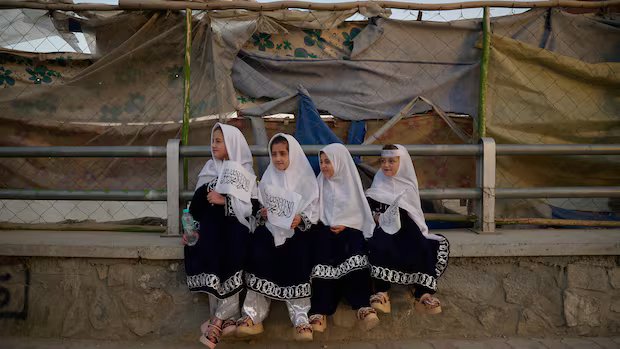
Before the takeover, there were more than 100,000 women in higher education in the country. Now, girls are banned from receiving an education beyond Grade 6.
“We had female ministers and parliamentarians, and judges of the High Court and prosecutors. And today there are no women in these roles,” Natasha Arnpriester said in an interview with CBC’s Saskatoon Morning.
Arnpriester is a senior legal counsel of the Open Society Justice Initiative. She is developing a case against the Taliban for the International Court of Justice.
Hashimy had dreams of going to university and becoming an athlete. She said she loved playing soccer.
“I wanted to become so many things,” she said.
Those doors closed for her after the takeover.

According to UNICEF, Afghanistan is the only country in the world to ban women from secondary and higher education, and the restrictions go beyond education. Women cannot leave their houses without a man present, and they must be covered from head to toe in clothing when they do so.
They are also prohibited from speaking in public.
These restrictions have severely impacted women’s ability to pursue education, make a living or access health care.
“We’ve really watched women’s rights systematically dismantled to what the United Nations is describing as the world’s most severe women’s rights crisis, which unfortunately, I think is an accurate description,” Arnpriester said.
She describes the policies as the Taliban’s “distorted interpretation of Islamic law and Afghan culture.”
She said she wants people to understand that life in Afghanistan over the past five years is very different than what it was before. She said women had rights under their constitution, and freedom of education and careers.
“There was an entire generation of women that had grown up exercising these rights.”
According to a study done by UN Women, 92 per cent of surveyed Afghans support girls going to school past secondary and primary education. That includes 87 per cent of men.
Arnpriester said stating this opinion aloud poses safety risks. Protests and advocacy for women’s rights have been prominent, but they can mean jail time for protestors, advocates and journalists.
A new life in Canada
Hashimy said that when her sister started to ask questions about Islam in school, she was told she was not allowed to. She said people wanted to kill her sister for it.
Her family knew they were not safe in Kabul. Hashimy’s mother had connections to Canada and the U.S. through her work as a midwife.
She was connected with the 30 Birds Foundation, which was founded shortly after the regime takeover in 2021. It is dedicated to getting Afghan women and girls, primarily students, out of Afghanistan to safety.
The foundation has helped more than 400 Afghan women and girls reach Saskatoon, including Hashimy and her family.
Her family moved from Kabul to Pakistan in 2022, where they lived for a year. They finally arrived in Saskatoon in 2023.
“30 Birds [Foundation] is more than a family to me. I don’t know how else to express it. They saved my life and my family. I’m really really grateful.”
She said most of the women still remain in the city, but others have moved to B.C., Ontario and Nova Scotia.
Asked to describe the feeling of arriving in Canada, Hashimy accentuated one word.
“Safe.”
She said she knew she was in a country where she could pursue her dreams of education and a career. She was excited to experience new ways of teaching, meet new people and experience new environments.
“I was really, really happy.”
Since her arrival, she has graduated high school and is now studying urban planning at the University of Saskatchewan.
“Canada is a country that needs a lot of development,” she said. “It’s a very huge country, but not a lot of cities. I am so interested to work in developing new cities.”
She is enjoying her new life in Saskatchewan, but said her mind is constantly with the women and girls back in Afghanistan, still living under the regime.
“Every pain that they feel, I feel too, because I am them and they are me. We belong to each other and that’s [what] motivates me to work on myself,” she said.
“After I become something I can help them.”